


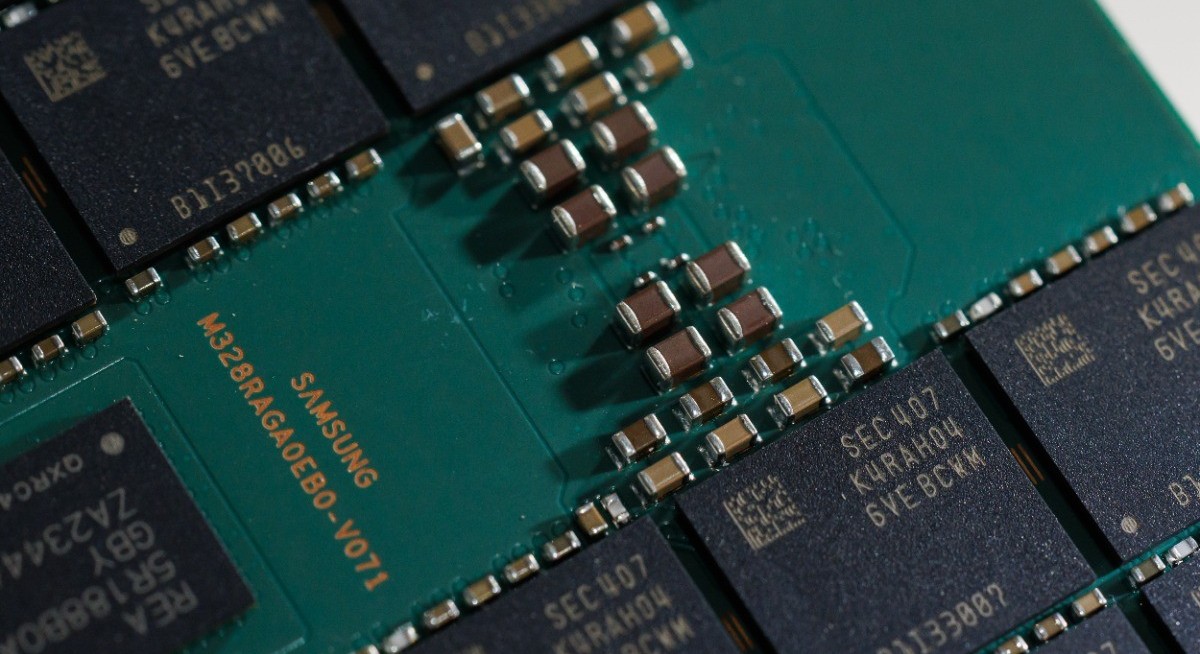


(March 19): Samsung Electronics Co plans to spend more than 110 trillion won (US$73.3 billion or $94.1 billion) on chip capacity expansion and research this year, devoting a record amount of capital towards an effort to seize the lead in artificial intelligence (AI) semiconductors.
South Korea’s largest company is hiking investment 22% in 2026 to try and retake the lead in AI chips from SK Hynix Inc, which has become the dominant provider of high-bandwidth memory to Nvidia Corp. The total outlay surpasses the roughly US$50 billion that Taiwan Semiconductor Manufacturing Co (TSMC) is setting aside for capex this year.
The decision reflects a strategic shift towards AI-driven demand. At the company’s annual general meeting on Wednesday, co-chief executive officer Jun Young-hyun described how the rise of agentic AI is fuelling an explosive surge in orders — not just for high-bandwidth memory, but also for server-grade storage. Consequently, the company will focus heavily on next-generation AI chips and advanced foundry processes.
The planned investment represents more than half of Samsung’s projected operating profit for the year. Analysts expect the company’s operating profit to more than quadruple to a record 202.6 trillion won this year, fuelled by its early lead in the cutting-edge HBM4 market.
Samsung reclaimed its technical lead early this year by becoming the first company to commercially ship HBM4 to customers, overcoming years of struggles and qualification delays that allowed rival SK Hynix to dominate one of the most lucrative fields in the global semiconductor market.
Its fortunes rose further at Nvidia’s GTC event earlier this month with the debut of its next-generation HBM4E chip. The Suwon-based company also won a ringing endorsement from Nvidia boss Jensen Huang, who revealed that Samsung’s advanced four-nanometre technology will be used to manufacture Groq 3 processors. A deepening partnership with Nvidia together with a new deal to supply HBM4 chips to Advanced Micro Devices Inc is cementing Samsung’s role as a pivotal player in the AI hardware ecosystem.
See also: Alibaba’s 67% profit plunge shows urgent need to monetise AI

The efforts by Samsung to expand capacity, meawhile, may go some way towards resolving a global deficit of traditional memory that’s hindering production across many industries.
Samsung, SK Hynix and Micron Technology Inc are enjoying an unprecedented surge in demand for the high-end memory essential to Nvidia accelerators. But the shift in production is in turn fomenting a historic shortage of conventional memory chips that go into most modern devices from cars to smartphones.
See also: Tencent’s shares dive after agentic AI vision fails to impress
That deficit is beginning to hammer profits, derail corporate plans and inflate price tags on everything from laptops and smartphones to cars and data centres — and many expect the crunch to worsen before it improves. SK Hynix is preparing to outline measures to help stabilise prices, SK Group chairman Chey Tae-won said this week, without elaborating.
Chey said he expects that global shortage to persist another four to five years because of endemic constraints in semiconductor production.
Uploaded by Tham Yek Lee




