


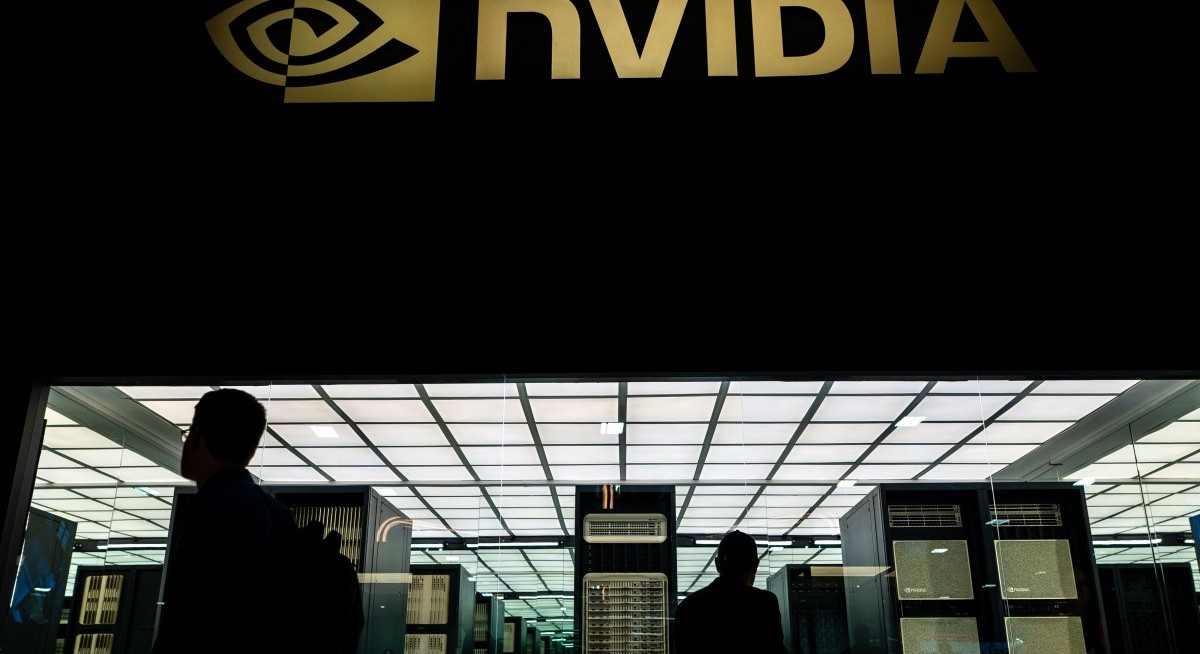


“We will protect National Security, create American Jobs, and keep America’s lead in AI,” Trump said in his post. “NVIDIA’s US Customers are already moving forward with their incredible, highly advanced Blackwell chips, and soon, Rubin, neither of which are part of this deal,” referring to more advanced lines of Nvidia chips.
Permission for H200 exports is seen as a compromise from Nvidia’s earlier push to sell its more advanced Blackwell design chips to Chinese customers, a person familiar with the matter said prior to the announcement.
Spokespeople for the Commerce Department and Nvidia had no immediate comment on Trump’s post.
An earlier arrangement touted by Trump, under which Nvidia and AMD would pay a percentage of their China revenue on AI chips sold there, hasn’t resulted in any payments because no regulations were put in place that would have made that legal. Beijing’s opposition to those exports and the consequent lack of demand from Chinese customers, made that issue irrelevant.
See also: Nvidia-led boom set to turn chips into trillion-dollar industry
Allowing H200 sales to China represents a victory for Nvidia in its push to get Trump and Congress to relax export controls that have kept the company from selling its AI chips in the world’s second-largest economy. Huang has forged a close relationship with Trump since the November 2024 election and has used those ties to make his case that restrictions only boost China’s domestic champions like Huawei Technologies Co.
After meeting with Trump on Wednesday, Huang expressed uncertainty about whether China would accept Nvidia’s H200 chips should the US relax restrictions on sales of the processors. “We don’t know. We have no clue,” Huang said, as he headed into a closed-door meeting with members of the Senate Banking Committee, which has jurisdiction over export controls. “We can’t degrade chips that we sell to China — they won’t accept that.”
This summer, Nvidia won approval to sell its less-powerful H20 chip, designed to fall just below existing export limits, but China promptly told potential domestic customers to shun the product and rely instead on processors made by Chinese companies, effectively blocking the US company from the country’s data centre market altogether.
See also: TikTok hit by EU ultimatum over addictive design dangers
Trump floated the possibility of selling a scaled-down version of its Blackwell architecture chip to the top US geopolitical rival, but that failed to materialise following his October meeting with Chinese President Xi Jinping. Members of Trump’s cabinet, including US Trade Representative Jamieson Greer and Treasury Secretary Scott Bessent, subsequently said they would not favour selling a version of the Blackwell to China at the present moment.
Last month, Huang said that China represented a US$50 billion market for his company, though for now Nvidia has excluded data centre revenue from the Asian nation from its financial forecasts. “We would love the opportunity to be able to reengage the Chinese market,” he said in a Bloomberg Television interview.
Nvidia scored another lobbying win last week in Congress, where lawmakers kept a provision out of must-pass defense legislation that would have limited the company’s ability to sell its advanced AI chips to China and other adversary nations. The so-called GAIN AI Act would have required chipmakers, including Nvidia and AMD, to give American customers first dibs on their powerful AI chips before selling in China and other arms-embargoed countries.
Any easing of export restrictions would mark a significant shift from policies imposed starting in 2022 to keep Beijing and its military from accessing the most powerful US technologies. Such a move would provoke sharp opposition from national-security hawks in Washington who have favored export controls as a way to keep adversaries like China from gaining ground in the AI race.
The H200, which began shipping to customers last year, is designed to both train and run AI models. The prospect of selling a higher-caliber processor to China bolstered arguments by lawmakers from both parties who have pressed unsuccessfully for the GAIN AI Act’s adoption. Senator Elizabeth Warren, the top Democrat on the banking panel, has warned that allowing sales of the H200 to China would “turbocharge China’s military and undercut American technological leadership.”
Uploaded by Isabelle Francis




