


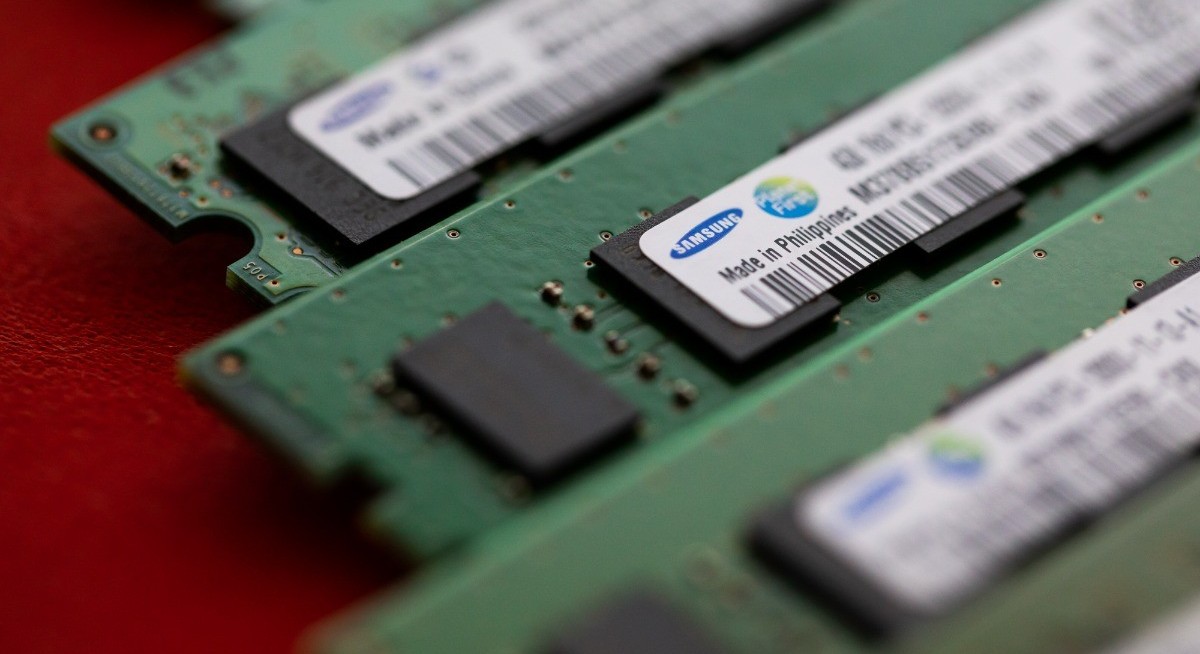


(Jan 29): The world’s largest tech firms show no signs of easing up on artificial intelligence (AI) spending, a record wave that’s propelling hardware providers like Samsung Electronics Co and SK Hynix Inc. That’s even as doubts persist about the staying power of AI demand to justify all that capital.
Meta Platforms Inc alone revealed ambitions to spend as much as US$135 billion this year — one of the biggest planned outlays of the business sphere. Its suppliers have responded in kind: On Thursday, SK Hynix said it plans a “considerable increase” in capex, and Samsung said it’s ratcheting up spending on its memory production capacity.
That’s as investors continue to reward ambition — so long as companies can show growth. Microsoft Corp shares slid 6.1% after revealing a slowdown in cloud services growth, while Meta climbed 6.6%.
A procession of industry linchpins reported results this week that underscored how voracious the appetite for AI hardware has grown — and how that’s likely to extend well into 2026.
Meta, Microsoft and fellow hyperscalers such as Amazon.com Inc and Alphabet Inc, are driving a wave of global spending on chips, servers and computers that’s firing up hardware suppliers around the world, particularly in Asia.
Samsung and SK Hynix — two makers of the memory chips that go into Nvidia Corp’s essential AI accelerators as well as data center servers — reported profits that grew several-fold. ASML Holding NV, the only provider of the cutting-edge lithography machines needed for advanced semiconductors — also smashed estimates.
See also: Nvidia-led boom set to turn chips into trillion-dollar industry
The “real headline is the relentless ramp” in capital expenditures, said Matt Britzman, an analyst at Hargreaves Lansdown. “It wouldn’t be surprising to see the share reaction cool as investors absorb those aggressive investment plans,” he said, referring to Meta.
At the same time, that enormous demand is worsening a global chip demand-supply imbalance that threatens to disrupt industries from smartphones and electronics to car-making.
While the appetite for Nvidia and Advanced Micro Devices Inc accelerators needed to develop and operate AI has long outstripped supply, investors are growing increasingly concerned about a similar deficit in more basic memory.
See also: TikTok hit by EU ultimatum over addictive design dangers
The availability of semiconductors will be a big bottleneck to growth for companies including Tesla Inc, and may necessitate building a Tesla TeraFab — a factory that can make logic and memory chips and provide packaging, Elon Musk said in a recent podcast with Peter Diamandis, founder of the X Prize Foundation.
“We’re going to hit a chip wall if we don’t do the fab,” Musk said. “We’ve got two choices: hit the chip wall or make a fab.”
Memory manufacturers are reallocating production lines toward lucrative HBM to satisfy the needs of AI data centres. Because HBM requires about three times the wafer capacity of standard DRAM for the same amount of memory, this shift has reduced supply for the consumer electronics industry. That’s threatening double-digit price hikes for PC makers and smaller electronics companies.
Concerns about end-demand for AI persist, however. Microsoft’s capex grew a larger-than-anticipated 66% in the quarter, but its Azure cloud-computing unit posted a 38% revenue gain — one percentage point slower than the prior three months.
On the other hand, Meta chief Mark Zuckerberg talked about “a major AI acceleration” that’s been brewing within the tech industry for over a year. “I expect our first models will be good, but more importantly, we’ll show the rapid trajectory that we’re on,” he said.
Samsung’s shares were down around 0.4% during trading in Seoul on Thursday, even though it said it plans to start shipments of its next-generation high-bandwidth memory, HBM4, in February — a key step in its bid to catch up with SK Hynix in the lucrative segment. SK Hynix’s stock rose around 2%.

To stay ahead of Singapore and the region’s corporate and economic trends, click here for Latest Section
Samsung’s chip unit reported a five-fold gain in profit, well above the average of analyst estimates. It also said it would buy back 3.57 trillion won ($3.2 billion) of its shares, and announced a special dividend payout that raises its fourth-quarter payout to 3.75 trillion won.
In Asia, attention is on the race for leadership in next-generation HBM4, which is set to be integrated with Nvidia’s upcoming flagship Rubin processors. Samsung is close to obtaining certification from Nvidia for the latest version of its AI memory chip.
The AI building rush is also helping to bolster Samsung’s foundry business, which competes with industry leader Taiwan Semiconductor Manufacturing Co. Samsung’s contract chipmaking arm expects two-nanometre orders to rise about 130% in 2026, with the company in active discussions with customers in the US and China, executives said.
Uploaded by Chng Shear Lane




