


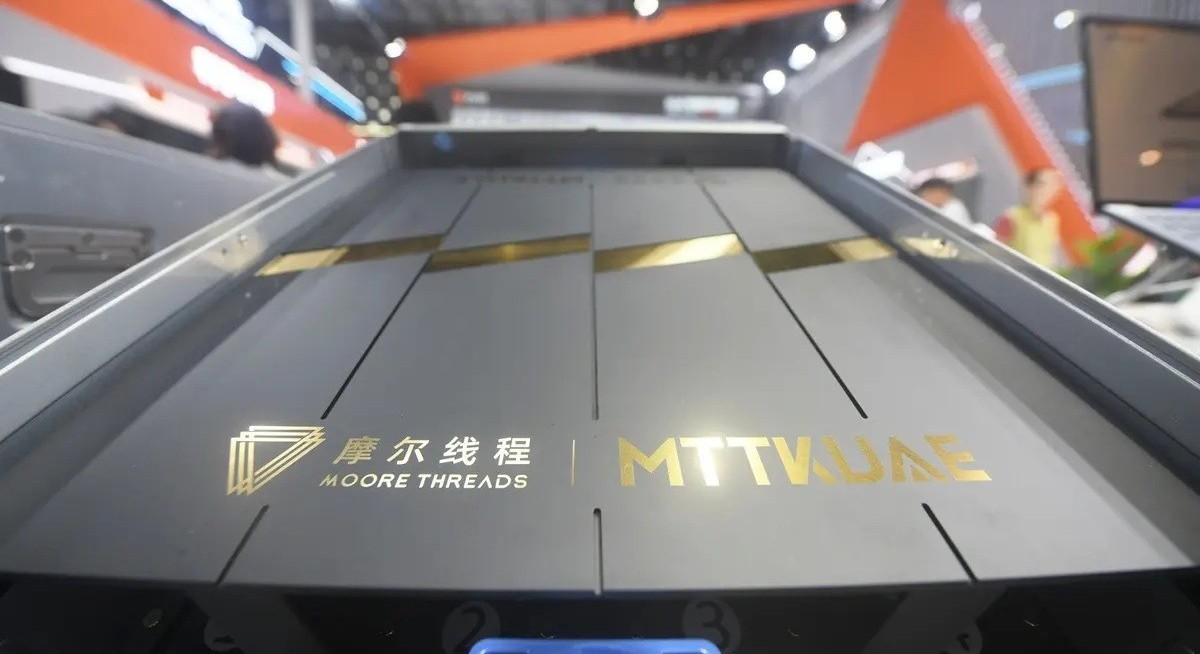


Chinese chipmakers are in the spotlight as Chinese authorities push forward with efforts to develop a world-class semiconductor sector. Investors are betting that national champions will emerge to challenge Nvidia, whose most advanced chips are blocked by the US from being sold to China. Moore Threads’ architecture, named Huagang, will elevate computational density by 50% and improve energy efficiency by 10 times, according to Zhang.
Zhang founded his own company in 2020 after spending 14 years at Nvidia. Chips based on the new architecture will be named Huashan and be positioned to compete with Nvidia’s Hopper and Blackwell products, he added.
Moore Threads’ announcement comes the same month it quintupled on its debut in Shanghai. Days later, domestic rival MetaX Integrated Circuits Co also rose several-fold on its first day.

See also: Nvidia-led boom set to turn chips into trillion-dollar industry
The new technology, slated for mass production from 2026, will enable clusters connecting more than 100,000 chips for AI training at data centres, according to Zhang.
Moore Threads started out earning revenue from gaming and visual rendering chips before pivoting to the accelerators vital to developing and running AI software.
The chipmaker also announced an update to its proprietary computing platform Musa at the event, positioning it as an equivalent to Nvidia’s Cuda. Moore Threads, which was blacklisted by the US in 2023, unveiled servers capable of linking tens of thousands of AI chips.
See also: TikTok hit by EU ultimatum over addictive design dangers
Moore Threads also introduced a new Lushan series of graphics processing units (GPUs), designed for advanced graphics rendering. The company also launched the Changjiang SoC chip, which integrates key components including central processing units and GPUs.
Uploaded by Tham Yek Lee




