


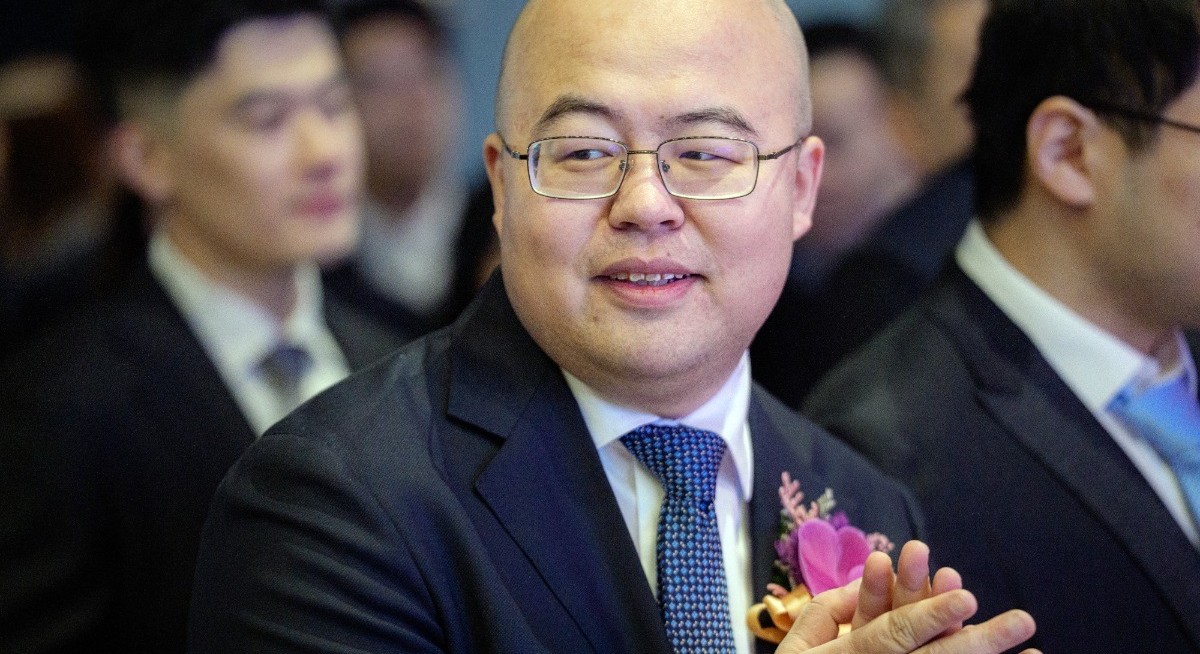


(Jan 9): Chinese start-up MiniMax Group Ltd spent its first three years largely on the sidelines of the generative artificial intelligence (GenAI) boom. As rivals chased local ChatGPT clones, the Shanghai-based team tackled a harder problem: building a single model capable of processing text, speech and video.
Founder Yan Junjie sums up the period in one word: “Painful.”
“It took four years to reach this point — the first three were defined by pure agony,” Yan said in an interview with Bloomberg in November. But the strategy to pursue multi-modal capabilities has paid off. When his foundation model M2 finally hit the market in October 2025, it quickly gained traction with developers around the world. The company has served at least 212 million users across consumer products, from AI avatars to its Hailuo video generator.
MiniMax’s debut on the Hong Kong Stock Exchange on Friday serves as a gauge of investor appetite for a sector that has consumed billions in capital and is only now starting to show signs of commercial viability.
The IPO also crystallises a surge in wealth for Yan. Priced at the top end of the offer range, the listing valued his four-year-old firm at US$6.5 billion ($8.4 billion). Shares were up 45% as of 9.40am Hong Kong time, giving the 36-year-old chairman and chief executive officer a fortune of about US$2.4 billion, according to the Bloomberg Billionaires Index.
A MiniMax spokesperson declined to comment on Yan’s wealth.
See also: Nvidia-led boom set to turn chips into trillion-dollar industry
The firm’s ascent was backed by billionaires drawn from China’s tech elite and Hong Kong’s financial establishment. Pacific Century Group, chaired by Richard Li, the son of Hong Kong tycoon Li Ka-shing, emerged as a key investor. Another pre-IPO investor is MiHoYo, the gaming studio behind Genshin Impact that was co-founded by billionaire Cai Haoyu.
They are joined by China tech giants Alibaba Group Holding Ltd and Tencent Holdings Ltd as well as Abu Dhabi’s sovereign wealth fund.
Gaming obsession
See also: TikTok hit by EU ultimatum over addictive design dangers
Raised in a small county in the Henan province, Yan taught himself advanced calculus in high school after finding the standard curriculum too slow. Yet he did not set out to build an empire. As a doctoral student at the Chinese Academy of Sciences, he told friends his ambition was simply to become a Java developer at IBM Corp, targeting an annual salary of about 280,000 yuan (US$40,000 or $51,564), according to local media.
He worked at computer vision firm SenseTime Group Inc for six years, serving as the vice-president and vice-head of its research institute. But his trajectory shifted due to a gaming obsession. A devoted enthusiast of the battle-arena game Dota 2, Yan began tracking OpenAI in 2019, captivated when the San Francisco start-up’s bots defeated the world’s elite human players.
That gamer DNA is woven into the fabric of MiniMax. Yan goes by the alias “IO”, a pun on technical input-output and a nod to the Dota hero — a wisp known for healing and support. It also helped him bond with MiHoYo’s Cai Haoyu, whose team of young engineers are obsessed with using AI to revolutionise video gaming.
MiniMax’s Hailuo (also known globally as Hailuo AI) has emerged as the company’s technical showpiece, resonating strongly with creators in both China and the rest of the world. Hailuo offers users the ability to turn text prompts into high-definition, six-second, cinematic-quality clips.
Hailuo is often reviewed by creators as one of the few Chinese models capable of competing with overseas peers like Runway and OpenAI’s Sora. The video tool is MiniMax’s second-largest revenue driver behind the Talkie chat app.
Despite the product’s success, MiniMax’s path has been uneven. Yan was forced to reassess in 2024 after the start-up missed internal targets for monetisation and user growth, he said in the interview.
The company also faces a complex operating environment. While revenue grew 175% year-on-year, profitability remains a key focus for investors. The IPO prospectus shows the company posted an adjusted loss of about US$186 million in the first nine months of 2025, a figure attributed to the massive computing costs required to train its “mixture of experts” models.
“Fundamentally, it is hard to justify the valuation of these new AI stocks, since the revenue now is small so it needs to grow many times to justify the high valuation,” said Edison Lee, the head of telecommunications research at Jefferies HK Ltd. “The biggest risk is whether the US AI trade can hold up. If it does not in 2026, there will be big deflationary pressure on the valuation of Chinese AI stocks as well.”
Uploaded by Tham Yek Lee




