


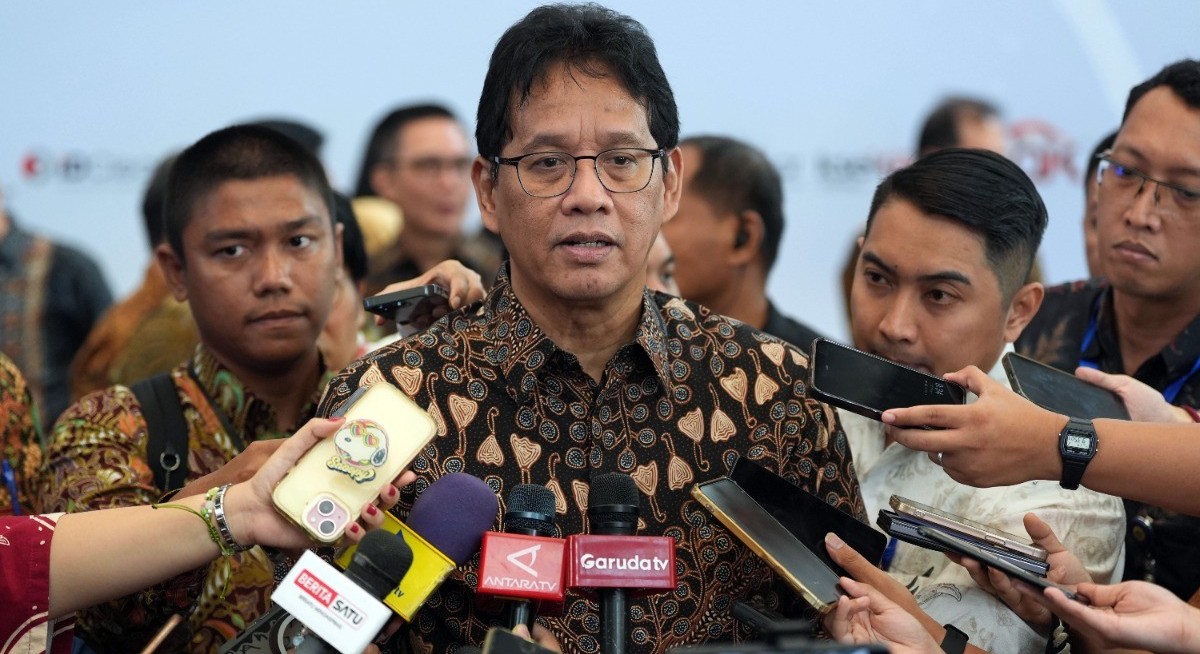


(Feb 3): Indonesian Finance Minister Purbaya Yudhi Sadewa defended his government’s economic track record in the wake of a recent slump in the rupiah and local stocks, while acknowledging a warning about transparency from MSCI Inc has merits.
In a wide-ranging interview with Bloomberg TV’s Haslinda Amin at a business forum in Jakarta, Purbaya said the government will stick with a rule limiting fiscal deficits to a maximum 3% of gross domestic product. He also downplayed concerns about the recent appointment of the president’s nephew Thomas Djiwandono to Bank Indonesia, arguing the appointee is qualified and the central bank remains independent.
“Am I going to intervene with central bank policy? Or am I going to use Tommy as a puppet to control the central bank from a distance?” Purbaya said at the Indonesia Economic Summit in Jakarta. “That will be easily seen by any economist or any commentator or any policymaker. I am not going to do that.”
Purbaya reiterated that he only wants to ensure that fiscal and monetary policymakers are working together to promote economic growth.
Longstanding concerns about the management of Southeast Asia’s largest economy boiled over last week, with stocks slumping after MSCI criticised corporate transparency. MSCI said the emerging market risked being downgraded to frontier status if reforms are not delivered by May, a move which would force many fund managers to ditch Indonesian stocks.
The warning triggered a sharp sell-off that briefly erased tens of billions of dollars in market value, forced trading halts and prompted heavy foreign selling. Purbaya described last week’s market decline as jitters, not a meltdown, quipping that once investors realise he is in charge, sentiment will pick up.
See also: MSCI pressure mounts on billionaire-held Indonesia shares
The MSCI warning is a good thing, according to the finance chief, as it highlighted a long-standing problem that hadn’t been addressed by previous administrations. Once the government corrects the lack of transparency, it will “remove the disease from the market”, he said. “People will take a look at the fundamentals of the economy again, which are strong.”
The rupiah, which last month hit an all-time low, strengthened 0.2% on Tuesday as the dollar weakened, while the benchmark 10-year yield was little changed. Stocks gained 2.5% as sentiment improved in Asia following a rebound in metal prices.
The Bank Indonesia appointment had compounded concerns about the independence of the central bank, which had already publicly aligned itself with President Prabowo Subianto’s growth goals and agreed to shoulder some of the costs of his priority programmes. Lawmakers have also been considering revisions to the central bank’s charter, including a broader mandate and a lower bar for removing senior officials.
See also: Global investors shun Thailand as election overhang hits assets
Purbaya, who took on the post back in September, said he and the rest of the Cabinet are boosting growth, while addressing the failures of previous administrations. At the same time, Indonesia will stick with the 3% deficit cap, he said.
“I don’t want to surpass the 3% level because the media will crucify me and tell everybody that I don’t know my job,” Purbaya said. “I don’t want to play around with that for the time being.”
Economists have warned that the deficit could breach the legal cap this year without stronger revenue collection or spending restraint. That would force the government to choose between pushing the shortfall close to the limit or revising the fiscal rule, further undermining investor confidence.
Purbaya also alluded to the widespread cost-of-living protests in August that led to the ouster of his predecessor, Sri Mulyani Indrawati, who enjoyed wide respect due to her fiscal probity. Prior to his appointment, economic growth had been slowing down, leading Prabowo to ask him to become the finance minister, he said.
The economy is now recovering and will become “stronger and stronger”, he said. The economy will expand 6% this year and 6.5% in 2027, he said.
“I just want to say to investors present here today that Indonesia is serious in improving economic conditions by activating every engine of growth available — fiscal, monetary, the private sector — and improving the investment climate,” he said. “One year from now, Indonesia will become a much better place to invest.”
Uploaded by Tham Yek Lee




