


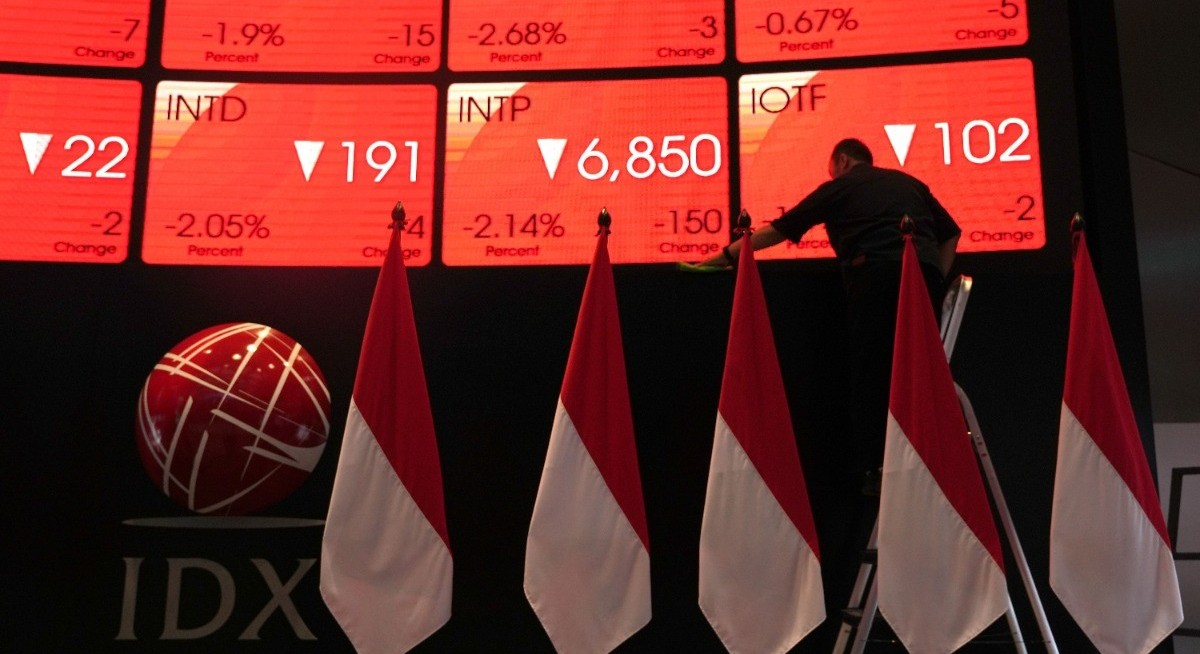


The next circuit breaker will be triggered at a 15% decline, prompting another 30-minute suspension, according to exchange rules. If Thursday’s losses are sustained, benchmark stocks may enter a technical bear market.
Goldman Sachs Group Inc and UBS AG both cut their recommendations, with the former adding that more than US$13 billion in outflows could be triggered in an extreme scenario. The concerns centre on the low free float of Indonesian equities, with the market’s biggest companies thinly traded and controlled by a handful of wealthy individuals — a structure that investors say distorts the index and risks manipulation.
“We think overhang on the overall market will likely persist until we get clarity on regulations and MSCI’s reassessment,” UBS analysts including Sunil Tirumalai wrote in a note.

See also: Indonesia stocks slide after MSCI delays high-stakes review
The angst also hit the local currency, with the rupiah down as much as 0.5% against the dollar, its biggest fall since October and trailing Asian peers.
Indonesian regulators have pledged to meet the call for greater transparency, and have until May when MSCI reassesses the country’s market accessibility status. If MSCI deems there’s not enough progress, it could reduce Indonesia’s weighting in its indexes and even downgrade the nation from emerging market.
The recent episode comes after months of consultation following MSCI’s proposal last year to tighten the definition of free float. MSCI had said it was considering an alternative data source, the Indonesia Central Securities Depository, also known as KSEI, to assess actual tradable shares. In its statement on Wednesday, MSCI said that many investors raised “significant concerns” about relying on this data set.
See also: BlackRock to launch quant fund trading Singapore stocks — Bloomberg
“Based on what’s been disclosed so far, the discussion around KSEI has mainly been about concerns over aspects of its data methodology, but there hasn’t been enough detail to draw firm conclusions yet,” said Bloomberg Intelligence Strategist Sufianti. “So for now, it’s very much a wait-and-see in terms of what actions might follow.”
Even before this week’s rout, foreign investors had already turned cautious, selling a net US$192 million worth of stocks in the week ended Jan 23, which was the first outflow in 16 weeks. Overseas investors offloaded a net 6.2 trillion rupiah (US$371 million or $470 million) of local shares Wednesday, the most since April 16, according to exchange data.
Uploaded by Chng Shear Lane




