


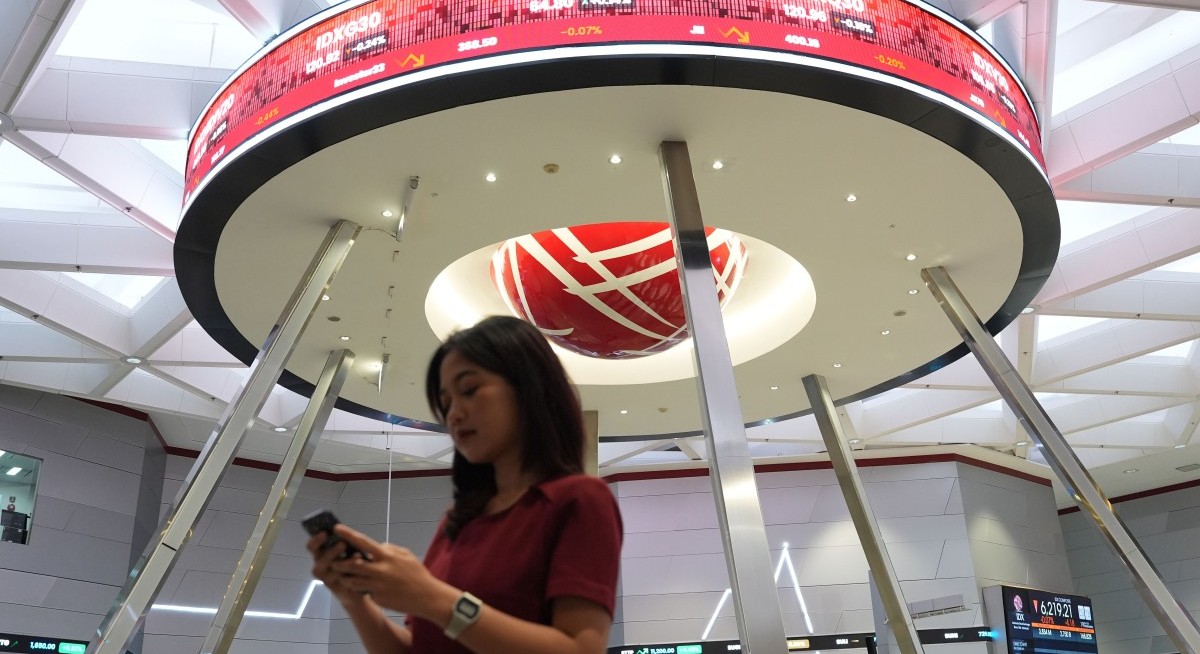


If MSCI finds that companies in Indonesia — which already have Asia’s smallest average free float — have even less stock available for trading than reported, passive investors would be forced to sell existing positions. The decision would be among the most consequential for the nation’s US$971 billion equity market in years, with implications for fund flows and investor perception.
“This exercise serves as a key test of the country’s capital market reform agenda, underscoring the corporate governance improvements required to unlock greater international participation and long-term investment flows,” said Gary Tan, a portfolio manager at Allspring Global Investments.
Outflows may hit the nation’s and region’s biggest companies most, including PT Petrindo Jaya Kreasi, which is 84% owned by billionaire Prajogo Pangestu. There’s also PT Barito Pacific — in which Pangestu owns 71%.
In the big business of index compilations, free float is a relatively obscure but crucial metric. Benchmark providers like MSCI and FTSE Russell rely on it to measure how easily investors can buy a stock — the more shares available for trading, the higher the potential weighting in an index. When free float is low, stocks can become what Aletheia Capital Analyst Nirgunan Tiruchelvam calls “museum pieces: you can look but not buy enough.”
See also: Indonesia rupiah rises most in six months, stocks gain in reopen
Low free float has already become a flash point in Indonesia, where many of the benchmark Jakarta Composite Index’s biggest members are thinly traded stocks controlled by a handful of wealthy individuals. Investors argue these volatile stocks distort the index, which masks true market performance and heightens the risk of manipulation.
More than 200 stocks on the benchmark have a free float below 15%. Across major Asia-Pacific indexes, Indonesia’s benchmark has the lowest average free float, according to Bloomberg data. PT Samuel Sekuritas Indonesia is among several brokerages forecasting about US$2 billion in foreign passive fund outflows if the rule is adopted.
The dislocation was evident last year, when the JCI outperformed the MSCI Indonesia Index by the widest margin ever. With so many JCI constituents thinly traded, fund managers say the benchmark is effectively untrackable, pushing them instead toward the more stringent MSCI Indonesia Index. The gap proved costly: the JCI surged more than 22% to a record, while the MSCI Indonesia fell 3%.
See also: Thai stocks extend Middle East-spurred losses as trading resumes
A reduction in free float numbers and a smaller weighting for Indonesia’s companies will likely just accelerate the divergence instead of narrow it, investors say. Still, MSCI has said that the potential changes offer “additional transparency” that could help address “information gaps”, according to an e-mailed statement.
In theory, free float math is simple: it’s the total number of shares minus those held by strategic investors like governments or founders. In practice, however, Indonesia’s opaque and web-like business relationships mean it’s difficult to identify strategic holders, a concern MSCI raised in its September consultation paper.
The Indonesia Stock Exchange currently requires companies to disclose shareholders owning more than 5% of a company. MSCI said a new data provider can identify shareholder types for electronically traded stocks, including those holding under 5%, giving a clearer picture of true free float.
One MSCI proposal would base free float on the lower figure from either public filings or the new dataset. By its own projections, that would shrink the free‑float market cap of 15 index names — resulting in outflows.
Regulators have sought to ease concerns with plans to raise minimum float levels to 10%-15% from the current 7.5% level. The longer-term goal is 25%, though no timeline has been set. That compares to Hong Kong and India’s 25% rule and Thailand’s 15%.
It’s an uphill battle. A tax rule that exempts individuals and companies from income tax when they reinvest dividends for at least three years encourages more corporate shareholding — precisely the type MSCI wants to exclude from free‑float calculations because it masks how much stock is truly in public hands.
Fear of missing out may also factor into the calculus. “Given Indonesian stocks’ long term upside potential, they’re too attractive for the index provider to keep reducing the weighting,” said Dimas Yusuf, chief investment officer at PT Sucorinvest Asset Management.
To stay ahead of Singapore and the region’s corporate and economic trends, click here for Latest Section
The financial regulator is also preparing stricter rules for small-company listings, though the bourse cautions the market will still need much more liquidity to absorb new shares when companies boost the amount available for trading.
That liquidity may ultimately not materialise, said Christopher Andre Benas, head of research at PT BCA Sekuritas, noting that institutional investors will remain selective and retail investors lack the cash to absorb the rest.
Uploaded by Isabelle Francis




