


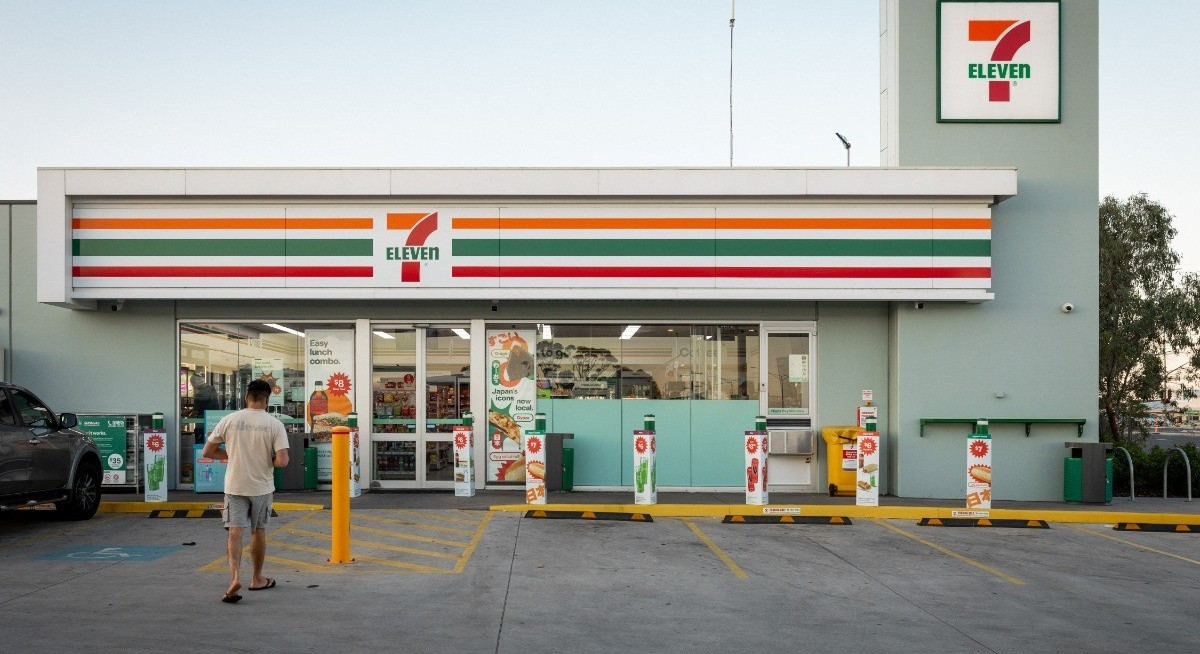


Australia is a live test of whether the 7-Eleven Japan model — built around fresh, prepared food and daily services — can succeed across the world. If it can compete with supermarkets and fast-food chains while making up for lost tobacco sales and the impending shift away from fuel, that clears a path for expansion in Europe and Latin America. If it fails, it signals the Japanese convenience-store playbook may be difficult to scale globally.
“We’re looking at Australia to test our capability, as well as come up with the winning formula,” Shin Abe, chairman of both 7-Eleven International and the Australian business, said at a briefing in Melbourne this week. “That’s our vision.”
Although Australia accounts for only around 3.5% of Seven & i’s group sales, the country of almost 28 million people carries strategic weight beyond the group’s core markets of Japan and the US. The retailer aims to expand its footprint by 10 countries to 30 this decade and is shifting from a franchise model toward direct ownership. In Australia, that’s giving Seven & i a tighter grip on operations as it seeks to change course.
Australia mirrors some of the challenges Seven & i faces in the US, where it’s also working to enhance in-store experience and prepare the business for a potential listing this year. In both markets, vast distances make building nationwide supply chains complex.
See also: From watchdog to steward: Why markets need a new compact
Seven & i brought the American convenience store concept to Japan in the 1970s and turned it into a nearly ubiquitous retail operation in the country and a global network of more than 85,000 stores. Now it’s undergoing a vast overhaul. It has been selling Japan-based supermarkets and specialty stores to focus on convenience retailing, installing new leadership to lift valuation and exploring a partial sale of its US unit.
Those efforts accelerated after Alimentation Couche-Tard Inc made a ¥6.77 trillion (US$43.2 billion or $55 billion) takeover proposal in 2024. Even after the offer was withdrawn, Seven & i has pressed ahead with restructuring. Shares of Seven & i are down about 3.6% in the past 12 months.
Fiona Hayes, 7-Eleven’s chief executive officer in Australia, says early results from the switch toward food and drinks point to progress. Tobacco sales lost through tighter regulation and cigarette tax hikes have already been replaced, Hayes said.
See also: Australia’s biggest bank to cut 120 more jobs amid AI push
The total range of products has roughly doubled to almost 3,000 since Seven & i took direct control, and revenue in Australia from cold and hot food, snacks, packaged drinks and groceries each grew 14% to 15% in 2025, according to Hayes. “This year, we’ve continued to see those growth rates,” she said. “We’ve well and truly offset.”
Still, the experiment has a way to run. More than 150 of the 763 stores in Australia have been substantially refurbished or overhauled with specialist equipment such as automated ovens and fryers, which can churn out hot pies, chicken and chips in just a few minutes.
7-Eleven is aiming for 1,000 outlets in Australia by 2030, which translates into a new site opening almost every week. The business also faces increasingly thrifty customers. Interest rates in Australia are rising again, reigniting cost-of-living concerns and weighing on consumer spending.
While there’s strong demand for staples such as 7-Eleven-branded A$4.50 sausage rolls and chicken schnitzel sandwiches, some items have been hit-and-miss. Hayes said buying a cheeseburger from 7-Eleven has so far been “a bit of a stretch” for Australians. It has also been tough to faithfully replicate the texture of onigiri in Australia, where regulations require cooked rice to be stored at lower temperatures than in Japan.
Hayes and Abe showcased a newly opened store at Anzac rail station in Melbourne. Shelves and cabinets heaved with dozens of different instant noodles, teriyaki chicken dinners and everyday groceries. But in the shop’s hot food section, fried dim sims withered on a wire rack, and no one was paying A$16 for a pepperoni pizza.
In Port Melbourne, a few kilometres from the city centre, a 7-Eleven store almost half a century old was spruced up and received a kitchen overhaul about a year ago. Pies, chips and fried chicken are selling well, according to staff. Standing on the shop floor, Chairman Abe said the store holds lessons for ageing outlets in the US that are also reliant on fuel sales.
Some trends are in Seven & i’s favour. The Australian grocery market is expected to grow 4% every year through 2034, according to IMARC Group forecasts. Smaller stores in urban areas are becoming more popular because they are easier to access, while demand for ready-to-eat meals and pre-packaged foods is rising as customers look for quick meal options, IMARC said.
To stay ahead of Singapore and the region’s corporate and economic trends, click here for Latest Section
Seven & i aims to roughly double Australia’s earnings before interest, taxes and depreciation and amortization to A$400 million by 2030.
In Japan, 7-Eleven convenience stores are everywhere, with more than 21,000 locations and are more than a quick stop. Bright, clean and efficient, they draw customers for freshly prepared food alongside snacks, drinks and daily essentials. Many also serve as service hubs, offering ATMs, bill payment and concert tickets.
Whether the model can travel overseas is open to debate. Seven & i needs to reposition 7-Eleven Australia as a credible food-led convenience store rather than a fuel stop, said Lea El-Hage, an analyst at Bloomberg Intelligence.
Australia differs from Japan in many ways, including lower population density, greater price sensitivity, and a car-centric lifestyle, according to El-Hage. There’s also stiff competition from supermarket chains Woolworths Group Ltd and Coles Group Ltd, which are both investing in online and convenience-oriented formats, she said.
A successful turnaround would validate Seven & i’s shift toward direct ownership. If it falls short, it would raise questions about how easily the Japanese model can be replicated abroad, she said.
“Conceptually, the strategy makes sense,” she said. “But execution risk is high.”
Uploaded by Chng Shear Lane




