




This new ownership structure will be accretive to earnings per share (EPS), net asset value (NAV) and return on equity (ROE), and will lower net gearing. According to a press release, the pro forma FY2025 EPS rises by 3.4%, NAV rises by 1.3% and ROE gains 0.1 percentage point (ppt), while net gearing is reduced by 3.3 ppts.
“In relation to our commitment to FHT as a platform, we are not shifting away from hospitality; we are increasing our focus on delivering quality service. This is a capital-efficient structure to lighten our balance sheet. The AUM (assets under management) has not changed. We have plans to grow AUM with better capital efficiency, and hospitality is and will remain an integral part,” says Loo Choo Leong, group CFO, FPL.
‘Positive’ transaction
According to Loo, this transaction delivers positive EPS, ROE and NAV, and lowers net gearing; opens up the possibility of future value creation with the redevelopment of the Valley Point site and the benefit will accrue to all shareholders; improves capital efficiency; and is at 6.7% above independent valuation and 1.7% above the take-private valuation of FHT.
See also: Thai billionaire’s family buys US$800 mil assets from Frasers
TCCGI bears the brunt of higher valuations. The five stabilised properties TCCGI is acquiring (subject to shareholders’ vote at an EGM) are valued at $1.07 billion, which is higher than their latest valuation. This compares with the four properties earmarked for AEI, valued at $389.1 million, and the for-sale assets of $344.8 million.
The transaction requires approval at an EGM, where only independent shareholders of FPL can vote.
When asked whether there was a tender process for the portfolio, Kelvin Tan, head of real estate M&A at DBS, the financial adviser to FPL, says: “We were requested by the board as additional safeguards to do a discreet market check with several parties to assess whether there are similar interests in acquiring the portfolio. Of the parties that we approached, none of them expressed interest in the portfolio, given FPL’s pricing expectations and on condition FPL continues to manage the assets and earn management fees.”
See also: MSCI acquires climate risk financial modelling company First Street
It is notable that FHT’s portfolio is being transacted 1.7% above its full valuation when FPL acquired it in September 2025. In fact, market-watchers have noted that the geopolitical environment has deteriorated since FHT was privatised, with inflation prompting the Reserve Bank of Australia to raise interest rates.
“The parties that were mentioned by our financial advisors on why they didn’t take up the portfolio — it’s not because our assets are not good, or that us managing the portfolio is not good. It’s just that [the valuations] don’t meet their minimum hurdle rates from what they would want from acquisitions, as well as align with their strategy of how they manage their assets. It is by no means an indication of the attractiveness of our assets,” Loo explains.
Indeed, the parties approached would not have management control, as FPL continues to manage the assets. “From this perspective, that was something third parties just didn’t find that interesting based on their own hurdle rates and internal requirements. From this process, it really reinforces that this transaction with TCCGI represents the best available pricing outcome for FPL shareholders,” Tan says.
TCCGI sees value in these assets and it is the largest shareholder of FPL. So whatever benefits accrued to FPL from the assets earmarked for AEI, and those warehoused for sale, will also accrue to TCCGI. In addition, as a family office, TCCGI, unlike investors in the public market, represents patient capital and can hold stabilised assets for a longer period.
Slated for divestment
The properties warehoused for sale are Novotel Melbourne, along with two others in the UK and one in Dresden. “Novotel Melbourne is planned for future opportunistic divestment. We want to do it in a measured and calibrated manner; we do not want to be pressured because it could be a long haul,” notes Eu Chin Fen, CEO of Frasers Hospitality. She adds that she is looking at a timeline of around 24 months to divest the assets warehoused for divestment.
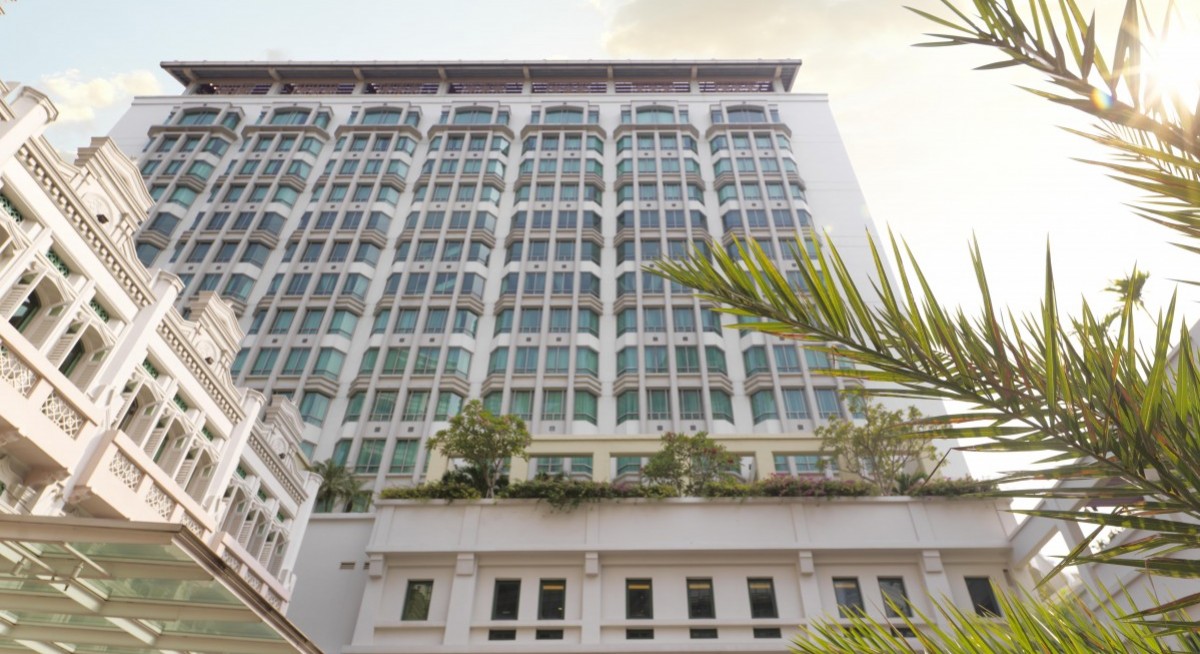
The most interesting part of the transaction is the full ownership of Valley Point following FPL’s acquisition of Frasers Suites Singapore from the privatisation of FHT. Full ownership of Frasers Suites Singapore, valued at $320 million, will enable FPL to to pursue the potential redevelopment of the entire Valley Point site, providing further opportunities for value creation over the longer term.
Following completion, FPL’s on-balance-sheet hospitality assets are expected to decrease from approximately $3.7 billion to $2.5 billion, while AUM remains at $4.2 billion. Frasers Property will continue to generate recurring income through its operating capabilities across the portfolio.




