


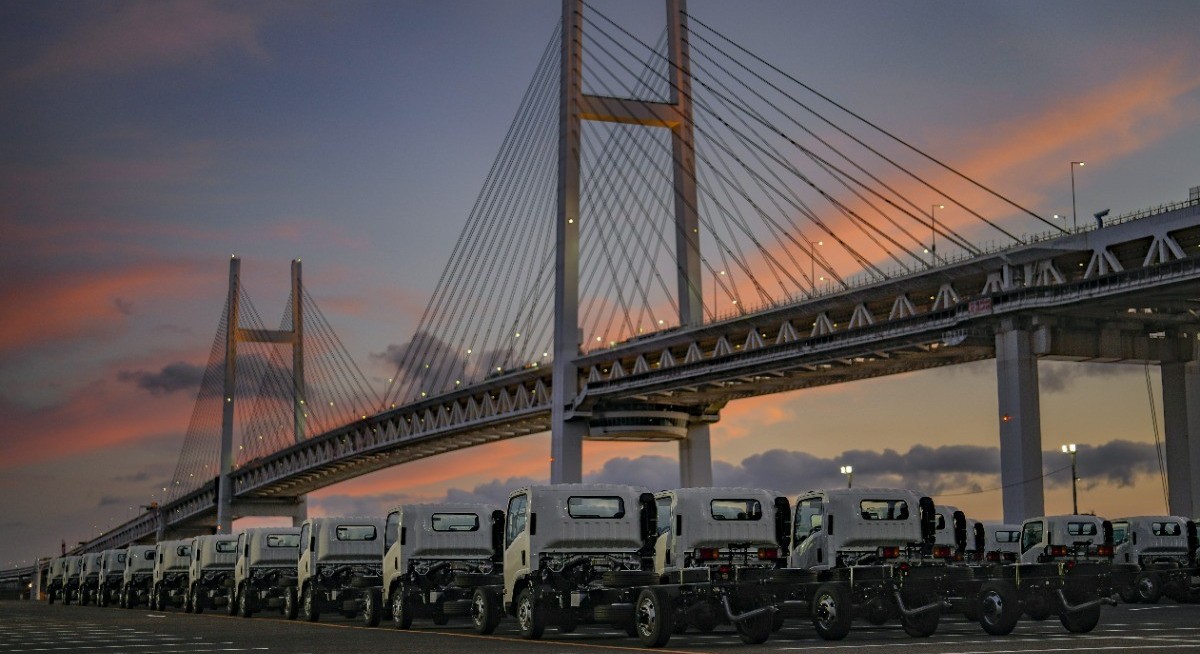


(March 18): Japan’s exports grew at a slower pace, as tariffs weighed on car shipments to the US fell and as demand in China slumped due to the Lunar New Year holidays.
The value of overall exports rose 4.2% in February from a year earlier, after a big jump in the previous month, the Finance Ministry reported Wednesday. The result beat the median analyst forecast of a 1.9% rise.
Imports rose 10.2%, a little below the consensus estimate, as the trade balance swung to a surplus of ¥57.3 billion ($460 million) on an unadjusted basis.
Exports to China declined 10.9% as the Lunar New Year holidays took place in February this year. Double-digit drops in semiconductor manufacturing equipment, plastics and scientific optical equipment drove that decline even as shipments of semiconductors and other electronic components continued to surge on AI-related demand.
“The decline in exports to China was due to the Lunar New Year,” said Shinichiro Kobayashi, chief economist at Mitsubishi UFJ Research and Consulting. “Still, overall exports grew because the global economy remained fundamentally sound despite some signs of slowing down in the US.”

See also: Shortage of naphtha threatens supply chain chaos in Japan
Exports to the EU advanced by 14%, with strong results for cars and machinery used in the construction and mining industries.
The figures come as the global economy braces for the impact of the war in Iran, which started at the end of February and has since boosted inflation risks owing to higher oil prices. Data released earlier this month confirmed that net exports didn’t make a positive contribution to the economy at the end of 2025 even as the weak yen supported exporters.
“Given the situation in the Middle East, the outlook is very concerning,” Kobayashi said. “Shipping routes are likely to be affected and companies are likely worried about whether they will be able to secure a steady supply of energy.”
See also: Japan’s stock market a safe haven in turbulent times
Japanese companies continue to cope with the fallout from US tariffs as the two nations implement last year’s trade deal that capped levies on US imports of Japanese goods at 15% in exchange for a pledge from Tokyo to boost investment in the US to help revitalise American manufacturing.
Exports to the US fell 8% in February, led by a 14.8% retreat in car shipments by value. On a unit basis, exports of cars fell at a slower pace, indicating that Japanese manufacturers continue to protect market share in the US with price cuts as they contend with tariffs.
Last month Tokyo announced the first tranche of investments as part of the US$550 billion ($701.98 billion) investment initiative that was a pillar of the trade deal, saying it would channel up to a combined US$36 billion into US oil, gas, and critical mineral projects.
Officials from both nations have continued discussions on investment ahead of Prime Minister Sanae Takaichi meeting with President Donald Trump in Washington this week. The second batch of projects may include next generation nuclear power projects, according to local media reports.
Japan’s currency averaged 155.65 per dollar in February, 0.7% weaker than in the same month last year, according to the ministry.
“With the weak yen, the cost of oil imports is certain to rise, which means the trade deficit is likely to widen,” Kobayashi said.
Uploaded by Chng Shear Lane




