


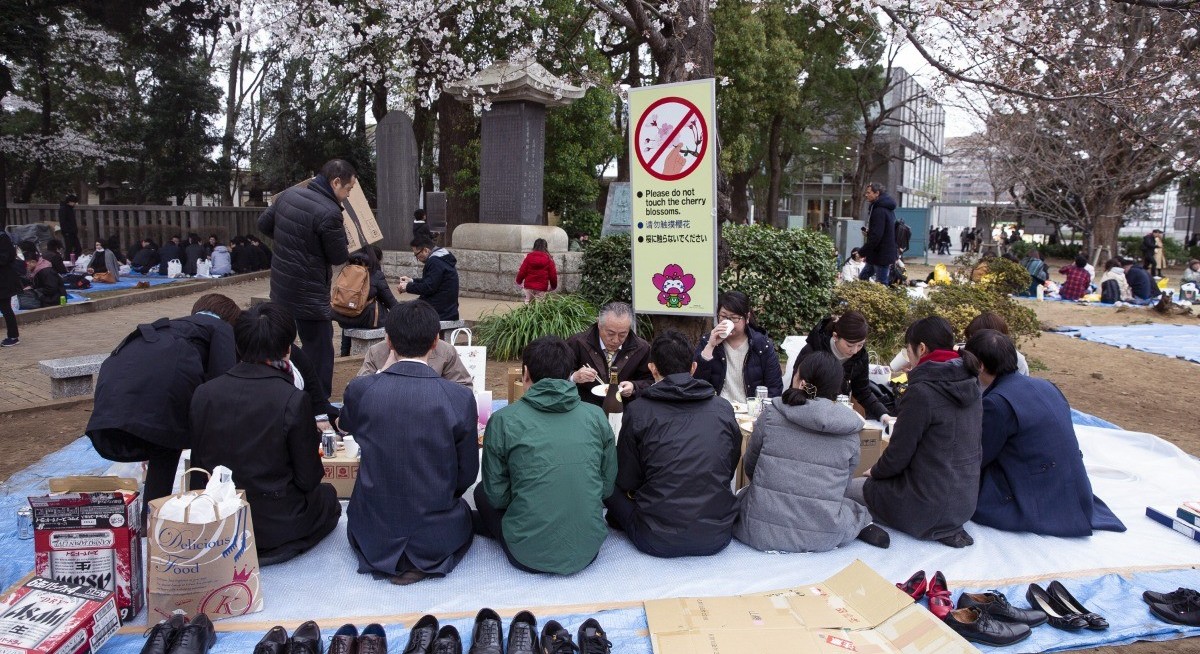


(March 25): Cherry trees are bursting into bloom across Japan, but the cost of foods often eaten at flower-viewing picnics — known as hanami — is higher than ever.
The price of typical food items is up 25% in the past six years and about 4% since last year, according to a report by Dai-ichi Life Research Institute. Meanwhile, broader inflation is prompting Japanese to cut back their spending on such events.
Steamed sweet buns saw the biggest increase among the 14 items tracked, climbing more than 46% since 2020. Prices of carbonated drinks have also jumped about 46%, while rice balls are up 45%, driven by higher costs for ingredients such as sugar, cooking oil and rice, as well as plastic containers.
The average budget for hanami in 2026 is around ¥6,383 (US$40 or $51.37), down about 14% from a year earlier, according to market researcher intage. The pullback suggests consumers are cutting back on travel and dining out, opting instead to celebrate closer to home, it said.
Japan’s spring wage negotiations have delivered pay increases above 5% for a third straight year, but food inflation has soared. As locals cut back, foreign tourists, attracted by the weak yen, are taking on a larger role in driving seasonal demand.
The impact of war in the Middle East has yet to fully feed through to the index, but further increases in crude oil prices are likely to push up the costs of sweets and potato chips, Hideo Kumano said in the Dai-ichi Life report. Carbonated drinks are also expected to become more expensive due to rising plastic costs, he said.
See also: Japan’s biggest bank plans to keep its ageing workers for longer
“Many people are skipping long-distance trips this year, while food-related costs are expected to continue rising amid tensions in the Middle East, making conditions even tougher next year,” Kumano said. The hanami market is also increasingly being driven by foreign visitors, he added.
Despite rising prices, the total economic impact of hanami season this year could reach a record ¥1.49 trillion this year, with foreign visitors accounting for more than 30%, according to Kansai University emeritus professor Katsuhiro Miyamoto.
Uploaded by Chng Shear Lane




