


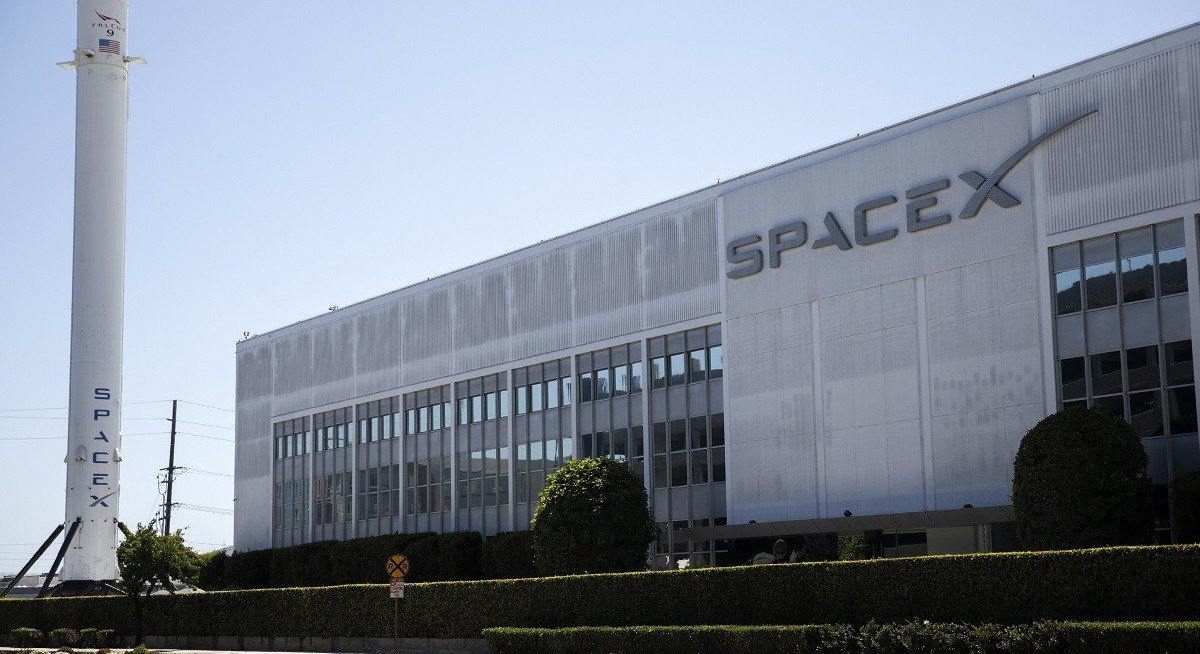


(June 12): SpaceX has made history with the biggest-ever IPO, sending it into the top ranks of the largest public companies and putting founder Elon Musk on the verge of becoming the world’s first trillionaire.
The company raised US$75 billion ($96.36 billion) in the IPO, pricing 555.6 million shares at US$135 each, according to a statement on its website on Thursday. SpaceX’s IPO is more than double the size of Saudi Aramco’s US$29.4 billion listing in 2019.
Space Exploration Technologies Corp, as it is officially known, has given the underwriting banks an over-allotment option to buy an additional 83.3 million shares at the IPO price, the statement shows, which would increase the size of the deal to about US$86 billion if fully exercised. The IPO drew demand for more than four times the available shares, Bloomberg News reported.
At the IPO price, SpaceX has a market value of US$1.77 trillion. Accounting for employee stock options and restricted share units, the pricing gives it a fully diluted valuation of about US$1.8 trillion. The company will debut on Nasdaq and Nasdaq Texas Friday under the symbol SPCX.
Musk’s fan base in the retail trading community is a crucial component of the deal. They have placed more than US$100 billion in orders for the stock, people familiar with the matter said on Thursday, far more than the 20% of shares that had been reserved for them.

See also: Chinese robot appliance maker Dreame Tech mulling IPO in Hong Kong — Bloomberg
Not everyone is so excited. Veteran short-seller James Chanos on Wednesday called it “a hopes-and-dreams IPO” driven by enthusiasm for Musk and artificial intelligence rather than the fundamentals of a company that has yet to post a profit.
Still, coupled with rule changes that could fast track the stock into benchmark gauges like the Nasdaq-100 Index, demand from passive funds and retail investors unable to buy at the IPO price should set the stage for a solid cohort of buyers for shares of the rocket, satellite and AI company once they start trading.
“It’s probably the most hopeful IPO,” said Kim Forrest, the chief investment officer of Bokeh Capital Partners, adding that she doesn’t buy IPOs. Buyers of SpaceX “want to be part of the future”, she said. “And I think that’s oddly hopeful in this time when we’re moving between the poles of greed and fear.”
See also: Thai hospitality group Minor International said to mull Singapore IPO instead of Hong Kong
SpaceX is the first of three major IPOs expected to capitalise on stock investors’ appetite for the leading AI companies, a seemingly insatiable demand that has propelled benchmark US indices to records this year despite the acceleration in inflation and economic disruption caused by the war in Iran.
Anthropic PBC and OpenAI, two of the company’s AI competitors, are expected to go public as soon as this year and could seek valuations of more than US$1 trillion each, so the performance of SpaceX’s stock will be as closely scrutinised by Silicon Valley venture capitalists as it is by Wall Street traders. The deluge of public equity, on top of an US$85 billion equity offering from Alphabet Inc and the potential for other big-tech firms to follow suit, is triggering a debate over whether there is enough investor demand to meet the incoming supply.
“It’s a big deal as a kind of precursor for Anthropic and OpenAI,” said Anthony Saglimbene, the chief market strategist of Ameriprise. “When I look at all three of those and the amount of capital that these companies are raising, it tells me that the demand for AI is still very strong even though we’ve seen more volatility. And I think some of that volatility in the market has been positioning around the expectations for these IPOs.”
Musk’s first-mover advantage allows SpaceX to notch another jump in its valuation in less than a year. SpaceX’s acquisition of Musk’s xAI in February vaulted the combined company’s private valuation to US$1.25 trillion, and the original SpaceX value to US$1 trillion. That was up from about $800 billion in an insider share sale in December — roughly double its mark from July 2025.
At the IPO price of US$135, SpaceX’s market value ranks it among the top 10 public companies globally, and make it larger even than Musk’s own Tesla Inc.
The surge reflects the company’s evolution in six months from a focus on rocket launches and providing satellite broadband internet to an aspiring AI juggernaut, whose deals providing computing infrastructure to Anthropic and Alphabet’s Google for as much as US$2.17 billion a month are set to become its biggest source of revenue.
Musk’s pitch placing SpaceX at the heart of a science-fiction vision of the future, with data centres in space and robot factories on the moon, came at precisely the right time to capitalise on the surging appetite for investments related to the AI boom. Even after a sharp sell-off in recent sessions, the Nasdaq-100 is still up 15.45% this year, while the Philadelphia Stock Exchange Semiconductor Index has surged 81.84% as a scramble for physical infrastructure drives up share prices across the sector.
To stay ahead of Singapore and the region’s corporate and economic trends, click here for Latest Section
Yet much of SpaceX’s plan to dominate what the company sees as a US$26.5 trillion total addressable market in AI rests on technology that either doesn’t exist or hasn’t been tried at scale. The company also faces stiff competition from Anthropic and OpenAI, whose chatbots have been more widely adopted by consumers and enterprise customers than xAI’s Grok.
“The total addressable market for space is infinite,” Chanos, founder of Chanos & Co, said at the iConnections Global Alts conference in New York on Wednesday. “You can build whatever stories you want — colonies on Mars, factories on the moon, data centres in space — to justify the valuation.”
Still, even among observers who were sceptical of the company’s current valuation, many acknowledge Musk’s achievements building Tesla and SpaceX into giants — and making money for investors, thanks in part to his loyal retail investor fanbase.
Musk’s paper gains
Musk’s net worth will jump roughly US$275 billion to about US$970 billion after taking into account SpaceX’s offering price, just shy of trillionaire status, according to calculations by the Bloomberg Billionaires Index. Musk’s SpaceX stake, including options, is worth US$688 billion at US$135 a share.
A successful showing in public markets on Friday could tip the scales into making him a trillionaire. His wealth will boom even further if he meets performance-based conditions for awards of as many as 1.3 billion additional class B shares in aggregate, split into tranches.
It would be no small feat to earn all those shares. The company’s market capitalisation needs to reach US$7.5 trillion, it will have to complete non-Earth-based data centres capable of delivering 100 terawatts of computing power per year, and establish a permanent human colony on Mars with at least one million inhabitants.
The CEO, who won’t be able to sell any shares until a year after the start of trading, controls 84% of the voting power after the IPO, excluding the potential over-allotment. SpaceX’s governance policies ensure Musk is effectively able to choose the board members, which means only he can remove himself as the CEO.
The IPO is set to deliver returns to a wide range of backers, from venture capital firms to special purpose vehicle investors to even members of the Trump Administration.
Led by board member Antonio Gracias, Valor Equity Partners is the second largest shareholder after Musk, and has 6.7% of the Class A shares after the listing assuming no exercise of the over-allotment, the filing shows. SpaceX president Gwynne Shotwell and chief financial officer Bret Johnsen each hold millions of shares and stock options.
The listing is also set to cement paper gains for private funds and current and former employees. A group of more than 1,000 are negotiating as a group with wealth management firms for better pricing and access to sophisticated tax-saving financial products ahead of the IPO, Bloomberg News has reported.
Goldman Sachs Group Inc, Morgan Stanley, Bank of America Corp, Citigroup Inc and JPMorgan Chase & Co are leading the deal, with 18 other banks participating.
Uploaded by Chng Shear Lane




