


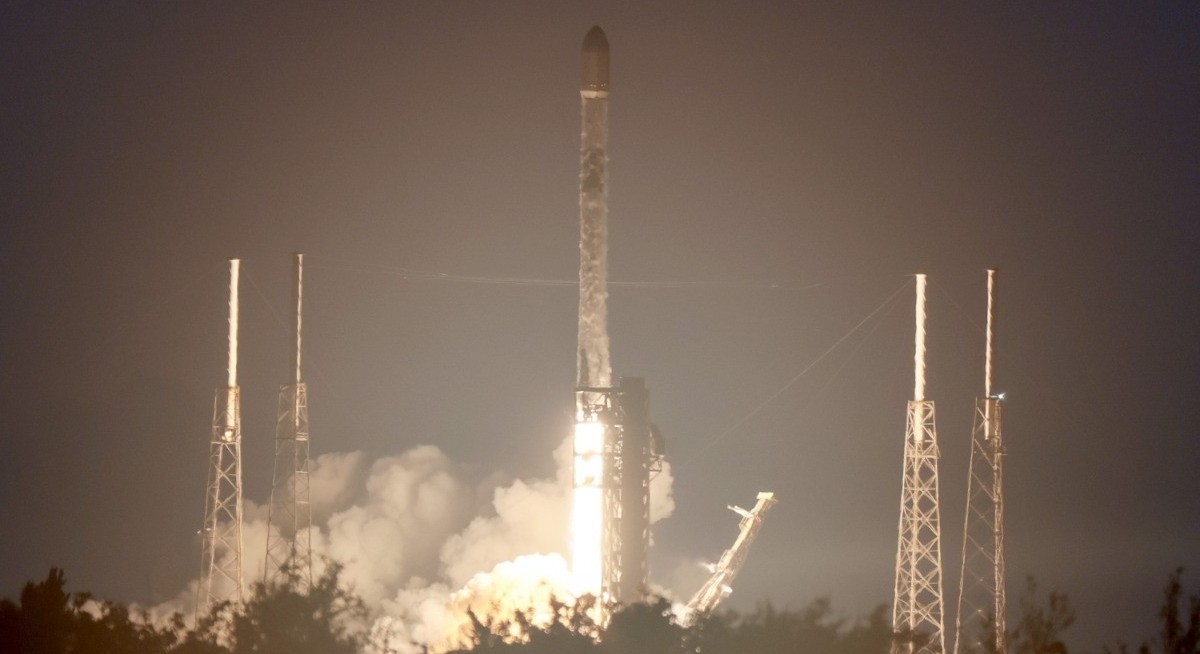


(June 11): SpaceX is bringing excitement to corners of the world where investors have long been starved of marquee deals.
The enthusiasm in Japan, home to about US$15 trillion of household financial assets, is so fervent that the company recently raised its local fundraising target by a quarter to US$2.5 billion. That makes it a rare opportunity in a country where there’s only been one initial public offering (IPO) that size or larger since Softbank Corp’s mega listing in 2018.
SpaceX has earmarked 30% of the US$75 billion IPO for individual buyers, setting off a scramble for what many see as a generational investment opportunity, regardless of the recent selloff that’s rocked US technology shares.
The deal has attracted demand for more than four times the shares offered, is expected to stop taking orders from institutional investors on Wednesday in New York, people familiar with the matter have said. In a sign of the overwhelming interest, banks are trying to prevent traders from placing multiple orders on different platforms.

For Japanese investors, like 20-year-old Getto Hagiya, it’s just an opportunity too good to miss.
See also: SpaceX IPO raises US$75 bil in biggest debut of all time
“The odds of winning shares look slim, but if I’m successful it would really feel like hitting the jackpot,” Hagiya said by phone. “I have huge respect for Elon Musk and see limitless opportunities for the space business.”
Japan is the only country in Asia and one of a few around the world, along with Australia, Canada and parts of Europe, where retail investors are able to directly buy into the SpaceX IPO. Based on the company’s target, Japanese investors will account for about 3% of the total fundraising and likely a bigger slice of the retail portion, according to Bloomberg calculations. Institutions can also join the tranche, but most are expected to be distributed to retail investors, given some mandates restrict Japanese stock managers from buying foreign equities.
But some potential buyers remain cautious. Yujin Hwang, a local retail investor in her forties, is waiting for more information on SpaceX’s other businesses before jumping in.
See also: Chinese robot appliance maker Dreame Tech mulling IPO in Hong Kong — Bloomberg
“I wouldn’t rush to buy immediately,” she said. “Instead, I would consider investing once the share price has stabilised to some extent. Many recent IPOs have become overheated on expectations right after listing and then undergone significant corrections.”

Veteran investor James Chanos is also cautious about the offering and sees it as a test of market sentiment. The IPO is being driven by investor enthusiasm rather than the company’s financial fundamentals, according to the experienced short seller, who argues the valuation is hard to justify and calls it “a hopes-and-dreams IPO”.
In Australia, demand is also heating up among the retail base. Investors waited almost an hour on Monday in call centre queues to reach broker Commonwealth Securities Ltd, with queries on SpaceX, according to local media reports. The company declined to comment, citing regulatory requirements.
In other Asian markets, millions of retail investors have been shut out of direct participation. Underwriters have been told not to accept orders from Hong Kong and China, citing restrictions around the exports of critical technology, people familiar with the matter have said.
In Korea, an army of “ants”, as they are known, has emerged as a market force and has famously piled into stocks like Musk’s Tesla Inc. In online communities, people are exchanging tips on how to gain exposure to SpaceX, such as buying big tech stocks that own a stake as proxies, or preemptively adding space-related US ETFs that will have to eventually add the shares.
For the more than 130 million retail investors in India, most brokers do not allow locals to subscribe to US IPOs directly, even if the SpaceX offering was available.
To stay ahead of Singapore and the region’s corporate and economic trends, click here for Latest Section
Japan, though, with its cash-rich retail investors and streamlined offering process, is a natural target for SpaceX. Households have about ¥2.4 quadrillion in financial assets, with roughly half parked in currency and deposits, according to the Bank of Japan. The proportion held in cash outpaced other major economies including the US as of March 2025.
“Japan’s retail money is attracting global attention, given its households’ huge asset holdings,” said Koji Takeuchi, Senior Research Fellow at Itochu Research Institute.
The buzz around SpaceX is also likely to be an entry point for new retail investors, said Hiroyuki Ueno, chief strategist at Sumitomo Mitsui Trust Asset Management. “Elon Musk is popular in Japan and there are lots of Tesla fans here. That will drive the demand,” he said.
The Japanese portion of the IPO is being run by Mizuho Financial Group Inc, whose US investment banking unit is one of the 23 underwriters. Mizuho will handle investor orders through its local brokerage as well as online brokers Rakuten Securities Inc and SBI Securities Co.
Rakuten Securities will stop taking orders four hours earlier than it originally planned, the online brokerage posted on X. Retail bidders will be notified of the lottery result as early as Friday morning in Japan, it said.
The offering takes advantage of a Japanese framework called public offering without listing, or POWL, which allows global firms to tap local retail pools. Visa Inc used this route to sell about 1.8% of its US$20 billion US IPO in 2008, while China Shenhua Energy Co offered slices of its Hong Kong IPO in 2005. SoftBank Group Corp-backed PayPay’s IPO this year raised US$138 million from Japanese buyers using the structure.
“It perfectly fits the profile of IPOs that the POWL structure was designed to accommodate,” said Philippe Espinasse, former head of Asia equity capital markets at Nomura Holdings Inc. “A POWL could generate significant, price-insensitive demand from members of the Japanese public in a deal by a huge, high-profile issuer,” he said.
“In light of the unprecedented quantum of and aggressive valuation for the SpaceX IPO, all possible avenues of investor demand will need to be canvassed,” said the former banker.
Uploaded by Felyx Teoh




