


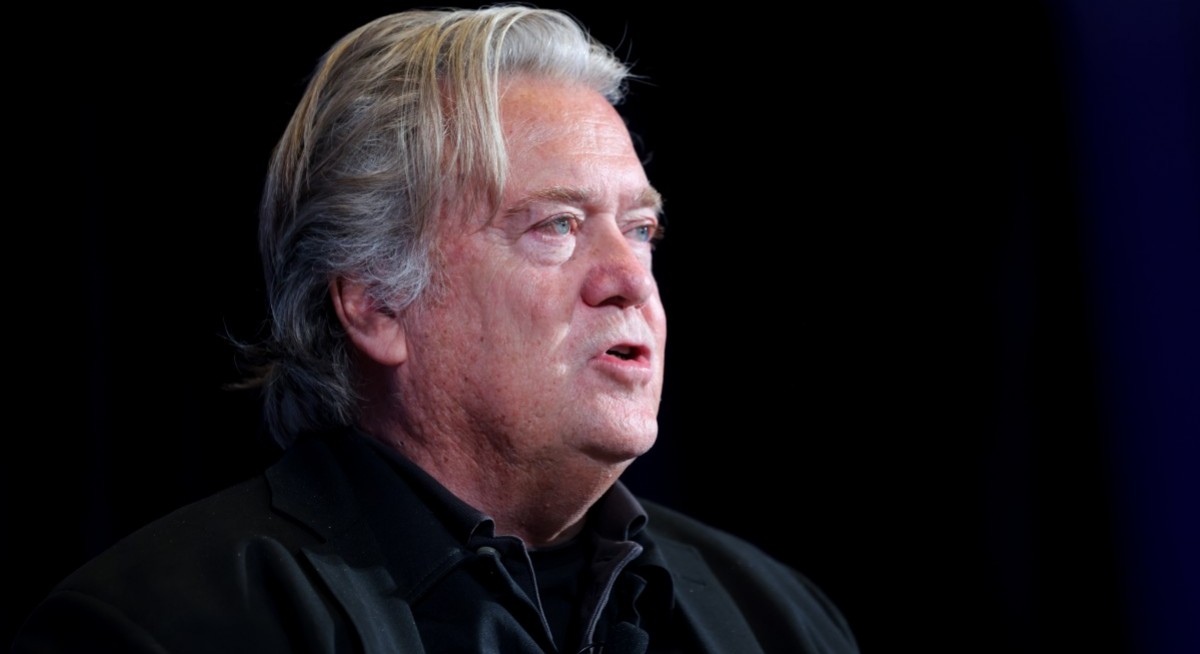


On Monday, US Attorney Jeanine Pirro in Washington asked a federal judge to allow the government to end the prosecution effort, writing that “the government has determined in its prosecutorial discretion that dismissal of this criminal case is in the interests of justice.”
Around the same time, US Solicitor General John Sauer separately asked the justices to wipe out an appeals court’s ruling upholding Bannon’s conviction and to send the case back to the district judge in Washington to act on Pirro’s request to dismiss it.
“Today the Department of Justice told the Supreme Court that Steve Bannon’s conviction arising from the J6 ‘Unselect’ Committee’s improper subpoena should be vacated,” Deputy Attorney General Todd Blanche said in a statement. He added that “this department will continue to undo the prior administration’s weaponization of the justice system.”
Bannon’s defense lawyers did not immediately respond to requests for comment.
See also: Prabowo fury on market rout shows growing divisions in Indonesia
By ending the case in this way, the justices won’t rule on the merits of Bannon’s challenge to his conviction. Bannon’s lawyers argued there should have been a higher bar to prove his guilt — that prosecutors had to show that he knew he was acting unlawfully, and not just that there was “intentional” conduct to defy a subpoena.
US District Judge Carl Nichols will still have to rule on Pirro’s request, but judges generally have little authority to overrule the Justice Department’s decision to withdraw charges while a case is active.
The decision to end the case was made by Sauer’s office, according to a person familiar with the matter who asked not to be identified discussing the process.
See also: Asian stocks set to extend rally to another record
Although Bannon served his sentence in 2024, his case remained open as he appealed the jury’s guilty verdict. He lost before a federal appeals court in Washington and filed a petition in October with the Supreme Court.
Contempt of Congress prosecutions are rare. Last month, a senior House Republican threatened to send a contempt referral to the Justice Department for former President Bill Clinton amid an investigation of disgraced financier and sex offender Jeffrey Epstein, but Clinton and former Secretary of State Hillary Clinton later agreed to appear before lawmakers.
The case is US v. Bannon, 21-cr-00670, US District Court, District of Columbia.
uploaded by Isabelle Francis




