




Singapore, a city famous for maximising every square metre of land, still overlooks its most abundant resource: rooftops. Despite year-round sunlight, proven technology and strong national sustainability targets under the Singapore Green Plan 2030, solar adoption remains low — fewer than 10% of the nation’s 70,000 landed homes have made the switch.
For Chew Yi Chen, CEO of one-year-old Singapore start-up 9 Solar Home, this low uptake is more than a statistic; it is an opportunity. Affectionately known as Orange, she represents a unique breed of energy entrepreneur who is shaped not by traditional utilities but by a blend of corporate experience and start-up agility. As one of the few women in a male‐dominated field, Chew began her career in sales at Johnson & Johnson, where career progression was comparatively stable and relatively predictable. At 9 Solar Home, a subsidiary of 9 Solar Fintech, which focuses on commercial and industrial solar, the challenges — and rewards — are far less certain.
Exuding energy and passion, Chew reflects: “The synergy of high-stakes teamwork is what makes this exciting.” Her goal is to sharpen the company’s edge within the competitive Singapore energy sector.
Leaving the security in her previous job meant plunging into long hours, undefined roles and building from scratch. But it also meant ownership of a company and a vision — to make solar energy accessible rather than just aspirational. That conviction now drives a business quietly redefining solar in Singapore.
Selling power, not panels
At its core, 9 Solar Home does something deceptively simple: it removes the biggest barrier to residential solar adoption: the prohibitive upfront cost. That initial expense can easily set a homeowner back by tens of thousands of dollars before the investment pays off over the years.
See also: Australian PM asks nation to use less fuel to conserve supplies
9 Solar Home removes that barrier entirely.
This young, up-and-coming solar player flips the model: they install the system for free and charge homeowners only for solar electricity, typically at a rate around 30% lower than Singapore Power (SP) Services' regulated tariff. At the end of the contract — mostly lasting nine years or less — ownership is transferred to the homeowner at no cost. Thereafter, the homeowner enjoys free green electricity for at least another 15 years.
The approach is, in fact, based on a Power Purchase Agreement (PPA), a framework more commonly used in large-scale commercial, industrial or utility energy projects. “It is a risk we take,” Chew says. “If they do not generate electricity, we do not earn.” The alignment is simple but powerful: the company gains only if its customers gain. Low-sunlight months mean lower bills; sunny months mean higher savings. Solar becomes a win-win for both parties.
See also: Singapore warns of costlier power bills due to Mideast conflict
Ground-level, hands-on strategy
Even with a modern model, Chew believes in getting out into the neighbourhoods. “Direct engagement with homeowners has become a cornerstone of introducing solar in a relatable, trustworthy way.”
It is hard work. Navigating unfamiliar neighbourhoods and facing rejection are all part of the process. Conversion cycles span days to months as homeowners weigh concerns ranging from aesthetics and roof integrity to long-term costs.
Her team guides homeowners through every detail, from billing mechanics to installation logistics. Homeowners also learn how to monitor real-time energy flow through a mobile app. These ground-level efforts have yielded something no digital campaign can match: trust fostered from in-person interaction.
“When you are palpably transparent about the pros, the cons, even the inconvenience during installation, they trust you more.”
Shorter contracts, gradual ownership
Another barrier to solar adoption has been the 20- to 25-year commitment typical of traditional contracts, which made homeowners hesitant to accept. “Their worry is the lack of flexibility when they want to sell the house or rebuild,” Chew quipped.
To stay ahead of Singapore and the region’s corporate and economic trends, click here for Latest Section
By offering contracts of nine years or less — a strategic nod to the company name — 9 Solar Home reframes solar as a medium-term investment rather than a lifelong obligation. Even more, the system would not be removed when the contract expires — instead, full ownership of the asset would be transferred to the homeowner at no cost. This model represents the gradual, secure acquisition of a valuable tangible asset.
The solar market landscape in Singapore reveals a mix of challenges and opportunities for companies in the sector. The country has primarily focused on large-scale solar projects, such as installations on industrial rooftops and commercial buildings, while residential adoption has remained inconsistent and scattered. Moreover, only homeowners of landed properties have the physical roof space to install solar panels, leaving most apartment residents excluded.
Demographics also matter — younger homeowners, often already leaning into electric vehicles and greener lifestyles, are more receptive to solar adoption. They are also curious about both the environmental and financial benefits. As Chew observes, “People are starting to see it as both a sustainability move and an economic one.”
Older generations, by contrast, tend to prioritise long-term financial security, often approaching solar with caution or scepticism.
But overall, that perception is shifting. Rising energy costs and the unpredictability of global fuel markets have given homeowners a new frame of reference. Where once solar was seen as an add-on, today it is being discussed in the same breath as energy security. “People are asking the right questions now,” Chew says. “They do not just want cheaper bills — they want certainty in an unpredictable market.”
Pragmatic sustainability
Chew’s guidance to her customers is also grounded in careful calculation rather than idealism. She avoids overselling the promise of complete energy independence. Most solar homes still draw power from the grid, often from Singapore Power, at night when the sun is not available; conversely, any excess energy generated during the day is fed back into the grid to offset future consumption.
“It is not about escaping the grid entirely; it is about paying less for the sunshine electricity you actually use, and ensuring it is clean,” Chew says.
Homeowners are thus encouraged to shift more energy-intensive activities into daylight hours, such as running appliances or charging electric vehicles when solar output is highest, thereby reducing the amount they need to draw from the grid at night. In a city that prizes efficiency and value, that message resonates.
Building a lean, distributed business
Large energy companies in Singapore, including many foreign ones, have largely steered clear of residential solar. They see it as complicated, as every home is unique and each installation needs to be customised, with constant customer communication required. Scaling up is a slow, long journey, which makes the process overwhelming for them.
“What others see as complexity, we see as our moat,” remarked Chew.
For 9 Solar Home, this complexity works in their favour. The company remains lean, with fewer than 20 core team members and minimal hierarchy. Everyone plays a role in both strategy and execution. While multinational firms chase massive projects, 9 Solar Home takes a distributed approach, one rooftop at a time. The team aims to scale to over 10,000 homes within the next decade, turning Singapore’s rooftops into a network of high-value, sustainable energy assets that power a decarbonised future. “Each installation in a neighbourhood sparks curiosity and starts conversations, naturally drawing more interest,” Chew explains. “Word of mouth spreads organically.”
A central element in the model’s success is 9 Solar Home’s commitment to demystifying the technical. By translating complex engineering into everyday language, the team transforms solar adoption from a daunting hurdle into a practical, compelling choice for families.
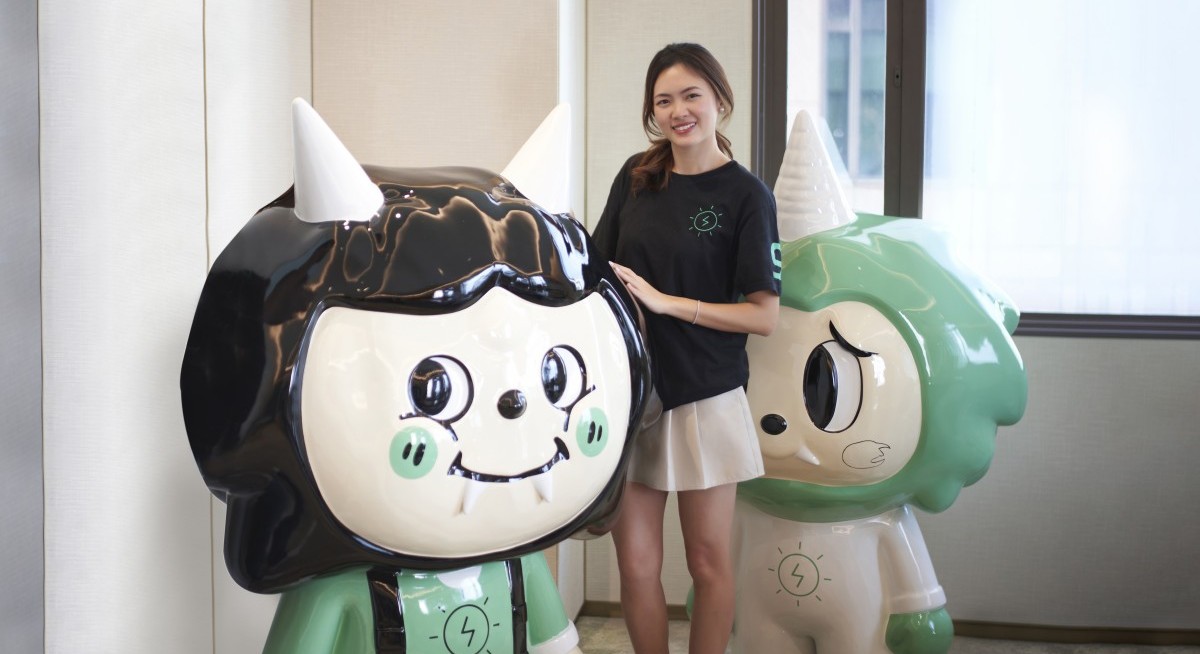
To bring this vision to life, her team created two playful mascots — Bullion, the guardian of clean energy and Bellion, the protector of homes. These characters translate environmental responsibility into stories children can grasp. “When kids get it, parents start asking questions too. Suddenly, it’s not just about electricity bills — it is about being part of something meaningful.” By turning green energy concepts into stories, 9 Solar Home makes solar adoption feel approachable and even a little magical.
Singapore generates about 95% of its electricity from imported natural gas, making prices highly sensitive to global disruptions. In fact, its energy regulator has warned that escalating geopolitical tensions — such as the recent conflict affecting supplies through the Strait of Hormuz — could elevate global fuel prices and, consequently, domestic electricity costs. Some countries are now debating how renewables can act as a buffer against such price shocks.
In this context, solar serves as a hedge. By generating clean power locally, homeowners reduce their exposure to the vagaries of international fuel markets and the knock‐on effects on electricity bills. This blend of economic savings and peace-of-mind benefits strengthens the appeal of 9 Solar Home’s offering.
The long-term view
In summary, solar panels are mature tech today — lasting 25 to 30 years with sophisticated monitoring and rising efficiency. According to one report, “Panel degradation is slow; even after decades, they still perform at over 87% of original capacity.”
Layer on AI-driven monitoring and the value proposition becomes even stronger. The key challenge is getting people to embrace it. As Chew shows, adoption hinges less on the hardware itself and more on human perceptions — trust, timing and perceived risk. “Trust isn’t optional. We can never communicate enough.”
For more information, please contact 9 Solar Home




