




At stake is direct access to the Fed’s payments plumbing, a privilege banks have long monopolized. Crypto and fintech firms now rely on partner banks for access and compliance infrastructure like anti-money laundering monitoring. The “skinny account” proposal would let stablecoin issuers like Circle Internet Group Inc. and payment firms like Stripe Inc. bypass that intermediation.
The banking groups argue the accounts should require 12 months of “successful safe and sound operation.” The Fed has limited experience with many applicants and lacks oversight authority over most of them, the banks argued. The regulatory framework for stablecoin operators under the Genius Act, which was signed by President Donald Trump in July, remains unfinished.
And while the proposal puts in some significant protections for the financial system, it doesn’t necessarily protect against potential runs on the newly-licensed companies, the Bank Policy Institute, the Clearing House Association, and the Financial Services Forum said in a joint comment letter filed Feb. 6.
The financial regulation watchdog group Better Markets warned that momentum is likely against the banks. “The provision of payment accounts by the Fed is very likely to be implemented despite any comments to the contrary,” Better Markets CEO Dennis Kelleher wrote. The deadline for comments was Friday.
See also: Prabowo fury on market rout shows growing divisions in Indonesia
In an effort to get ahead of these concerns and proactively come into compliance with the forthcoming Genius Act rules, a drove of fintech and crypto firms have applied for national trust bank charters, with some explicitly stating their intentions to seek master account access.
In 2022, the Fed introduced a tiered system for reviewing master account applications. Anchorage Digital Bank, which holds a national trust charter, recently applied under a “tier 3” designation which often comes with the strictest level of review. The American Bankers Association argued that master account access should be limited to institutions designated as “tier 1” that are supervised by federal banking agencies and hold federally insured deposits.
The new payment account shouldn’t be used as a stepping stone to a master account, which should require a separate application, the banking trade group said.
See also: Asian stocks set to extend rally to another record
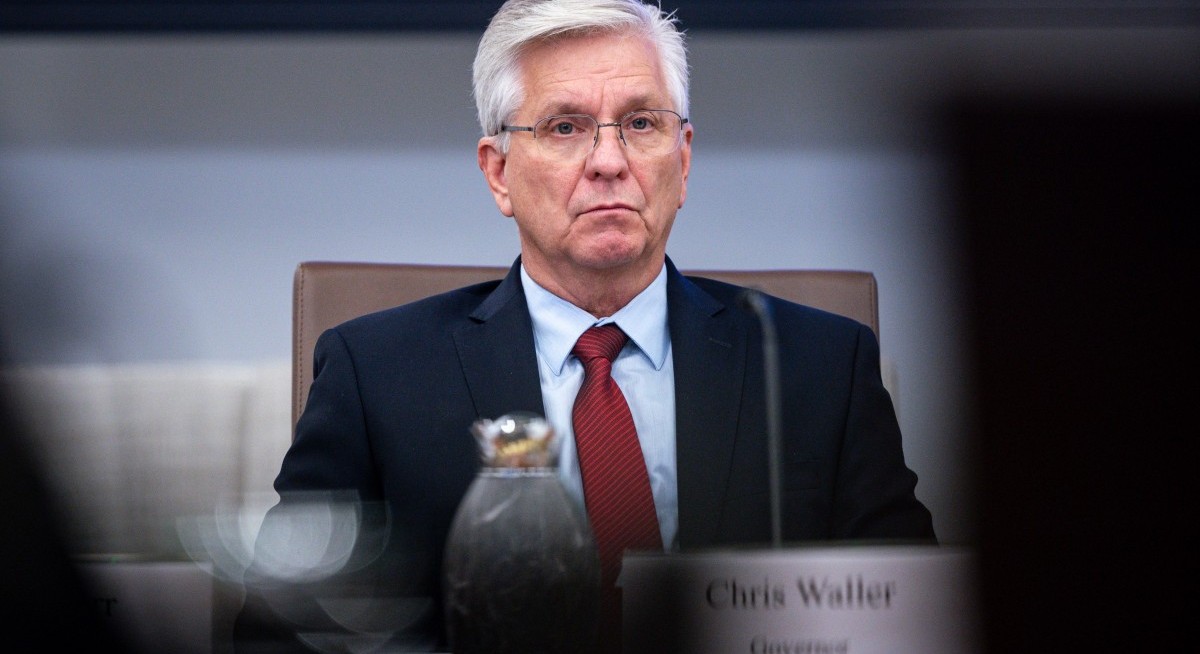
Circle and Anchorage argued the proposed skinny accounts are prohibitively inflexible. The current proposal, for example, does not allow account holders to access FedACH, a payment system that processes trillions of dollars worth of transactions annually. In his initial proposal for the accounts last year, Fed Governor Christopher Waller said skinny accounts would not provide overdraft privileges or discount window borrowing. Offering payment account holders access to FedACH would be subject to the development of controls to prevent overdraft, Circle wrote in its letter.
The Financial Technology Association also lamented an overnight balance cap that is the lesser of US$500 million or 10% of total assets, which it argued is too restrictive for scaled payment firms that often handle billions worth of daily volume. If the cap were to stay in place, account holders would need to sweep excess funds into partner bank accounts overnight, Anchorage noted, adding that payment account holders should also be able to earn interest on reserve balances.
The debate is unfolding in parallel with another hot button issue: whether crypto exchanges like Coinbase Global Inc. should be able to offer rewards tied to their customers’ stablecoin balances. The exchange currently offers 3.5% rewards on USDC balances, a program banks argue threatens to siphon deposits away from the traditional financial system. The issue has delayed progress on current legislation. White House representatives have stepped in to broker negotiations, and are aiming to resolve the issue by the end of this month.
Those concerns were largely in the background of the skinny account letters.
Financial stability advocates and banks also warned that the proposed accounts were beyond the Fed’s mandate and put in place significant risks.
“The proposal makes it clear that the Fed knows institutions that have been and will be requesting access to payment accounts present huge risks to the Federal Reserve system and the financial system, which is why nearly the entire proposal is about risk mitigation,” Better Markets said in its letter.
uploaded by Isabelle Francis




