


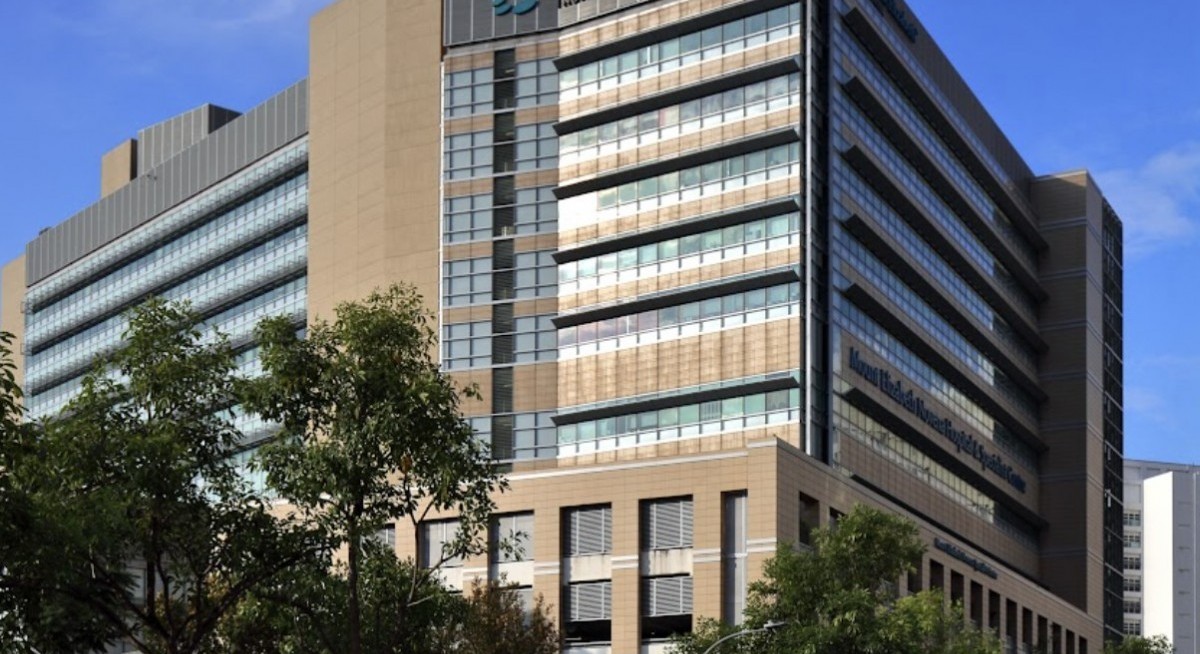


“Starting from primary, ambulatory and tertiary care, we have a big ecosystem in Singapore, and that makes us dominant and our business resilient,” says Dilip Kadambi, group CFO, IHH.
According to Kadambi, medical inflation in the city-state continues to rise. “We, like any responsible corporate citizen, said: ‘Let’s see what we can do to curtail rising costs.’ Hence, we’ve been actively working with the payers, such as insurance companies, to develop packages, and the ACC is part of trying to curtail costs.”
An additional leg for IHH is medical tourism. Last year, it acquired Island Hospital in Penang, where medical tourism accounts for 60% of the new hospital’s revenue.
In Singapore, though, medical tourism’s percentage of revenue is lower, around 16% to 18%. This was partly because Mount Elizabeth Orchard was undergoing extensive asset enhancement initiatives in partnership with PLife REIT.
See also: Lilly to buy three vaccine developers for up to US$3.8 bil
“There are people from Indonesia who cannot afford Singapore, who would much rather go to Malaysia and get treatment. There are also the top 2% to 4% of Indonesians, Cambodians, Vietnamese, Filipinos or even Indians who still want to come to Singapore to seek treatment. This is because there is cutting-edge technology and very skilled and trained clinicians,” says Kadambi. “From a revenue contribution standpoint, out of $100, the medical tourism in Singapore still continues to be $16 to $18.”
Still, “more acute cases” have begun arriving in Singapore, adds Kadambi. For instance, cancer patients who need proton beam therapy can only receive that treatment at Mount Elizabeth Novena.
Now that Mount Elizabeth Orchard has fully reopened, it is attracting patients from new geographies, including the Philippines, Vietnam, Cambodia and Bangladesh. “The strategy for [our] Singapore [brands] is to go big on medical tourism and bring back some of the medical tourists. Secondly, it is to work actively with our payers to devise packages to bring back patients in,” Kadambi says.
See also: Singapore pushes medical AI toward patient care as population ages
For instance, IHH’s Singapore entities are offering healthcare concierge services. “We are trying to make healthcare seamless for high-net-worth individuals wherever they are. They can be based in Singapore or Jakarta. People want to come in and avail of our services because they’re part of these privileged banking networks. Recently, one of the partnerships we announced was with HSBC for their Diamond [clients]. We tied up with them across Singapore, Malaysia, Hong Kong and India — across our entire network,” Kadambi says.
Thirdly, it is to look at bringing health-conscious services to privileged banking centres, given Singapore’s wealth hub status.
To drive efficiency, Kadambi says IHH has turned to technology. One of the initiatives is implementing IHH’s unified data platform across its different geographies, to observe inventory levels, reduce wastage and promote clinical excellence.
An IHH subsidiary, iXchange, is what Kadambi calls his secret weapon. It is a third-party administrator (TPA) that brings together clinicians, corporate clients and 1,500 panel clinics to offer customised healthcare solutions for employees.
“We have been using iXchange as a TPA, bringing primary care, ambulatory care and tertiary care together; no other private hospital has this combination in Singapore,” Kadambi says.




