


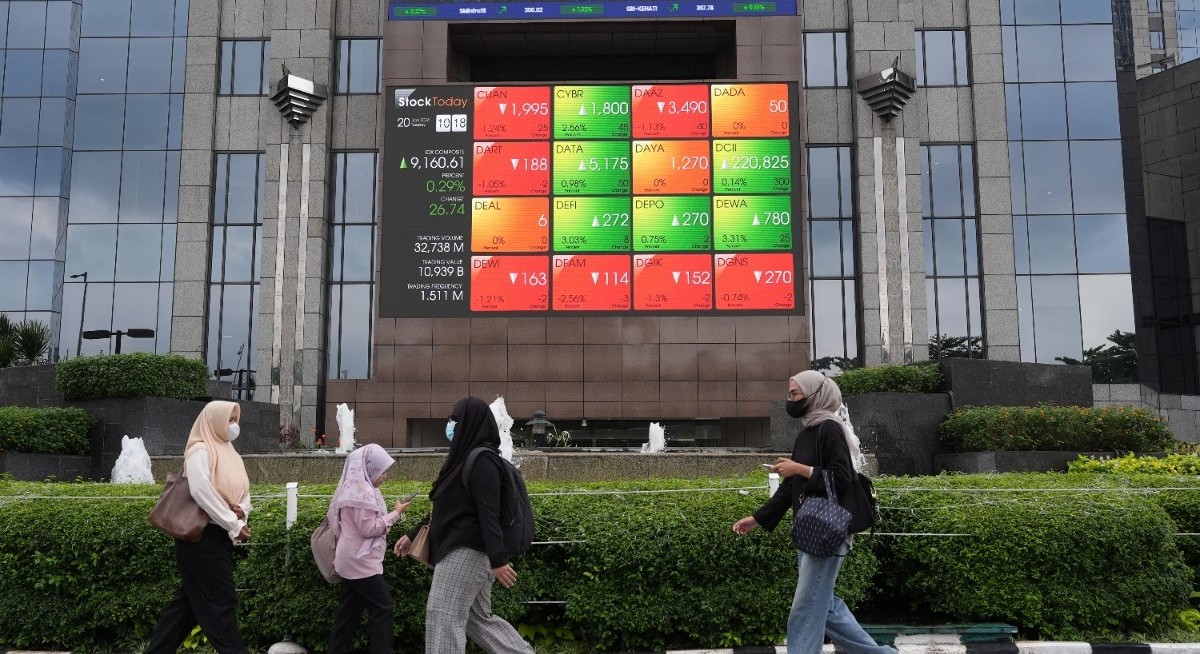


(April 22): The Indonesia Stock Exchange plans to remove firms identified for having high shareholding concentration from some of its key indices as part of ongoing market reforms.
Tightly held companies will be barred from the IDX30, IDX80 and LQ45 gauges to ensure “an index that better represents market dynamics", according to a bourse statement late Tuesday. The adjustment will take place during the April index review and will be effective on the first trading day of May, it added.
The new measure comes as MSCI Inc warned that tightly held stocks could be dropped from its indices even as the index compiler extended its review of Indonesia’s market revamp. The Southeast Asian country has rolled out a flurry of reforms over the past few months to avert a potential downgrade to frontier status.
“The exchange’s move indicates that it is taking proactive steps during the one-month extension granted by MSCI,” said Gary Tan, a portfolio manager at Allspring Global Investments. “This should help in further reducing the risk of Indonesia being downgraded from emerging market status.”
MSCI in January warned of a possible downgrade of Indonesia to frontier status from emerging market due to investability concerns and limited free float. The move had triggered a stock rout, resignations of key market officials and a series of market reforms.
Following the warning, regulators ramped up measures to improve ownership transparency. These include doubling minimum float levels to 15%, with a phase-in period of up to three years for certain firms, and naming nine companies, including PT Barito Renewables Energy and PT Dian Swastatika Sentosa, where a small group of investors holds more than 95% of shares.
See also: Yara ups deliveries in 1Q as Iran war jolts fertiliser market
Losses in Barito Renewables and Dian Swastatika deepened, with both stocks falling at least 10% each on Wednesday. The benchmark Jakarta Composite Index edged lower.
Barito Renewables declined to comment on the bourse announcement, referring instead to an earlier statement saying its shareholder structure has been unchanged since its 2023 listing and that it remains compliant with disclosure and free-float requirements.
A representative for Dian Swastatika referred to a statement from earlier this month that the company was focusing on strengthening its business structure, including by conducting a stock split.
See also: Hyundai Motor eyes increasing China’s share of global sales to about 9%
“The high share concentration status is still negative for stocks as it reduces visibility and access to global institutional investors,” said Liza Camelia Suryanata, head of research at PT Kiwoom Sekuritas Indonesia. “Passive funds have no choice but to reduce their positioning in those two stocks and it seems they have been doing that since days ago.”
Uploaded by Arion Yeow




