


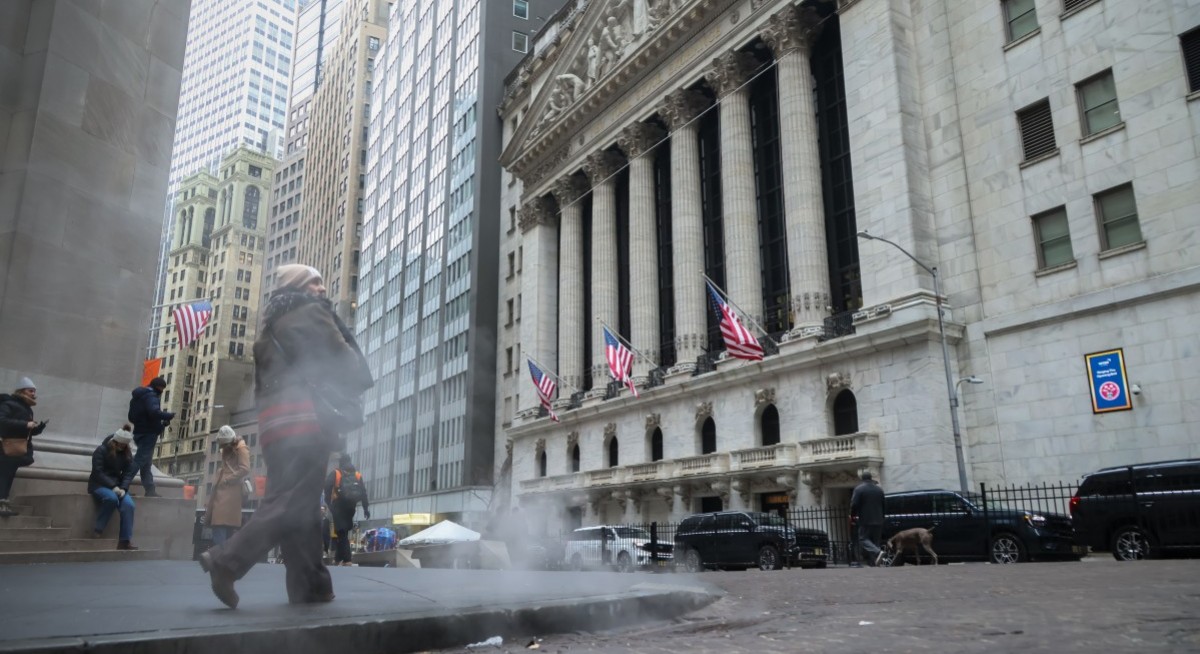


(Jan 27): Modest gains in stocks and bonds were overshadowed by volatility in energy, commodity and foreign exchange markets at the start of a busy week. The dollar fell to the lowest since 2022, gold topped US$5,000 and natural gas jumped almost 30% as cold weather gripped much of the US.
The S&P 500 extended its January advance ahead of high-stakes megacap results. With the Federal Reserve expected to pause its rate cuts, Treasuries remained in a narrow range. The greenback slid on speculation the US could coordinate intervention with Japan to support the yen. After the close, big US insurers including UnitedHealth Group Inc, CVS Health Corp and Humana Inc tumbled on a report the US will hold payments to private Medicare plans flat next year.
The earnings season picks up steam this week, with companies accounting for a third of the S&P 500’s market capitalisation expected to post results. Following a breakneck rally of artificial-intelligence names, those firms are under pressure to show that the vast sums they’ve committed to capital expenditures are starting to pay off in a bigger way.
While the reporting season is still in its early stages, an analysis by JPMorgan Chase & Co shows that forward guidance has topped expectations at roughly half of the S&P 500 companies that have provided an outlook for 2026.
“Since most of the companies that have reported are outside the tech sector, this trend suggests a broadening of growth across other industries this year,” strategist Dubravko Lakos-Bujas wrote in a note.
Meantime, Fed officials are expected to hold rates steady following three straight cuts at the end of 2025 as a steadier jobs market restores a degree of consensus at the central bank after months of growing division. Chair Jerome Powell is likely to telegraph his view that policy is well-positioned for now, but refrain from signaling much about where rates are headed.
See also: Stocks roar back as Dow Average hits 50,000 mark
US power grids are under mounting pressure following a winter storm that unleashed deep cold and heavy snow and ice from Texas to Maine. That’s knocked an estimated 12% of US natural gas production off-line and forecasts for frigid weather caused prices to soar.
The S&P 500 rose 0.5%. The yield on 10-year Treasuries slid one basis point to 4.21%. Bitcoin jumped. The dollar fell 0.4%. The yen climbed 1%.
“The dramatic recovery in the yen suggests that actual intervention is not needed,” said Marc Chandler at Bannockburn Capital Markets.
See also: How China uses a ‘national team’ to influence trading
Despite the heightened moves in currencies and metals, stock traders seemed unflustered by the potential for volatility. Equities bounced after posting the first two-week losses since June.
Enthusiasm over the most-eventful earnings week of the season has investors raising exposure to tech shares ahead of results from four of the “Magnificent Seven” megacaps, according to Jose Torres at Interactive Brokers.
“Analysts patiently await further details on AI initiatives, the pace of investment, and expected profits to better gauge whether the theme can continue to carry this bull market,” he noted.
If not, Torres says investors are geared up to keep rotating into the reacceleration trades that benefit disproportionately from rate cuts amidst faster growth.
In fact, market performance in early 2026 has been defined by broadening in equities. While the S&P 500 has climbed 1.5% this year, its equal-weighted version — which gives Dollar Tree Inc as much clout as Apple Inc — is up around 4%.
History demonstrates three potential paths to an extended period of broadening, according to Ben Snider at Goldman Sachs Group Inc. Those would be: a “catch down” collapse in the valuations of the largest stocks, a broad-based “catch up” increase in valuations across the market, or a market broadening driven by earnings broadening.
“Our forecast for economic acceleration in early 2026 points to the third scenario as the most likely near-term outcome,” he said. “The ultimate degree of equity market broadening will depend on the degree of earnings broadening.”
To stay ahead of Singapore and the region’s corporate and economic trends, click here for Latest Section
Snider continues to recommend select consumer stocks, companies with exposure to non-residential construction, and small caps as opportunities.
Strong earnings growth is expected to continue in 2026, with estimates calling for nearly 15% growth and all 11 sectors projected to post positive results, according to Angelo Kourkafas at Edward Jones.
“Broad‑based earnings growth paired with a healthy macroeconomic backdrop helps support a diversified approach to equity sector positioning in US stocks,” he said.
The strategist recommends overweight positions in the consumer discretionary, health care, and industrials sectors — offset by underweights in consumer staples and utilities.
Small caps ended their historic relative outperformance streak on Friday, though fundamental tailwinds remain supportive over the intermediate term driven by positive operating leverage and improving pricing power, according to Michael Wilson at Morgan Stanley.
Wilson reiterated conviction in his bullish small-cap view over the next three to six months as relative earnings revisions strength is not showing signs of letting up, particularly in cyclical pockets - consumer, industrials, financials and energy.
“Unless the US dollar continues to move significantly lower, which seems unlikely, small caps, the broadening out trade and rest of world stocks should be fine,” said Dennis DeBusschere at 22V Research. “The macro tailwinds of the broadening out trade are unchanged.”
Investors appear a little more willing at the start of the year to rebalance at least some of their positioning away from the AI trade, and toward asset categories, sectors, industries, and companies that are more exposed to the “real” economy, according to Anthony Saglimbene at Ameriprise.
“Unless reports from Magnificent Seven companies materially reset the earnings outlook (which we believe will not be the case), the early-year preference for small caps and non-tech cyclicals could remain intact,” he said.
Big tech has led the stock market higher for much of the past three years. But that reversed at the end of 2025 as Wall Street grew skeptical of the billions of dollars the companies are spending to develop AI and when the returns on those investments will materialise.
“This is a big week with megacap earnings and the FOMC,” said Jonathan Krinsky at BTIG. “Getting through that without any major hiccups should see some volatility compression, which would be another tailwind.”
This week’s lineup of megacap earnings should help shape sentiment around the AI trade, but Wednesday’s Fed announcement will likely keep politics in the headlines, according to Chris Larkin at E*Trade from Morgan Stanley.
“Even though the Fed isn’t expected to cut interest rates, Powell’s press conference may be as much about Fed independence as it is policy,” he said.
Expectations about Fed policy have been shifting in response to changes in the consensus view on whom President Donald Trump will nominate to succeed Powell, whose term expires in May.
Trump has been saying since June that his decision on a successor was down to four or fewer candidates and would be announced soon. During that time, prediction markets have favored several in turn as the likely nominee, with BlackRock executive Rick Rieder currently leading.
The biggest question for the Fed in 2026 will be the timing of its single projected rate cut, according to Stephen Kates at Bankrate.
“I expect Chair Powell to remain tight-lipped about any definitive plans in order to preserve maximum flexibility for both the committee and his successor,” he said. “While concerns about the balance of risks between inflation and the labor market have eased slightly, achieving success on both fronts will still require careful judgment.”
Meantime, ongoing tensions between the Fed and the White House elevate what might otherwise have been a quiet January meeting into a more sensational event, Kates noted.
“Our base case remains that the Fed will remain on hold in coming months, with no additional cuts on the horizon,” said David Doyle at Macquarie Group.
A key risk to this view, Doyle noted, is the potential for an incoming Fed Chair to sway the committee in a more dovish direction.
“However, we believe this risk is mitigated by a potential shift in the new Chair’s incentives once they assume the role,” he said.
Policymakers have signaled that easing may still be appropriate at some point later this year, although any action would remain dependent on how economic conditions evolve, according to Jason Pride and Michael Reynolds at Glenmede.
“The Fed’s dual mandate remains finely balanced,” they said. “Inflation has cooled substantially from its 2022 peak but still sits near the upper edge of what officials would likely view as price stability, while the unemployment rate has edged higher.”
Taken together, the Fed, highly attuned to incoming data, is likely to keep rates unchanged over the next several meetings before adding one or two more cuts later in the year, they noted.
Meantime, hedge fund Bridgewater Associates favours stocks over bonds given the risks posed by governments ramping up public spending and the inflationary impact of AI.
“It depends on how willing buyers are to hold an ever-expanding supply of debt and what it takes to entice the next marginal buyer,” Bob Prince, Greg Jensen and Karen Karniol-Tambour wrote in a note. There is “no magic number” that determines what level of debt or deficit is sustainable, but many developed world economies are “getting dangerously close” to such limits.
DoubleLine Capital LP is reining in its corporate-debt buying, fearing that an already frothy market is growing more perilous as richly valued companies prepare for record borrowing to fund the artificial intelligence boom and acquisitions.
“This year is going to be the risk-building year,” said Robert Cohen, director of global developed credit at DoubleLine. “You have more risk, less spread. It’s the worst scenario.”
Uploaded by Isabelle Francis




