


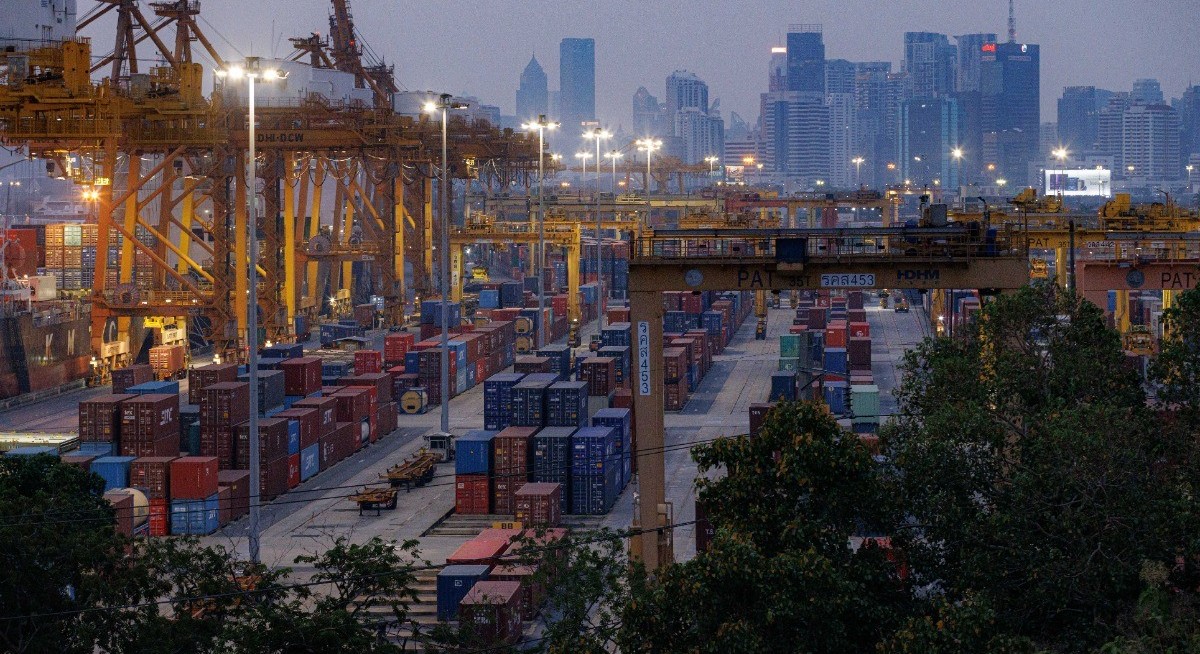


The wider deficit underscores imbalances in Thailand’s trade-driven economy. A sustained shortfall could weigh on overall growth, pressure the baht and complicate monetary policy at a time when the central bank, as well as Prime Minister Anutin Charnvirakul, are trying to support a fragile economic recovery.

Exports are a key driver of the Thai economy, accounting for more than half of gross domestic product. The country’s heavy reliance on international trade makes it vulnerable to currency fluctuations and global tariff policies that can erode competitiveness. Thai shipments to the US, the country’s largest export market, face tariffs of up to 19%, weighing further on demand.
The baht has gained more than 5% against the greenback so far this year, outpacing most other Asian currencies and making Thai products more expensive. The baht held gains of 0.4% against the dollar after the release of trade data.
See also: Japan’s economy ekes out growth as Takaichi eyes more spending
The wider-than-expected trade deficit “may be positive as it should help ease pressure on Thailand’s current account surplus and the baht strength,” Nantapong Chiralerspong, director general of the Trade Policy and Strategy Office, told reporters.
Exports to the US rose 32.9% from a year ago, the 25th straight month of growth, driven by computers and parts, machinery and steel. Shipments to China grew 9.3% last month, according to the Commerce Ministry.
Uploaded by Felyx Teoh




