


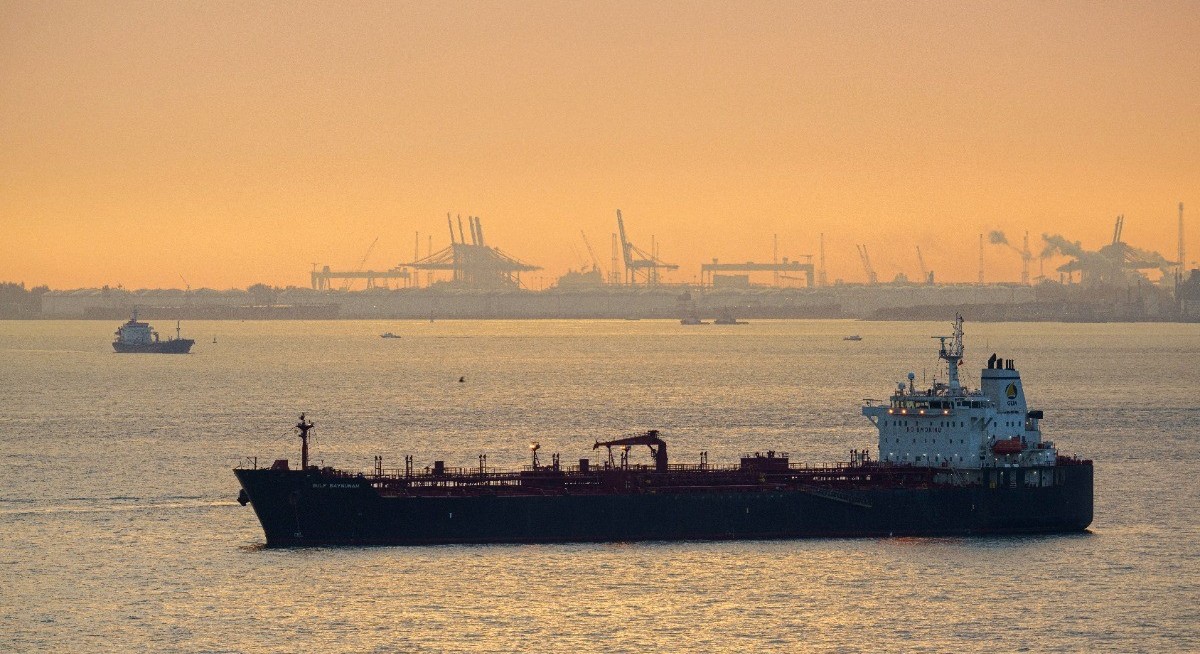


(June 20): Ships can consider transiting the Strait of Hormuz along the southern route, day or night, with their transponder signals on, a key naval information group has said.
Vessels that choose to do so also aren’t required to coordinate with the US naval unit that’s supporting the region, though they are encouraged to do so, the Joint Maritime Information Center (JMIC) said in an advisory published on Saturday, referring to American Naval Cooperation and Guidance for Shipping or NCAGS.
Ships should be aware of potential congestion, and the possibility of mines in the strait, the JMIC said, adding that clearing operations are expected. The US navy had previously said the southern route is free of mines.
The JMIC’s latest update comes after the US military encouraged vessels earlier this week to transit Hormuz “dark”, meaning that ships should turn their transponders off, according to an advisory seen by Bloomberg News. Night time transits were preferred, the US military added.
“Mariners are advised that they may transit the southern route day or night with their AIS on, radars radiating, running lights on, and normal use of VHF,” the JMIC said, referring to the automated identification system from transponders, and very high frequency radio communications. “Coordination with the NCAGS is not mandatory. Ships may transit the southern route without coordination.”

See also: South Korea’s early exports jump again as AI boom fuels chip demand
The advisory however encouraged operators to obtain more information on safe transits with the US navy. It was not immediately clear the reason behind the JMIC’s latest advice.
Hormuz was largely blocked since the war began in late February and later subject to an international diplomatic arm wrestle. Before the effective blockade of the strait, it handled around a fifth of all oil supply in a global market of more than 100 million barrels a day.
Despite an interim peace deal between the US and Iran signed on Thursday, the status of the strait remained unclear. Iran said on Friday that ships that cross the Strait of Hormuz will need its permission, setting the stage for a likely contentious debate over future tolling arrangements.
See also: Canada retail sales up 1% in May as gasoline lifts receipts
Doubts have also emerged over whether the US and Iran would be able to work out contentious details in the memorandum of understanding in the 60-day period. Plans between the two sides to meet in Switzerland were cancelled, while Israeli forces said they struck southern Lebanon despite warnings from Washington not to do so.
The JMIC also now assesses the security threat level in Hormuz is deemed to be “moderate”, a notch lower than the “substantial” level before the signing of the deal.
Uploaded by Tham Yek Lee




