


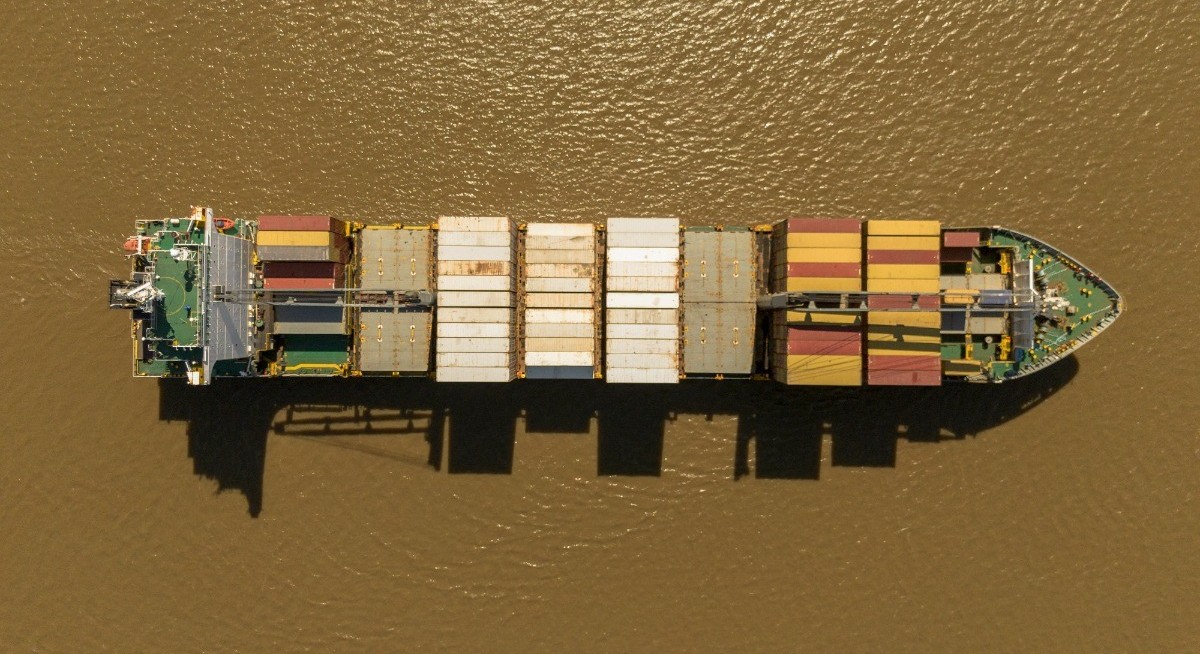


(May 11): One of the world’s largest commodity shipping companies is planning for a scenario in which the Strait of Hormuz remains effectively shut for the rest of the year, highlighting how the Iran conflict is upending expectations across the maritime cargo industry.
Jan Rindbo, the chief executive officer of Denmark’s D/S Norden A/S, said on Monday the company has based its full-year guidance on the assumption that vessels currently trapped in the Persian Gulf will not be able to leave before year end. That’s because visibility is so limited, not because such a lengthy closure is the most likely outcome.
“There’s no clear time line for when this conflict will be resolved,” Rindbo said in an interview. “From a prudence perspective, we felt it was right to assume the ships remain there for the rest of the year. Another issue is, that when the strait reopens it will likely be under certain conditions and there will be a backlog of ships waiting to leave.”
According to an OECD maritime tracker announced earlier on Monday, there are about 1,300 vessels engaged in trade currently in the Gulf. A vital artery for oil and gas flows, the Strait of Hormuz has been effectively shut since late February, with no clear path back to normal traffic.
Tanker earnings
Rindbo’s comments underscore how the war is reshaping risk calculations across global shipping, where geopolitical disruptions have become as critical as supply and demand in determining earnings.
See also: China’s policies threaten US$650 bil in G7, US Chamber of Commerce says
Norden has seven chartered ships stuck in the Gulf and last week raised its full-year outlook. Tanker earnings have surged on the back of significant disruption to global oil flows following the war in Iran.
Rindbo, who has spent more than three decades in shipping, described the situation as “extraordinary”, saying he has never experienced anything comparable. Even if transit resumes, he warned, it could take time before shipowners regain confidence in the safety of the route and for traffic flows to normalise.
“It will likely remain a higher-tension area,” he said. “But much depends on the terms of any peace agreement. Either way, it will take time to rebuild the stability and confidence needed to transit the area safely.”
See also: Bank of England’s Greene waits on Iran war before backing hikes
Against that backdrop, Norden has moved to lock in earnings, securing long-term contracts covering about 80% of its tanker capacity over the next three years, far above typical levels of around 50%, Rindbo said.
Uploaded by Tham Yek Lee




