


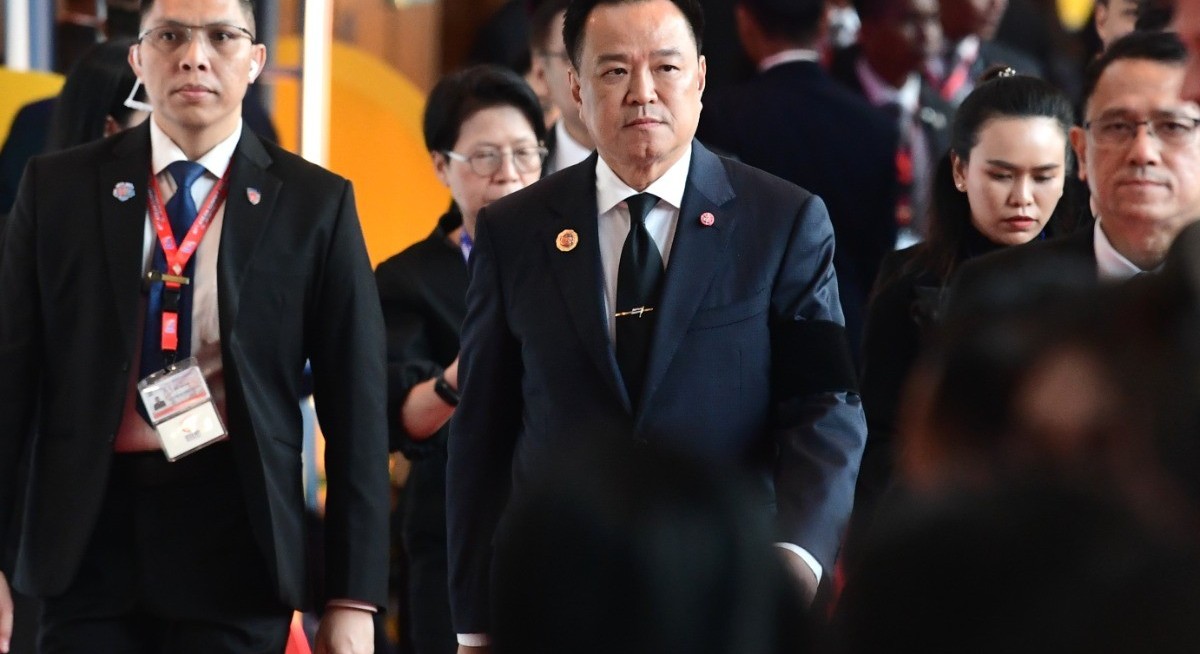


(March 19): Anutin Charnvirakul won a parliamentary vote on Thursday for a new term as Thailand’s prime minister, clearing the way for the conservative politician to form a Cabinet that faces the immediate challenge of managing the fallout from the war in the Middle East.
Anutin, 59, secured 293 votes in the 500-member lower house, while his challenger, Natthaphong Ruengpanyawut, a candidate from the opposition People’s Party, received 119 votes. About 86 lawmakers abstained from voting for either candidate.
Anutin leads a 16-party coalition backed by around 292 lawmakers after his ruling Bhumjaithai Party won the Feb 8 election. It represents the strongest parliamentary majority for a governing alliance in more than a decade and should reassure investors after years of political upheaval that saw multiple prime ministers ousted by courts or coups.
The premier, who oversaw military clashes with Cambodia when he first took office in September, now must address fuel shortages, price spikes and supply chain challenges resulting from the conflict in the Gulf. The ripple effects of the war have already prompted some economists to trim Thailand’s growth outlook as exports and tourism — two vital engines of the economy — feel the brunt of the war.
Thailand, which heavily subsidises retail diesel, has already had to raise prices in response to the surge in the cost of crude oil. Like many Asian countries, Thailand relies on energy imports to support growth, and the higher prices threaten the livelihoods of millions.

See also: Hong Kong vessel makes rare Hormuz transit into Persian Gulf
Daily fuel consumption in Thailand has risen to 84 million litres per day, from 67 million litres before the war, largely due to hoarding, Anutin told reporters. Fuel imports and domestic production continue as usual, he added.
“We need to manage the situation to assure people that there’s no shortage,” Anutin said. “People have the right to be concerned.”
Before the election, investors had expected to potentially face months of coalition negotiations. But Anutin’s handling of a border conflict with Cambodia, which had led to the downfall of his predecessor, helped him ride a wave of nationalist sentiment to a victory so decisive there was little room for the second-biggest winner, People’s Party, to mount a challenge.
See also: Trump demands help to secure Strait of Hormuz, threatens more strikes on Iran's Kharg Island
“The relatively quick formation of a new government will be welcomed by investors,” said Peter Mumford, the Southeast Asia head of risk consultancy Eurasia Group. “The challenges facing Anutin are huge though, with the country one of the most vulnerable emerging markets globally to the impact of high energy prices in the wake of the Middle East conflict.”
Market impact
The potential hit to the economy has already prompted foreign investors to turn net sellers of more than US$2 billion ($2.57 billion) of Thai stocks and bonds this month. The sell-off has trimmed gains in the benchmark stock index, following a rally driven by Anutin’s decisive win, to about 14% this year. The baht has weakened about 5% against the dollar since the start of the war.
Anutin is now expected to unveil his Cabinet within days. Bhumjaithai is expected to dominate the line-up, with several portfolios allocated to key coalition partner Pheu Thai, a party backed by influential former leader Thaksin Shinawatra.
One cloud on the horizon is a Constitutional Court review of a petition alleging that the use of barcodes and QR codes in last month’s election made the ballots traceable. That could potentially invalidate those votes and necessitate a new election.
But the formal creation of a new government for now reduces the likelihood of any delays to the 2026-2027 budget, Eurasia’s Mumford said. After the 2023 election, wrangling over the formation of a new government delayed agreement on government spending plans.
Anutin is poised to govern with little legislative resistance, with Bhumjaithai’s strength in the two houses of Parliament reducing the risk of the gridlock that plagued previous administrations.
On Sunday, veteran Bhumjaithai politician Sophon Zaram was elected as the Speaker of the lower house, strengthening the party’s influence across both chambers. Though the upper house Senate is officially non-partisan, roughly two-thirds of senators are believed to have links to Anutin or Newin Chidchob, a key power broker behind Bhumjaithai.
Uploaded by Tham Yek Lee




