


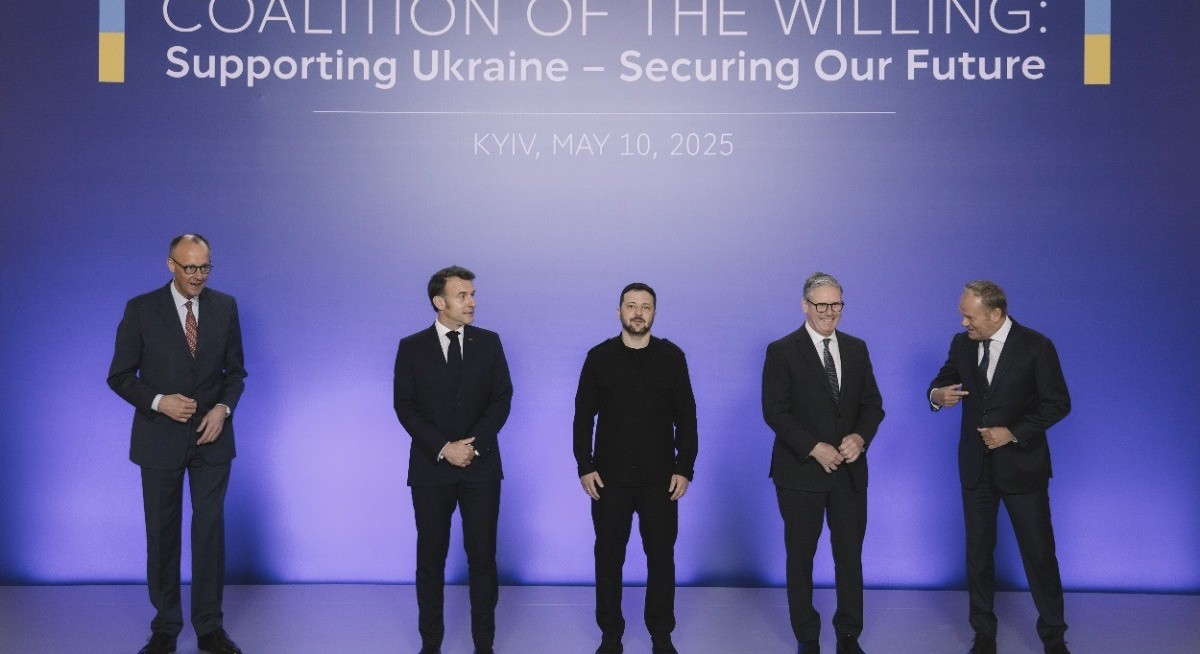


European leaders are deeply concerned by US efforts to cut a deal that was drafted with Russia and would represent a capitulation by the West. It’s shattered confidence in the Trump administration on the continent and raised more existential questions: The transatlantic alliance is fracturing — can Europe defend itself?
European diplomats sometimes compare managing Trump’s policy on Ukraine to riding a roller coaster. Right now, they are staring down a particularly steep drop.
Kyiv’s allies had hoped Ukraine was in a “better place”, Starmer told Bloomberg in October. They’d moved past Trump’s Oval Office shouting match with President Volodymyr Zelenskiy and his Anchorage summit with Russia’s Vladimir Putin. The US had seemed to pivot to a tougher stance against Moscow, imposing sanctions on its major energy companies.
If Kyiv could be supported militarily and financially through the winter, Ukraine’s supporters saw Russia’s economic struggles intensifying next year, losing Putin his negotiating leverage.
See also: Tankers speed through Hormuz chokepoint on US-Iran tensions
Yet European officials were always clear-eyed that there would be further lurches. Last month, one came. A new US-Russian peace plan emerged, forcing them to reach again for their strategy of publicly welcoming American efforts, and relying on Putin to derail them.
That approach is now being tested to its limits. And it’s not clear whether there’s a plan B.
Bloomberg News’ revelation that US envoy Steve Witkoff had advised Russia on how to pitch a plan for Ukraine to Trump led many in Europe to lose trust in the president’s negotiators. Macron expressed that on a European leaders’ call reported by Der Spiegel, reportedly warning that the US could be about to “betray” Ukraine. Merz was said to have accused the Americans of “playing games”.
See also: Iran signals US negotiations won’t lead to quick resolution
Meanwhile, the US in its strategy document said European officials “hold unrealistic expectations for the war” and lamented that the continent is suffering from a “lack of self-confidence” that’s most evident in its relationship with Russia.
For the UK, the challenge is particularly acute: Starmer has sought to position Britain as Ukraine’s leading ally and the European nation that’s closest to the US. The unique nature of its intertwined military and intelligence partnership means that for London a rupture in the so-called special relationship is unthinkable.
That’s partly why the UK has seen itself as managing Trump’s moves more calmly than some European counterparts. British officials note that claims of an imminent deal proved unfounded, that Putin appeared to reject US proposals in a meeting with Trump’s envoys this week, and that the plan appears to have been altered at least slightly to Ukraine’s benefit.
But the Europeans see potentially different dynamics this time around. European diplomats report that communication with US and Ukrainian sides has not been easy of late. They are also increasingly prepared for the prospect of Trump walking away if he cannot get an agreement.
“The risk remains that the US walks away from the whole issue and leaves it up to the Europeans to deal with it,” said John Foreman, former British defence attache to Moscow and Kyiv. “Statements of standing ‘shoulder to shoulder as long as it takes’ aren’t a strategy. With the US out, Europe will have to decide whether it can afford to continue to support Ukraine militarily and financially.”
Meanwhile, Zelenskiy is under pressure from both the US and a domestic corruption scandal that has brought changes to his top team, potentially weakening Kyiv’s ability to resist a bad deal, one official said.
It also remains unclear whether Europe will succeed in producing a viable plan to continue financing support for Ukraine. A proposal to use frozen Russian central bank assets to fund Kyiv remains in the balance, held up by Belgium and opposed by the US. Merz has pushed back against any US attempt to take the money for itself, warning there was “no possibility of leaving the money we mobilise to the US”.
To stay ahead of Singapore and the region’s corporate and economic trends, click here for Latest Section
The continent’s primary objective is to avoid a situation where a battered Zelenskiy is forced by the US to withdraw troops from Ukraine’s Donbas region and agree to a deal without any serious American security guarantees. European officials say that would not be a just peace and would only encourage a future wider war with Russia. Delegations from the continent will travel to the US in coming days to discuss the state of talks.
Europe — and the UK in particular — still holds out hope that Trump will come back round to his October viewpoint, see Putin as the peace blocker and ratchet up pressure on Russia’s economy. But leaders are also wary he could wash his hands of the war if he can’t get a deal.
There are different versions of what that could look like, a Western European official said. A worst-case scenario would be him lifting pressure on Russia, blocking US weapons from being used by Ukraine and stopping intelligence-sharing with Kyiv, leaving Europe truly on its own. A less-bad outcome would be Trump saying it’s now Europe’s war, but continuing weapons sales to Nato for use by Ukraine, and maintaining the intelligence relationship, they argued.
Starmer, Macron and Merz see their defining mission as preventing a cleavage between the US and Europe, something they see as a key Russian strategic objective. That is also revealing of the continent’s ongoing reliance on America.
“Europe has become accustomed to the US security blanket, under-invested for years, ignored the warning signs of disengagement, nor prepared adequately,” said Foreman. “The consequences of this strategic misjudgement are now clear.”
All three European leaders face domestic rivals to their political right who have enjoyed support from nationalist Trump officials such as Vance. The security strategy alluded to the need for political changes in Europe to “reestablish conditions of strategic stability across the Eurasian landmass, and to mitigate the risk of conflict between Russia and European states”.
Still, the document indicated continued US engagement on the continent. “Not only can we not afford to write Europe off, doing so would be self-defeating,” it said.
Uploaded by Chng Shear Lane




