




“The economy remains resilient in a challenging global environment,” it said in a statement. “At the same time, the outlook is still uncertain, owing particularly to ongoing global trade policy uncertainty and geopolitical tensions.”

ECB officials have described monetary-policy settings as being in a “good place” for now, and neither traders nor analysts see borrowing costs changing for the next two years. But heightened uncertainty over inflation and growth has returned of late as Donald Trump again wields the threat of tariffs and a stronger euro weighs on prices.
Other central banks are also on hold: The Bank of England kept its benchmark unchanged earlier Thursday and the Federal Reserve sat tight last week. Both, though, are expected to cut rates further in the months ahead.
See also: Paramount offers to fix EU concerns over US$110 bil WBD deal
Following the ECB’s decision, the euro maintained an earlier loss amid broad-based dollar gains, trading 0.1% weaker at US$1.1795 ($1.50). Markets kept bets on ECB easing, pricing five basis points of cuts by year-end. Yields on benchmark German bonds were little changed at 2.86%.
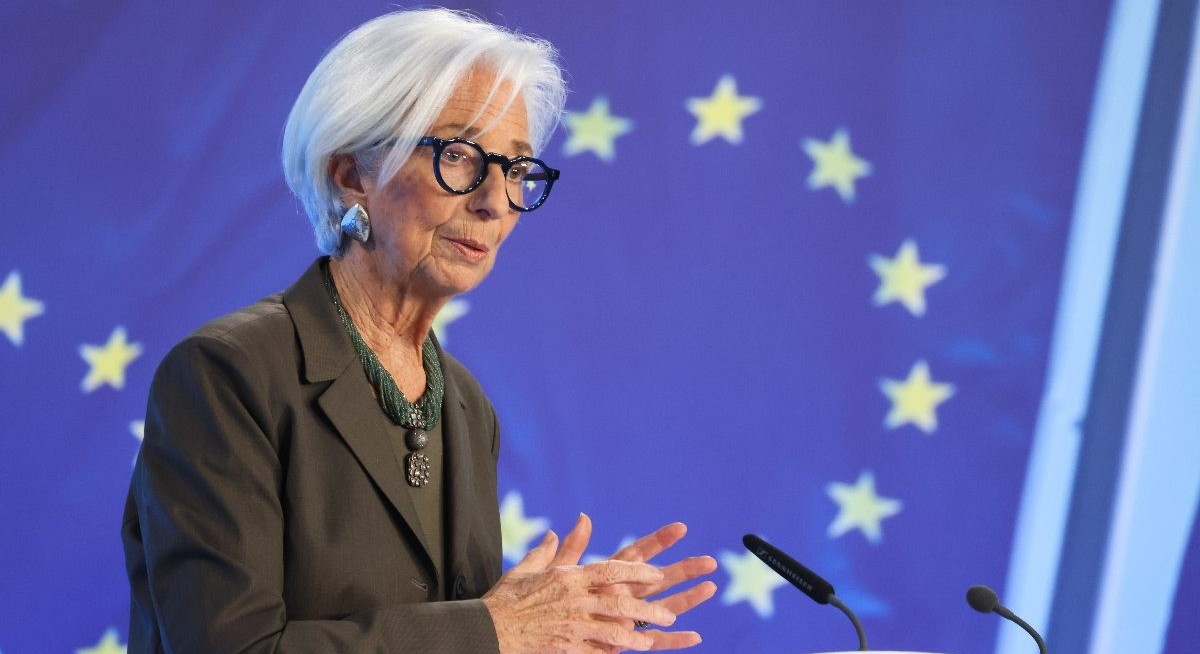
ECB President Christine Lagarde will discuss the situation in Europe at a press conference at 2.45pm in Frankfurt.
The euro zone performed surprisingly well at the end of 2025 and should benefit from a spending splurge by Germany as well as the region’s race to rearm. A retreat in inflation below the ECB’s 2% goal, meanwhile, is seen as only temporary.
See also: Nobel Laureate Aghion steps into the ring, fighting for European innovation and AI
Risks are mounting, however. The foggier outlook, particularly on tariffs, could curb investment and drag down growth, ECB Executive Board member Piero Cipollone cautioned last week.
That’s one reason why policymakers need “full optionality” to react “quickly and decisively” if needed, Austrian central-bank chief Martin Kocher told Bloomberg TV.

The euro’s appreciation, at one point beyond the critical US$1.20 threshold, is another danger should it damp exports or make the undershoot in consumer prices more permanent.
ECB officials have a close eye on the common currency’s advance, according to Bank of France chief Francois Villeroy de Galhau. While they don’t target a specific exchange rate, the euro’s path will help guide decisions, he said.
The challenging backdrop coincides with a period of flux for the ECB, where Croatia’s Boris Vujcic will succeed Vice President Luis de Guindos in June and three other top officials — including Lagarde — will be replaced in 2027.




