




“The fact is that EM equities was a consensus asset allocation play this year and headed into the conflict in a very overheld position,” Geoffrey Yu, a senior market strategist at BNY, said in an interview. “The market is moving toward liquidity preservation, which means high-performing positions are most at risk, and emerging-market equities and also fixed income unfortunately are in this bucket.”
Investors withdrew money from exchange-traded funds that buy emerging stocks and bonds as of March 20, with outflows for the past two weeks totalling US$3.82 billion ($4.88 billion).

Trump’s deadline to Tehran to reopen the Strait of Hormuz or face strikes on its power plants, expires Monday evening New York time. but he said Monday US and Iran had “very good” conversations about an end to the conflict in the Middle East.
See also: Emerging-market stocks rise to record high on tech boost
However, oil remains above US$104 a barrel, keeping alive worries that high energy prices and strained supply lines will hurt global growth. The emerging-market stocks index is on track for a drop of more than 10% this month while the gauge of currencies has fallen more than 2%
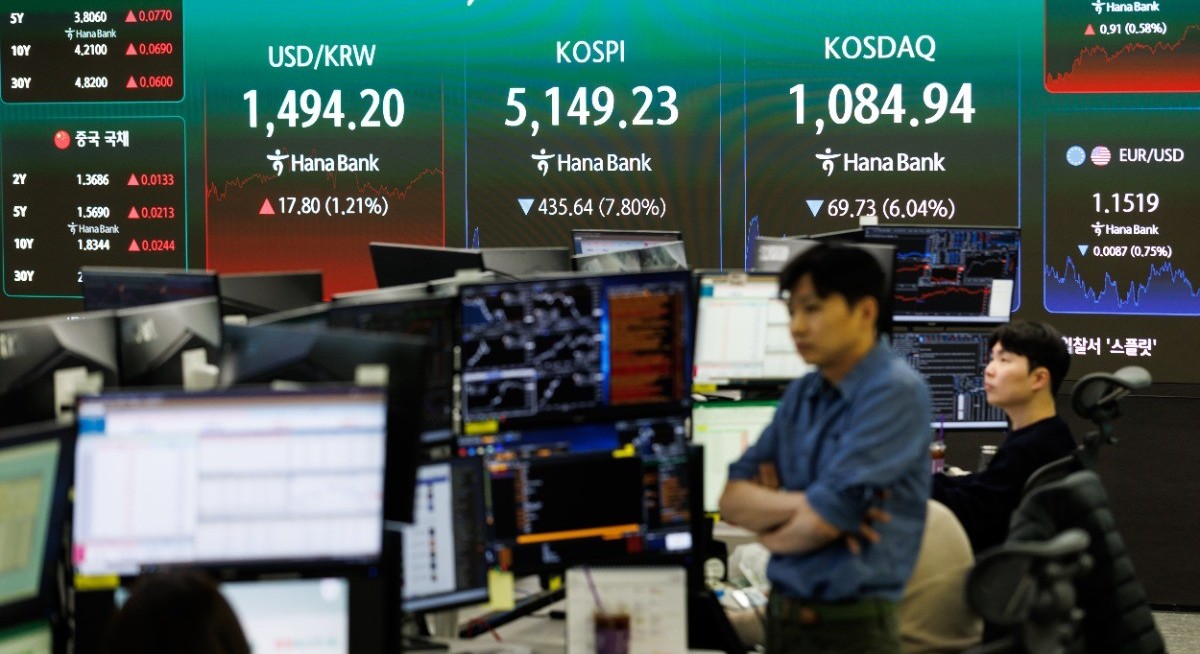
South Korean stocks led declines, with the benchmark Kospi tumbling as much as 6.4%. China’s Shanghai Composite briefly fell below 3,800, while the STAR 50 Index dropped more than 4%. Hong Kong’s Hang Seng Index was also headed for its biggest drop since April last year, and Taiwanese stocks fell to a two-week low as foreign investors continued to be net sellers.
Surging oil prices due to the Iran war are weighing on the currencies of net energy importers, which are predominantly located in Asia. The Korean won slid to its weakest level against the dollar since 2009 despite the nomination of Shin Hyun Song — a senior Bank for International Settlements official seen as a hawk — as the next central bank governor. The Philippine peso traded below the key 60-per-dollar level, adding pressure on authorities to stem losses. India’s rupee plumbed a new record low.
See also: Stock traders favour Asia over US as pre-war playbook returns
The South African rand dropped as much as 1.2% to trade at a four-month low, amid outflows from stock and bond markets. Traders at now pricing four rate hikes this year, flipping from having priced cuts just a month ago. The decline in metals prices pushed the Johannesburg stock market to the lowest since September.
South Africa’s central bank is expected to hold rates steady on Thursday but signal a hawkish stance. A similar outcome is expected of central bank meetings in Hungary, Chile and Mexico this week, with markets pricing rate hikes in all these countries over the coming year.
“Sentiment has soured across emerging markets for those on the wrong side of the Terms of Trade divide,” Citigroup Inc strategists said, referring to energy importing nations. “While emerging-market credit has historically shown resilience post-oil shocks, current price discovery in energy markets limits the normalisation of risky asset prices.”
Uploaded by Tham Yek Lee




