


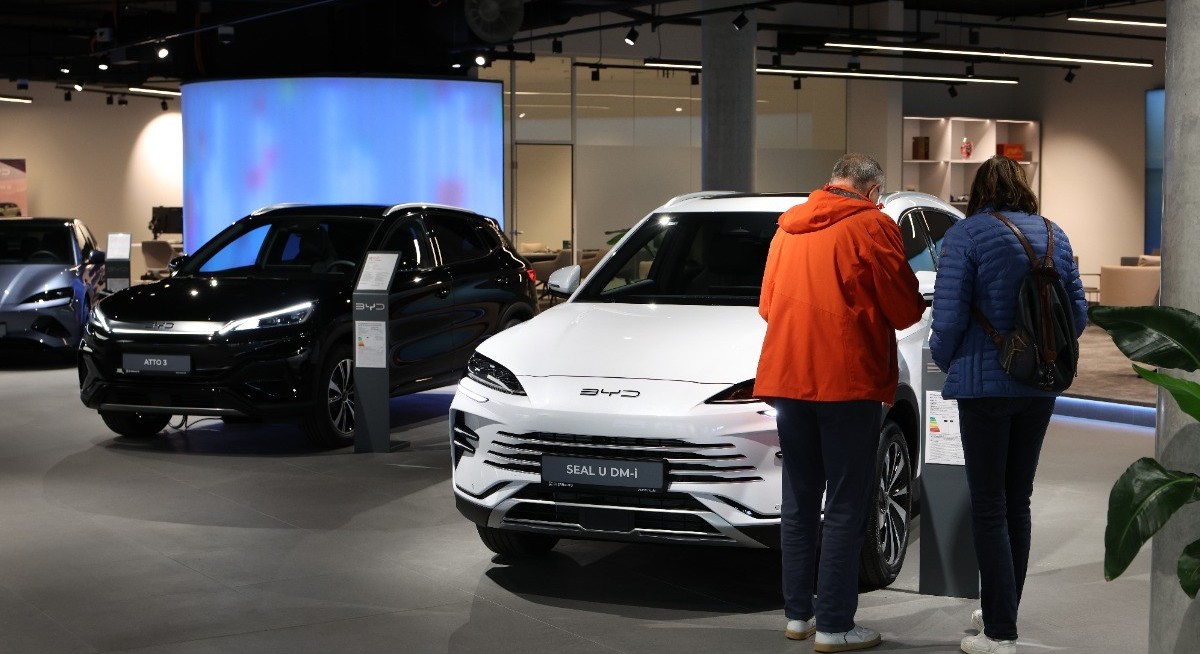


“The March data suggest that scaling up to electrification can occur at a meaningful pace when market and policy conditions align,” said Peter Mock, Europe director at the International Council on Clean Transportation. “The coincidence with the recent oil price shock is notable.”
The surge wasn’t entirely unexpected; online searches for EV listings intensified in the weeks after the war. In March, all told, consumers snapped up 1.1 million EVs, 2% more than they did in the year-earlier period, according to new global data from BloombergNEF. Some 17% of new cars and trucks sold around the world last month were entirely battery-powered, roughly the same share as in March 2025.

The EV gains came despite flagging sales in the world’s largest auto markets. While electric car transactions last month cooled in Canada, China and the US, a surge in demand in Europe, Australia and parts of Asia more than compensated for the declines. Tesla Inc called out the uptick in orders as a tailwind to its recent quarterly results. “2026 has had an interesting start, not just for us, but I think the world in general,” Chief financial officer Vaibhav Taneja said on a conference call. “On the autos business, we have seen a resurgence in demand.”
See also: BYD to send hot-selling SUV to Europe, pressuring incumbents
Where EV sales are bubbling up, analysts point to a cocktail of two ingredients: elevated gas prices and affordable new models from Chinese automakers. Indeed, Chinese exports of EVs and hybrids reached a new record in March, increasing 140% from the previous year, according to the China Passenger Car Association.
The renewed global appetite for EVs is good news for Chinese manufacturers. Major export markets that saw a sizeable jump in EV shipments included Australia, up 67% from February; Belgium, up 63%; and Germany at 34%, according to Chinese customs data. The increases align with survey results showing interest in EVs surging as fuel prices have risen.

See also: Electric vehicle outlook sinks as US withdraws policy support
Graham Kettlewell, a 62-year-old near Sydney, has had the EV itch for years. As an atmospheric chemist, Kettlewell has spent his professional life measuring the steady ramp-up of CO2 in the atmosphere. Still, he didn’t ditch his 2014 Nissan Altima until a few months ago when he got his hands on a BYD Co Dolphin, a zippy little Chinese hatchback that sells for about US$30,000 in Australia.
Drilling for oil, refining it, shipping it all over the world and burning it to create greenhouse gases “doesn’t seem like the best approach,” Kettlewell said. “This was my take on things prior to the fun we are currently having in the Strait of Hormuz.”
With solar panels on the roof of his home that fuel the car, Kettlewell has seen his transportation costs drop from US$100 a week to US$4. Gas prices in Australia have spiked more than in many countries and thousands of Kettlewell’s neighbours are running similar equations. Australians bought 14,100 EVs last month, 68% more than in the year-earlier period.
Similar forces sped EV sales across Europe where nearly 400 electric models are now on offer largely due to Chinese imports, up from 368 a year ago.
The sales were spurred in part by policy changes, some a direct response to the Iranian oil crisis, according to BloombergNEF analyst Sada Wachche. Germany, for example, has reintroduced purchase subsidies of up to €6,000. Meanwhile, France has strengthened an electrification mandate for fleets of vehicles.
“Every market has a lot of levers, but especially Europe,” Wachche said.
Meanwhile, EV sales continued to swoon in China and the US, the world’s two largest auto markets. Chinese consumers have largely been insulated from gas price spikes and the government has curtailed some purchase incentives.
EV sales in the US declined 27% from the year-earlier period. However, analysts note American EV sales were particularly strong in March 2025, as drivers rushed to grab expiring federal incentives. Meanwhile, a tide of used EVs is pulling buyers away from the new market. US car consumers have become bargain hunters and are snapping up used EVs faster than any other kind of car or truck.
Uploaded by Felyx Teoh




