


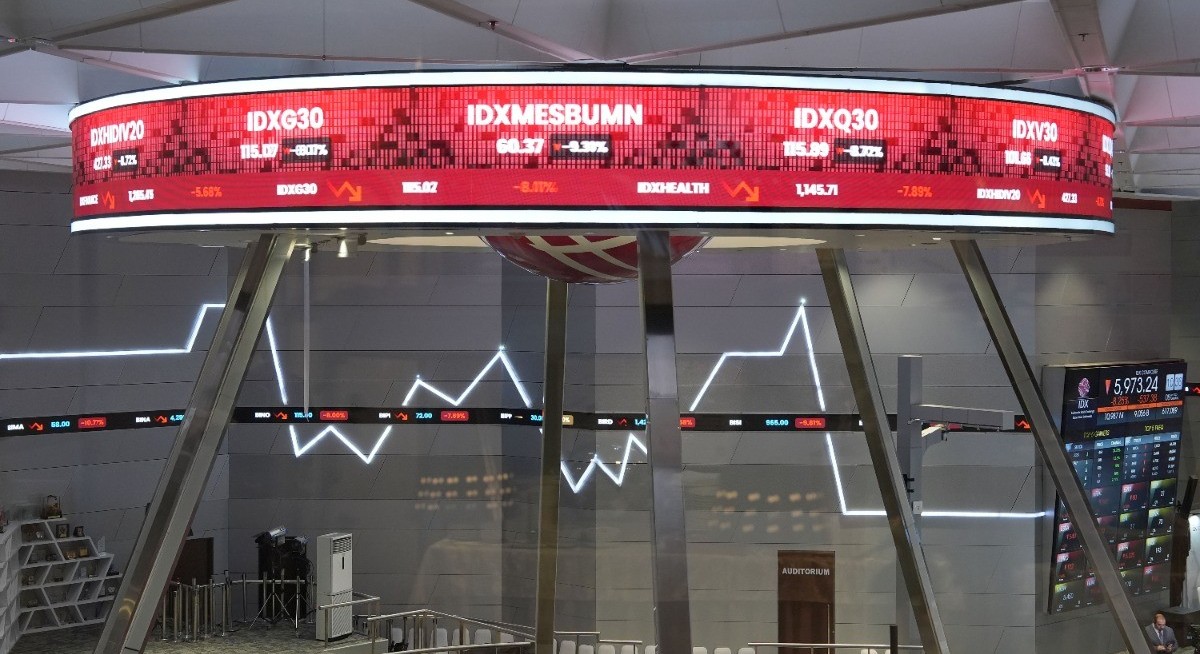


“They’re saying the 3% budget deficit cap is hard to keep,” said John Foo, founder of Valverde Investment Partners Pte in Singapore. “Something has to give. You either increase the gap, or cut back on growth. Whatever happens, it’s not good.”
Transport and property stocks were among the biggest losers in the benchmark index, which is heading for a fourth day of losses. The nation’s 10-year bond yield jumped 11 basis points to its highest level in 10 months, while the rupiah weakened 0.2% to 16,985 per dollar.

Here are some comments from analysts about Indonesian assets and its fiscal situation.
See also: South Korea’s export surge continues as AI boom fuels chip sales
Felix Darmawan, BCA Sekuritas
- The surge in oil prices could add strain to the fiscal outlook if it stays above the levels assumed in the state budget
- With the long Eid holiday period coming up, investors tend to hold back and wait for clearer signals, which adds to the selling pressure
- Transaction value has been noticeably lower in the past few days and the market feels quieter than usual, another sign that investors are stepping back and waiting for clarity
Suryaputra Wijaksana, PT UOB Kay Hian Sekuritas Indonesia
See also: Saudi economic growth slows as Iran war hits oil exports
- For fixed-income investors, yield risk is materializing and foreign outflows from bonds are intensifying and could accelerate if global risk sentiment deteriorates further
- The combination of rising global yields, worsening risk perception following outlook downgrades from rating agencies and higher supply suggests a challenging backdrop for government bonds in the near term
Mohit Mirpuri, SGMC Capital Partner Pte
- The JCI is lagging regional peers mainly due to thin liquidity and cautious positioning ahead of the upcoming long holiday period” as investors are reluctant to commit fresh money when markets will be shut for a week and global risks remain elevated
- Sentiment is also weighed down by lingering MSCI concerns, the expected release of shareholder concentration disclosures, and headlines around fiscal deficit risks
- Volatility is likely to remain elevated in the near term
Ari Jahja, Macquarie Capital
- Feedback from investors suggest that they would be more supportive of the fiscal reallocation path compared to a more immediate deficit cap removal scenario
- The combination of a weak rupiah and high energy costs may trigger a hawkish stance from Bank of Indonesia to curb imported inflation
- We recommend investors stay defensive in this volatile environment
Uploaded by Evelyn Chan




