


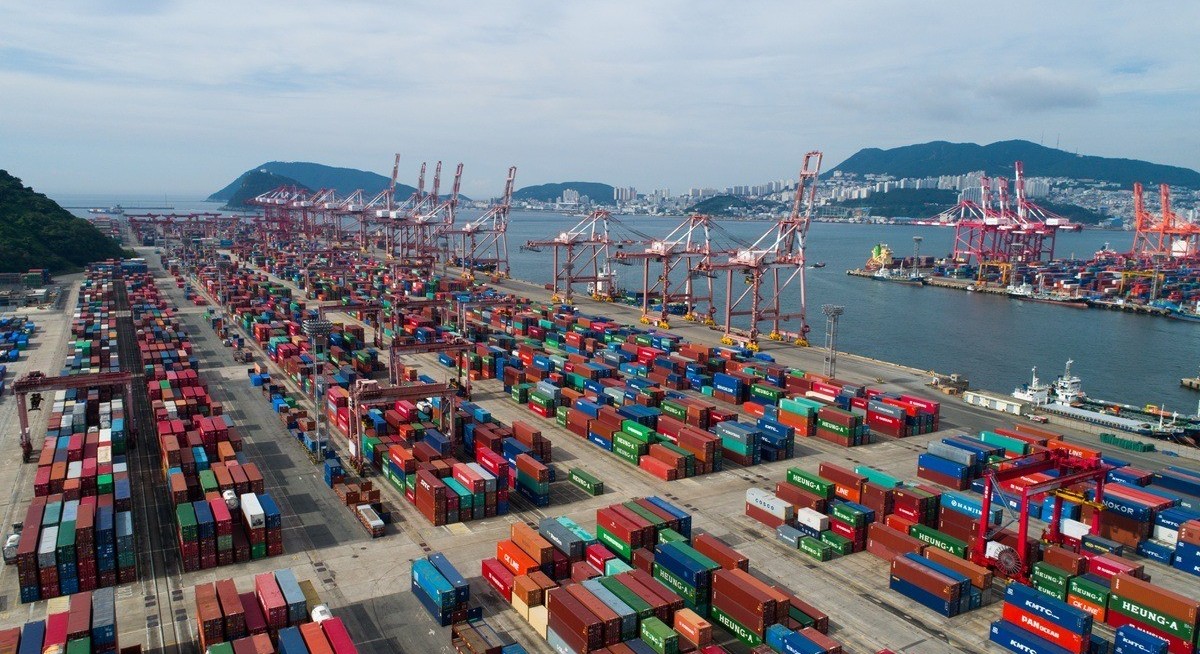


The data reinforce signs that South Korea’s export engine remains resilient for now, even as external risks intensify. The Iran conflict has pushed up oil prices, boosting import costs, and adding to inflation pressure in an economy heavily dependent on energy imports.
For policymakers, the divergence between strong exports and growing cost pressures complicates the outlook. Higher oil prices and a weaker won are expected to lift inflation while weighing on growth, a challenge flagged by newly appointed Bank of Korea governor Shin Hyun Song.
But for now, it’s the AI-led boom in shipments that’s proving to be the dominant economic force, as it is in Taiwan. Data from the island on Thursday showed that the economy grew at its fastest since 1987 in the first quarter.
Semiconductors remained the primary driver of South Korea’s export growth, with US$31.9 billion in shipments. That was up 173% from a year earlier, following March’s record US$32.8 billion in exports, as sustained investment in artificial intelligence and data centers underpinned demand.
See also: MAS June survey shows expectations of growth moderation and higher inflation
Fuel exports also supported growth, reflecting higher crude prices.
By destination, exports to the US increased 54%, while the value of shipments to China climbed 62.5%.
In the first quarter of this year, gross domestic product grew 1.7%, the fastest pace in more than five years. That marked a reversal from a contraction at the end of 2025.
See also: Singapore warns growth outlook to weaken on energy crunch
The strength in April exports masks underlying vulnerabilities. Private consumption rose only modestly in the first three months of the year, while rising energy costs linked to the Iran conflict and a weaker won have added pressure on households and businesses. Policymakers are now grappling with a more complex trade-off as external demand from semiconductors remains resilient, but domestic sentiment weakens.
Import prices also surged sharply in March, underscoring how quickly external shocks are feeding into the domestic economy. That dynamic is likely to keep the central bank cautious as it assesses whether the inflationary impact proves temporary.
South Korea’s consumer confidence plunged in April, slipping into pessimistic territory for the first time in a year, given concerns over energy supply disruptions and a weakening economic outlook. Inflation expectations also firmed to one of the highest levels in two years, underscoring growing worries over rising prices even as domestic demand softens.
Former BOK governor Rhee Chang Yong said the central bank would be inclined to look through short-lived shocks, but could respond if price pressures become persistent.
Uploaded by Liza Shireen Koshy




