


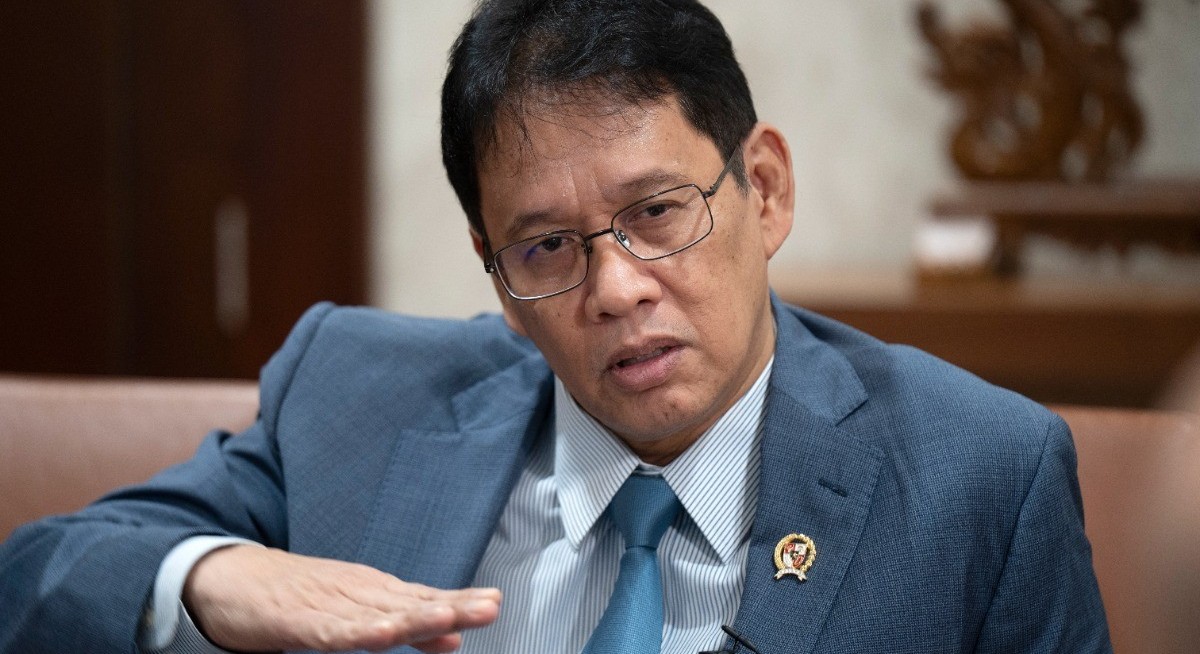


(April 2): Indonesia will hold off raising subsidised fuel prices despite ongoing oil shocks from the Iran war, with Finance Minister Purbaya Yudhi Sadewa warning any hike could undermine growth and threaten social stability.
In an exclusive interview with Bloomberg News on Thursday, Purbaya said the government will instead rely on a mix of fiscal measures — including broad 10% cuts to ministry spending and a potential new export tax on coal — to absorb the hit while keeping the deficit below its legal limit.
“If we remove the subsidies, inflation will increase, the cost of capital will increase,” Purbaya said. “There will be more protests on the streets, which will lower economic growth quite significantly. It’s a very risky policy.”
“So we choose — under current conditions — to prevent that from happening,” he said.
The remarks offer one of the clearest signals yet on how President Prabowo Subianto’s administration intends to handle a spike in global energy prices: in essence, protect domestic fuel costs, rein in spending elsewhere and look for new revenue streams rather than risk politically costly subsidy rollbacks.
The approach underscores the balancing act facing Southeast Asia’s biggest economy as it tries to preserve purchasing power, reassure investors over fiscal discipline and sustain a rebound in growth. More broadly, Purbaya cast stronger growth as the government’s main safeguard against renewed social and political instability, arguing that better job creation and public confidence are essential to avoiding a repeat of last year’s unrest.
See also: Indonesian stocks, bonds drop on concern over budget-deficit cap
Purbaya, 61, said Indonesia could withstand average oil prices of around US$100 for the rest of the year while keeping its budget deficit at about 2.9% of gross domestic product, just under the legal ceiling. That fiscal cap has become a focal point for international investors and ratings firms. Moody’s Ratings and Fitch Ratings Inc recently lowered the country’s credit outlook.
He said part of the budget savings — which he said could eventually reach 190 trillion rupiah (US$11.2 billion or RM44.8 billion), coming from Prabowo’s free meals programme and cuts across ministries, among other things — would be used to cover rising subsidy costs. He also suggested oil prices significantly above US$100 were not likely to persist.
“I don’t have to worry about that, because if oil prices reach that level, Trump himself will be in trouble,” he said. “I believe he’ll find a way to ensure oil prices will not reach that level.”
See also: Spain courts China in new Asia strategy as ties sour with US
If required, Indonesia could also draw on its budget reserve funds, known as Saldo Anggaran Lebih, or SAL, a pool of leftover government capital from previous budgets that sits with the state treasury and can function as a rainy day reserve.
SAL currently stands at around 420 trillion rupiah, Purbaya said. Authorities last year distributed about 200 trillion rupiah from it to state-owned banks to support lending and boost economic activity, underscoring SAL’s dual role as both a fiscal backstop and a policy tool.
Purbaya dismissed concerns that ministry spending cuts would weigh on growth, saying the savings will mainly come from expenditures he views as unproductive, like having meetings in hotels and travelling too much to other areas of the country.
“We can optimise that and reduce the budget accordingly without slowing down economic activity or production,” he said.
Purbaya, who took over as finance minister in September last year, replacing Sri Mulyani Indrawati following her removal from the post after a cabinet reshuffle, also said the economy likely grew at least 5.5% in the first quarter, and probably as high as 5.7%, and remains on track for a 6% expansion this year, which would be the fastest pace in more than a decade.
“One thing I’m sure of is that the population right now is more satisfied than before,” he said.
Purbaya also said he plans to introduce new export taxes on coal and possibly also nickel — two of Indonesia’s most lucrative exports. A coal export tax will likely come this year, he said.
To stay ahead of Singapore and the region’s corporate and economic trends, click here for Latest Section
While the fresh levies would raise revenue, Purbaya said the main objective is to give the government a tool to check under-invoicing of exports, something he described as a significant source of leakage.
The costly energy subsidies, long treated as politically sensitive in resource-rich Indonesia, are a key buffer in the economy, helping to keep transport and food prices in check in a nation where household consumption makes up more than half of GDP. By anchoring energy costs, the government limits inflation pressures and supports purchasing power, particularly for lower-income households.
Longer term, Purbaya said Indonesia would effectively phase out some subsidies by moving consumers to alternative fuels. Officials are speeding up a plan to raise the level of palm oil in a biodiesel blend, and are increasingly talking about boosting the country’s modest solar capacity.
Indonesia plans to roll out up to 100 gigawatts of solar capacity, mainly through village-scale systems that would hopefully cut diesel use and accelerate rural electrification.
“If we conduct it gradually, it will be realistic,” he said. “If I’m saying it will be implemented in six months or one year, that’s maybe not realistic. But I’m an engineer. I have an engineering background, so I understand how this works.”
Purbaya additionally plans to meet with investors and possibly credit ratings agencies later this month in his first overseas trip as finance minister, when he heads to Washington for IMF and World Bank meetings. He said some recent scepticism was understandable, both “because I’m new” and given that when uncertainty creeps into the global economy, investors seek safe havens.
But when conditions improve, investors will come “back to our country because we’re not playing around with improving the fundamental economic condition,” he said. “Higher growth rates will be there.”
Uploaded by Evelyn Chan




