


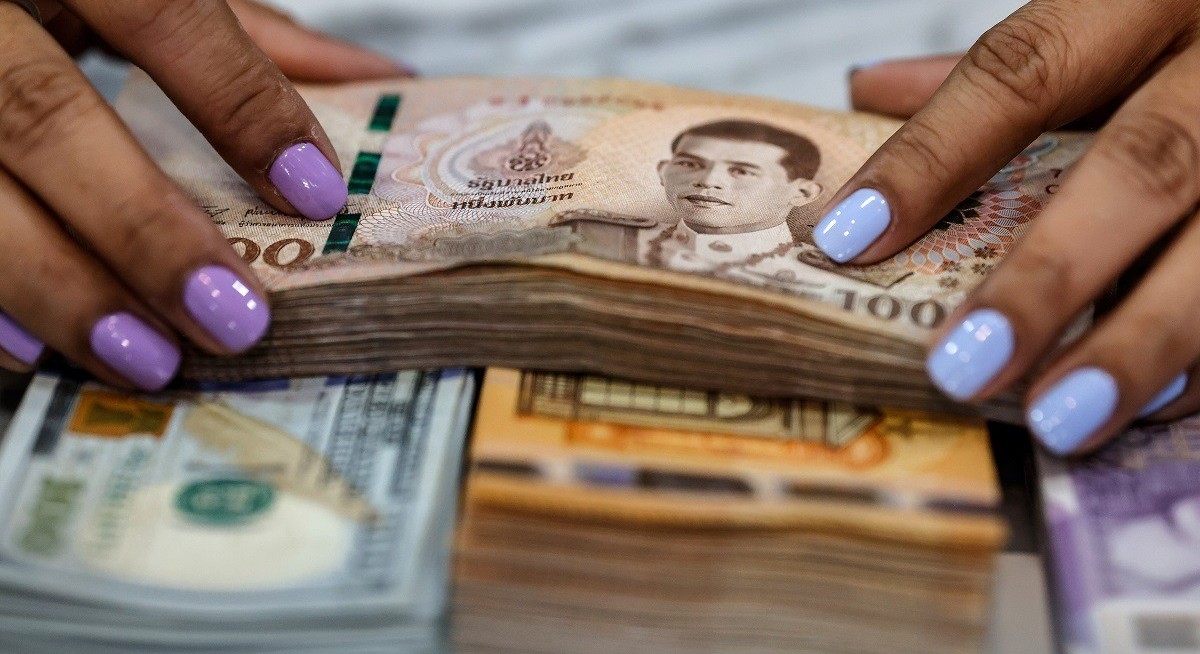


(April 27): The Thai baht has been among the worst performers in Asia since the start of the Iran War and it’s at risk of further losses as the conflict drives up oil prices, strategists say.
The baht is likely to come under renewed pressure given the size of the nation’s energy imports, according to MUFG Bank Ltd. The seasonal pattern of Thailand’s current account will weigh on the currency in the second quarter, Malayan Banking Bhd says.
The Thai currency has already weakened more than 4% since the war began in late February, trailing only the Philippine peso in Asia. The baht retraced some of its declines in early April as a US-Iran ceasefire began, but it has started to drop again as talks between the two sides have stalled.
“We still see risks to the downside for Thai baht, given it runs the largest net oil-and-gas trade deficit in the Asia region,” said Lloyd Chan, a foreign-exchange strategist at MUFG Bank in Singapore. “We are mindful that the US blockade of Iranian ports still persists, which will continue to disrupt energy flows.”
The baht will probably weaken to 33.90 per dollar this quarter, Chan said, which would put the currency at the weakest level since April 2025.
Most vulnerable
See also: Asia’s beaten-up currencies gain traction after defensive moves
The Thai currency is particularly vulnerable as the nation is the most exposed in Asia to higher energy costs, according to a study by Nomura Global Economics, based on factors such as the share of fossil fuels in total energy supply and the energy trade balance.
“Higher oil prices and a seasonally narrower current account keep us cautious on the baht in the second quarter,” said Alan Lau, a foreign-exchange strategist at Maybank in Singapore. The baht is set to end this quarter at 32.50 per dollar, assuming oil prices don’t fall significantly, he said.
Maybank’s forecast matches the median estimate of analysts, surveyed by Bloomberg, which represents a slight decline through the end of June from the current level of about 32.40 per dollar.
See also: Indonesia tightens rule on forex purchases after rupiah's new record low
Thailand’s current-account data due Thursday will give an initial reading about the impact of surging oil prices. The February numbers had shown an unexpected improvement in the surplus, but there seems little reason to be optimistic this time around.
Economic growth may slow to around 1.3% this year if the war drags on, versus a pre-conflict estimate of 1.9%, Bank of Thailand governor Vitai Ratanakorn said this month. The central bank has also signalled it will refrain from raising interest rates “for as long as possible” to support the economy, even though inflation is set to accelerate
“The BOT has already downgraded growth and flagged a negative impact on the current account, which is bearish for the baht over the medium term,” said Jeffrey Zhang, an emerging markets strategist at Credit Agricole CIB in Hong Kong.
The baht is likely to weaken to 33 per dollar by year-end, he said.
Uploaded by Magessan Varatharaja




