


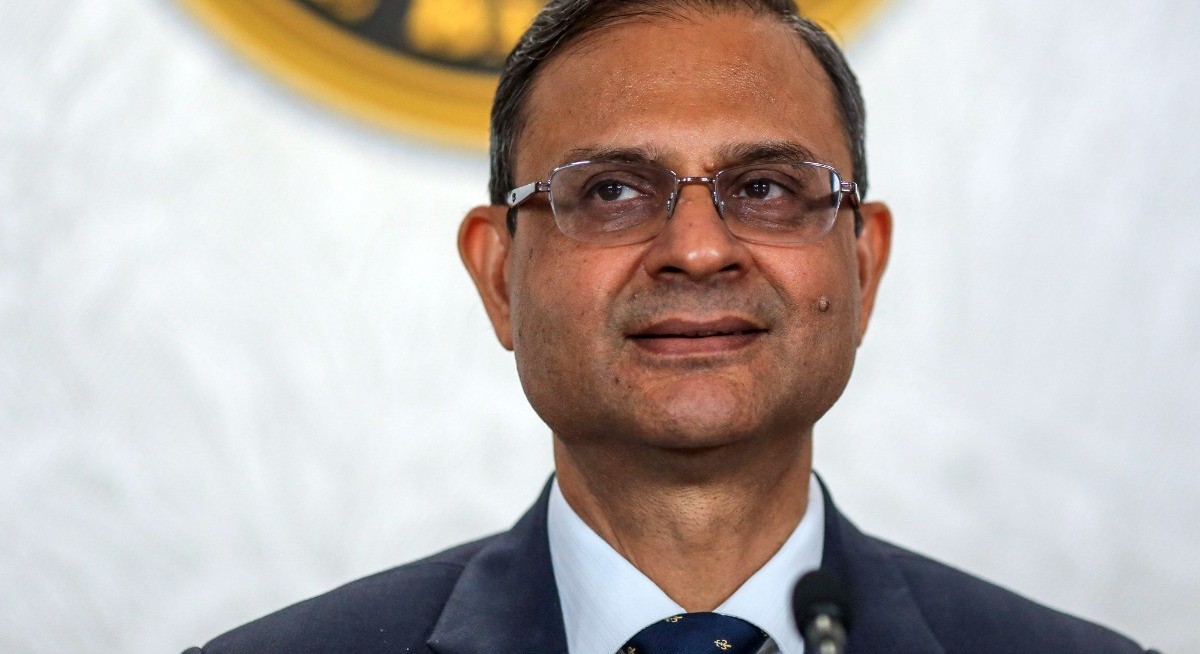


(April 8): The Reserve Bank of India’s recent currency market curbs aimed at quelling speculation against the rupee are temporary and will not remain in place forever, Governor Sanjay Malhotra said.
Arbitrage positions had been building between offshore and local markets toward the end of March, Malhotra said. While these linkages are important for efficient price discovery in normal times, excessive volatility and rapid build up of positions can be destabilising, he added.
“Obviously, these are not measures which are going to remain there forever,” he said at a briefing after the monetary policy review on Wednesday, where the central bank held interest rates at 5.25%.
The comments are the central bank’s first since it introduced a US$100 million cap on banks’ onshore currency positions and barred them from offering non-deliverable forwards, the most widely used offshore rupee instrument.

The steps have helped stabilise the rupee after it weakened past 95 per dollar to a record low in late March. The currency has recovered more than 2% after the first set of measures was announced on March 27. The rupee rose 0.5% to 92.54 per dollar on Wednesday, tracking gains in Asian peers amid a temporary ceasefire in the Iran war.
See also: Malaysian importers used ceasefire window to buy dollar — Citigroup
Still, the regulatory actions triggered dislocations across markets. Onshore hedging costs have climbed to a three-year high, while dollar-rupee implied volatility has surged to the highest level in four years. Banks have also taken a hit, with Jefferies estimating system-wide losses of around 50 billion rupees.
The arbitrage trades were leading to an “artificial drying up” of supply in the currency market, affecting prices, Deputy Governor T Rabi Sankar said at the same briefing. “Our objective of doing this was to cool that phase down.”
Malhotra also allayed concerns that the central bank is moving away from its push to better integrate with global markets.
See also: Dollar hits four-week low as ceasefire boosts risk appetite
“We stand committed long-term to the development, broadening and deepening of these markets and to the internationalisation of the rupee,” he said. The curbs don’t signal any structural change, he added.
Uploaded by Arion Yeow




