


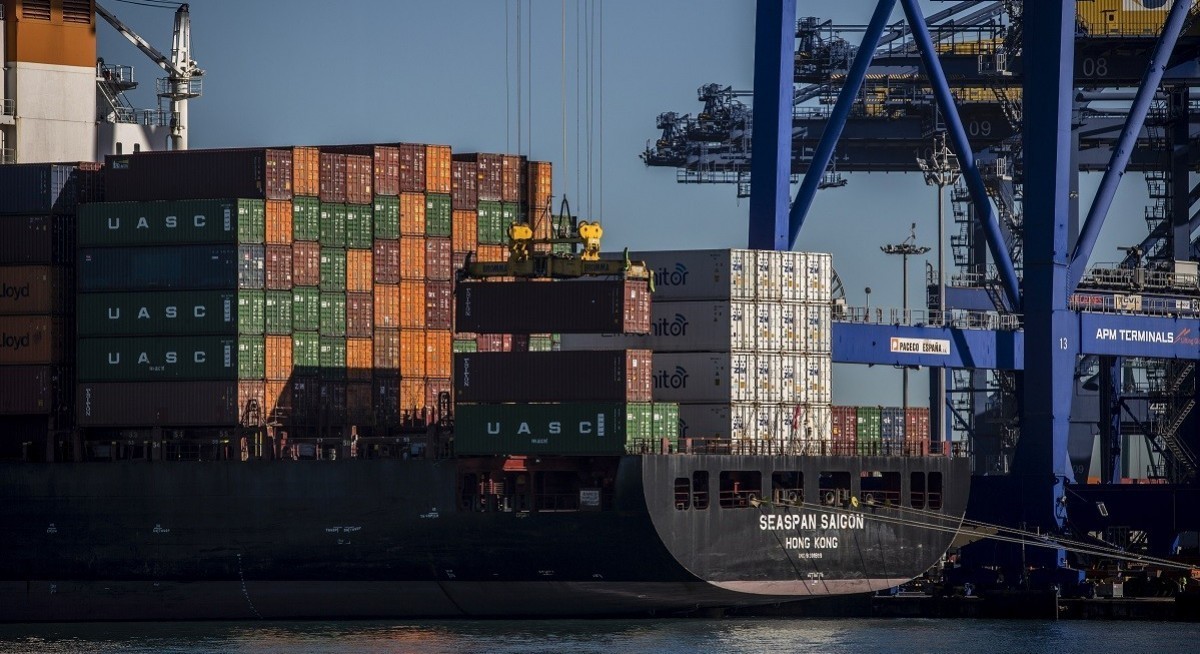


Of more interest is YZJ's plan to invest US$825.7 million for a 10% stake in Poseidon which is the holding company of Seaspan, one of the world’s largest containership lessors.
Seaspan, a long time YZJ customer, operates long-term charters with major liners, providing stable contracted cash flows and counter-cyclical earnings relative to shipbuilders.
Loh notes that the acquisition implies a valuation of 2 to 25% above a third party’s assessed fair value range of US$661 - 811 million, and is also around 1.8x book value based on Poseidon’s NTA of US$459 million.
"While financially full, we believe that the premium reflects strategic considerations, including securing alignment with YZJ’s key customer, Seaspan, and likely enhances order visibility going
forward," says Loh.
Loh, citing YZJ, notes that the acquisition would have increased 2025 pro forma net profit by around 5%. "The investment positions YZJ further upstream in the containership value chain, providing direct visibility into fleet renewal cycles and global charter dynamics," he adds.
Industry-wide, container freight rates have normalised from the 2021-22 peaks, but structural drivers remain firmly intact and fleet replacement continues.
From his perspective, YZJ's investment in Poseidon is a "clear step" towards vertical integration.
See also: Keppel DC REIT is JP Morgan’s preferred data centre play in Singapore
"YZJ should now have forward visibility on fleet expansion and replacement needs, thus enabling it to better plan yard capacity, optimise slot utilisation and secure repeat orders.
"In effect, the company embeds a degree of order pipeline visibility into its business model, reducing earnings volatility and mitigating the traditional boom-bust dynamics of shipbuilding," says Loh, who is comparing this move to broader industrial trends of downstream integration to stabilise margins.
Meanwhile, Loh is of the view that container shipping industry remains robust, with charter rates near post-Covid-19 highs amid tight vessel availability, particularly for vessels above 2,000TEU.
Loh points out that freight rates have also been supported by geopolitical disruptions, including Middle East tensions, with China-Europe rates rising around 20% since February. He acknowledges that there will be near-term uncertainties, no thanks to US tariffs, but structural demand drivers remain supportive.
"Going forward, fleet renewal, decarbonisation, and regulatory compliance should continue to drive newbuild demand," says Loh. To reflect earnings from Seaspan, Loh has upgraded his earnings estimates for YZJ by 4% for FY2026 to FY2028 and by applying a target PE multiple of 10x, derived a higher target price of $4.75.
YZJ's FY2026 PE and EV/EBITDA multiples appear inexpensive at 8.6x and 5.3x respectively, especially given that it delivers a robust 2026 ROE of nearly 28% and well above that of its Korean peers.
With the orderbook now at nearly US$23 billion across 256 vessels, YZJ retains strong revenue coverage into 2029 supported by its robust shipbuilding margins, says Loh.
Key risks to the stock, according to Loh, include operational issues at its shipyard which could lead to a delay in the delivery of vessels to its customers, a resumption of the trade war with the US, and also volatility in domestic steel prices in China which would compress profit margins.
As at 10.17 am, Yangzijiang Shipbuilding shares changed hands at $3.90, up 1.83%.




