


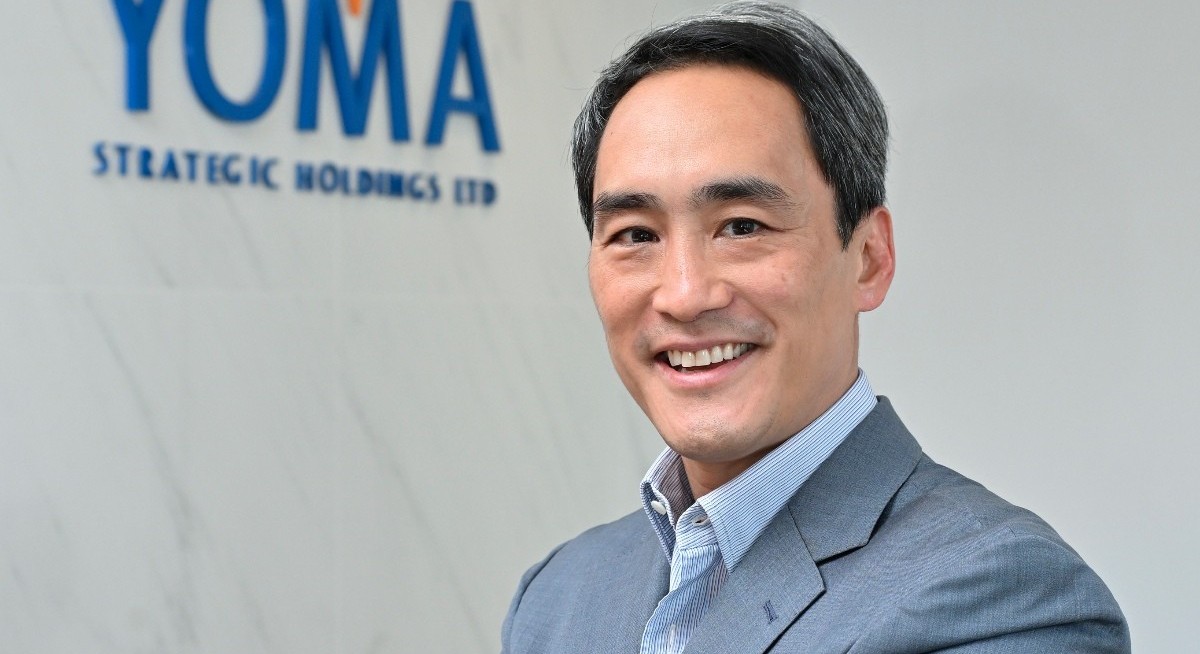


For its FY2026 ended March 31, net profit rose 75.7% y-o-y to US$23.9 million ($30.7 million) while revenue grew 13.7% to a record US$233.2 million. Yoma Land and Yoma F&B both posted record revenues, while Yoma Motors more than doubled its top line. Its CFO, JR Ching, describes the set of results as the “strongest overall financial performance” as the company celebrates its 20th year on the Singapore bourse.
Following the results announcement, DBS Group Research’s Derek Tan, in his unrated June 2 report, highlights the company’s cash flow, which he describes as the results’ “standout feature”. For FY2026, Yoma’s operating cash flow more than doubled to US$48 million, driven primarily by stronger collections from property sales and working capital improvements. This enabled the company to fund capital expenditure requirements, reduce borrowings and strengthen liquidity without significant reliance on external funding.
“While reported cash balances improved, investors should note that a substantial portion remains restricted, largely relating to Wave Money customer trust balances. Total borrowings remained broadly stable, although near-term maturities increased following debt reclassification, placing greater emphasis on refinancing execution over the next 12–24 months. Nevertheless, net gearing remained manageable at 17.8%, providing sufficient flexibility to support ongoing projects,” Tan says.

See also: E-commerce logistics hub gives SingPost flexibility to value up its floor space
Yoma’s strong results were achieved against an economy under severe strain. In 2025, Myanmar’s already weak economy, which contracted by about 9% between 2020 and 2024, was exacerbated by the earthquake of 7.7 to 7.9 magnitude, which caused over 5,000 domestic casualties. According to the World Bank, the disaster caused about US$11 billion in direct damage, equal to 14% of GDP.
According to Ching, the company’s outperformance amid subdued macroeconomic conditions was the result of a turnaround strategy it initiated in FY2024. He adds that this strategy involves a disciplined approach, focusing on aspects that were “within the company’s control”.
“That’s one of the things we had to learn following Covid-19 and the country’s political crises. There are only so many things we, as a group, can manage; we choose to focus on what is within our control. This includes taking care of our people, making sure we are developing and selling products that our customers want, as well as managing our capital structure and balance sheet,” says Ching in an interview with The Edge Singapore.
That is not to say the company was unaffected by events beyond its control. For instance, the earthquake’s epicentre was close to the country’s second-largest city, Mandalay. As a result, Yoma had to close several of its damaged restaurants temporarily, in addition to disruptions to its Wave Money network and platform, partly due to power outages. However, as its core business operations are mainly based further south in Yangon, the company did not face sustained disruptions, Ching says.
Urbanisation trend and product diversification
Yoma has seen some of its businesses being supported by the structural shifts happening in Myanmar. With conflict and natural disasters affecting parts of the country, more people are moving from outlying areas, particularly border regions, into cities such as Mandalay and Yangon — driving urbanisation.
Ching emphasises that many of those relocating are not necessarily lower-income labourers, but traders, entrepreneurs and business owners with some capital behind them. As they move into cities, their spending and investment are creating new demand for certain businesses. This has, among other things, led to substantial growth in Yoma’s real estate business, as it has seen demand from both buyers and renters seeking quality housing.
The other major macro factor driving real estate demand is the inflationary environment, coupled with the depreciation of the local currency. This has led to the tendency to move away from financial assets such as cash or bank deposits held in local currency. “Instead, they look for hard assets that can better preserve value, such as gold or real estate. As one of the country’s largest real estate developers, we are well-positioned to serve the rotation into real estate assets,” says Ching.
As such, Yoma Land posted revenue growth of 17.1% y-o-y in its FY2026, with its development business up 19.9%. The segment benefited from strong sales momentum at StarCity and Sandakuu projects, with the latter achieving near-complete sell-through.

To stay ahead of Singapore and the region’s corporate and economic trends, click here for Latest Section
As at March 31, the unrecognised revenue for all sold units at StarCity, Pun Hlaing Estate and City Loft West amounted to approximately US$90.34 million. Photo: Yoma
The revenue growth was in part driven by the ongoing strategy the company has employed since 2018, in which it broadened its product portfolio from primarily an upper- to high-end product range to a more affordable segment. This allows Yoma to penetrate a larger portion of the population. The first of such products to launch was City Loft at StarCity, which saw demand that validated the affordable residential unit market. The company has further expanded the segment, introducing an affordable product, Estella.
Another company-specific driver is Yoma’s focus on large-scale township developments, says Ching. Over the past five to six years — including during pandemic lockdowns and periods of political instability — these communities have become increasingly attractive because they offer reliable power, clean water, security, and a “more stable” internet than the rest of the country.
“This has helped lift StarCity’s population from just over 2,000 residents before Covid to more than 9,000 today, while Pun Hlaing Estate (PHE) has grown from around 800 residents to more than 1,300. As these townships gain scale, they create a virtuous cycle — a larger resident base brings more vibrancy, supports more amenities and commercial offerings, and in turn, attracts more people,” he adds.
As at March 31, the unrecognised revenue for all sold units at StarCity, PHE and City Loft West amounted to approximately US$90.34 million. PhillipCapital analyst Paul Chew, in his unrated report dated June 2, expects a launch pipeline of US$110 million to US$120 million in FY2027. Some of the key projects for launch include City Loft West, ARA, StarCity and PHE. There are also potential projects outside Yangon, Chew adds.
The full picture
For FY2026, Yoma F&B’s revenue grew 16.7% y-o-y to US$38.39 million. The company now operates 81 restaurants across 11 cities, reinforcing its position as Myanmar’s largest restaurant operator.
The revenue growth was driven by strong consumer demand, several successful marketing campaigns, a larger operating platform and additional fees from the YKKO franchise expansion. The strength in consumer spending occurred despite multiple pricing revisions at both KFC and YKKO to counter inflationary cost pressures.
For the F&B segment, Ching says the company went through a phase of unconstrained growth pre-pandemic and the 2021 coup d’etat. Afterwards, it had to undergo a tough consolidation period, which included shutting down its Auntie Anne’s pretzels and Little Sheep Hot Pot brands. Since then, the F&B segment has been in a “conservative growth posture”. Last year, it added three new restaurants — one YKKO and two KFCs.
“That said, about last November, we announced we would launch three to four restaurants over the next 12 months. We’ve upped that number now to eight restaurants in FY2027, so I think you can see that our posture is changing to a little bit more of a growth mode,” Ching says.

This was driven by factors including opportunities in other parts of the country, he adds. “For instance, the best-performing KFC outlets are no longer in Yangon; they’re actually in some of the outlying cities in other parts of the country. While supply chains and labour would be harder to manage, it is possible to generate outsized returns by taking on the risk of going outside Yangon or Mandalay. Our recently opened KFC outlets in the outlying cities have been performing extremely well.”
This is despite ongoing pressure on household spending. Although headline inflation eased to 19.8% y-o-y in October 2025, price levels remain elevated, driven by import restrictions, energy tariffs and persistent supply-side constraints, according to World Bank data.
That said, Ching highlights that while Myanmar’s headline GDP and GDP per capita figures have been flat or declining in recent years, these figures include rural areas and regions that have been severely affected by conflict. For businesses with a strong presence in urban markets, the national statistics do not always fully reflect underlying demand. In sectors such as F&B, real estate and automotive, demand is being supported by this shift in population and economic activity towards urban areas, including second- and third-tier cities.
This is also why Yoma Motors’ revenue more than doubled y-o-y to US$16.06 million in FY2026. Strong demand for commercial trucks underpinned the heavy equipment business — the total number of Hino Trucks sold in FY2026 stood at 98 units versus 41 units in FY2025. Passenger vehicles, on the other hand, saw their revenue grow nearly ninefold to US$7.1 million.
Ching says that the Myanmar passenger vehicle market has been constrained by restrictions on fully-assembled imports since 2022. The ban was part of an effort to shore up dwindling foreign currency reserves that have been under pressure due to soaring energy and food costs and weakness in the kyat.
Notwithstanding this, Yoma saw opportunities in semi-knockdown (SKD) vehicles, which are shipped in parts and reassembled locally. Since Yoma’s existing brands were not active in that segment, the company pivoted to represent third-party SKD brands through its dealer and sales network. This allowed Yoma to make better use of its existing showroom infrastructure, resulting in a significant revenue jump. The company is planning on growing the space in FY2027.
Capturing opportunities
Meanwhile, for Yoma’s mobile financial services unit Wave Money, revenue declined 29.7% to US$19.63 million in FY2026. Ching is not concerned about the decline, highlighting that Wave Money is in the midst of a digital-led transformation with the revenue mix shifting away from remittance fees towards wallet services, merchant transactions and lending.
“Wave Money has always been about financial inclusion — bringing more people into the formal financial system, giving them more secure and broader access to financial services. While we have done a good job at articulating that, we could probably do better in explaining the business proposition ahead,” says Chin.
Ching points out that, unlike Wave Money, many similar companies would have to spend years building their ecosystems before initiating monetisation. Philippines’ GCash, for example, was founded in the early 2000s but only achieved positive full-year profitability in 2021. In comparison, Wave Money is an “unusual creature” in the fintech space, starting with a fee-charging remittance business, which allowed it to become profitable early on.
That remittance business is now shrinking as the platform shifts towards digital wallets, payments and new use cases. As a result, revenue appears to be declining, but that does not fully capture the platform’s underlying progress, Ching stresses.The platform has grown in monthly active users, added a merchant platform network, and the launch of the national QR standards last year has also led to substantial momentum, he adds.
The company is currently developing new monetisation opportunities, including lending. It has started piloting Wave Score, a credit-scoring mechanism built on the data Wave Money has collected from payments and transfers on its platform. Over the next 12 months, the company expects to refine the model further. “This is something that we want to make sure gets off the ground, as we think the time is right and the market is ready for us to push for it,” Ching adds.

Yoma sold more New Holland tractors and Hino trucks following the resumption of bank hire purchase financing for New Holland tractors and the continued strong demand for commercial vehicles. Photo: Yoma
Aside from this, Yoma is also working towards increasing its current interest in the Mandalay Airport business. Currently, the operations, upgrades and maintenance of the airport are managed under a 30-year concession agreement by MC-Jalux Airport Services Co, which is a joint venture consisting of two Japanese companies — Mitsubishi Corp and Jalux Inc (part of Japan Airlines), both holding 45.5% of shares respectively — and Yoma’s wholly-owned subsidiary, which holds the remaining 9%.
Yoma is in talks with its partners about increasing its stake to effectively take control of the airport, says Ching. He adds that the company likes the business as an infrastructure play. Airports are strategic national assets, and as they are typically regulated and essential to the economy, they tend to generate stable cash flows. As the airport operator, Yoma would act as the landlord to tenants within the airport, giving it a stronger foothold in Mandalay, where it sees long-term opportunities across the region.
Many family-controlled conglomerates in the region have an infrastructure play in their portfolios. Ayala, for instance, used to own Manila Water, while Cheung Kong has Hong Kong Electric. Yoma’s portfolio, in comparison, does not have a strong infrastructure play. Therefore, the company plans to expand this to pursue potential synergies with its other businesses.
The deal is subject to regulatory requirements and further updates will be provided once the company is able to do so, says Ching.
Beyond macro headlines
For the fiscal year of 2025 ended March 31 2026, Myanmar’s GDP declined by 2.2%. According to the Asian Development Bank (ADB), the country’s economy should recover, but remain weak amid continued uncertainty. Based on the early stabilisation scenario, growth is forecast to rebound to 2.4% in FY2026, driven by a moderate increase across sectors and post-earthquake reconstruction.
ADB, in its April report, expects Myanmar’s political uncertainty to persist — particularly around the electoral process — and to continue undermining business confidence, macroeconomic resilience and stability. Increased geopolitical tensions could further disrupt trade and undermine external accounts and economic growth. At the same time, high exposure to natural hazards poses significant risks, potentially disrupting economic activity and straining already limited fiscal and institutional capacity.
Ching acknowledges that this may cause concerns among investors, who would be wary of Yoma’s operating environment. Indeed, despite the improvement in the company’s results, investors here have yet to regain their enthusiasm for the company’s stock. Just before the 2021 coup, Yoma was trading as high as around 27.5 cents, as investors became optimistic that the country would soon move past its frontier economy status. Since the coup, Yoma’s share price dropped to as low as four cents in the middle of 2024. It has since recovered somewhat to just over eight cents, but still a far cry from where it used to be.
“We cannot get away from the macro headlines, and we recognise that Myanmar will continue to carry that overhang. But what we would say is — look at the performance. We believe that the numbers, particularly the progression over the past three to four years, speak for themselves,” says Ching.
“We have shown that we can operate and deliver in a challenging environment. Much of what we set out to achieve at the beginning of the year has been delivered. Looking ahead, there are clear milestones to assess us against over the next 12 months — whether we continue to execute on real estate construction, launch Wave Score, or open six to eight new restaurants. So far, we believe we have had a strong track record of delivering on what we said we would do,” says Ching.
He also points out that the dampened economic backdrop would not be permanent, drawing parallels from previous years. For instance, back in 2011–2012, Myanmar was at the early stages of a political and economic transition. In 2013, as the business and investment story accelerated, Yoma’s stock price rallied from 10 cents at the end of 2012 to as high as 85 cents on June 14, 2013.
“This is not the be-all and end-all. When the narrative and headline change, things can move very quickly, and investors may not want to miss out,” adds Ching.




