




After HKL introduced a new strategy in October 2024, its share price has narrowed the discount to net asset value (NAV) by more than doubling to $8 as of May 25 from $3.89 as at Oct 29, 2024. In the same period, the price-to-NAV (P/NAV) has risen from 0.28 times on Oct 29, 2024 to 0.56 times as of May 25.
Initially, the strategy involved divesting non-core assets, such as MCL Land, and other property development assets at or near book value, and using 20% of the proceeds to buy back shares at a discount to book value.
The strategy also set new targets, including recycling up to US$10 billion of capital by 2035, with US$4 billion by the end of 2027, and doubling its profit before interest and tax (pbit) and dividends per share by 2035. In FY2023, pbit was US$844.6 million and dividend per share was 22 cents. To date, HKL has recycled further US$3.6 billion, or around 90% of the targeted US$4 billion by the end of 2027.
On the asset management front, HKL set a target of US$100 billion in assets under management (AUM) by 2035, up from US$40 billion, to increase third-party capital to expand AUM and fee income. In February, HKL set up the Singapore Central Private Real Estate Fund (SCPREF) with AUM of $8 billion and Qatar Investment Agency and APG Asset Management as capital partners.


Growing total shareholder returns
See also: Asset-light vs asset-heavy and somewhere in between
Group CFO Craig Beattie has been with the Jardine Group for around 20 years, including two years at HKL. In a recent interview with The Edge Singapore, Beattie reveals that the targets in HKL’s new strategy were announced following what he describes as substantial research into which real estate companies had long-term market-leading returns and how they were achieved.
“I had already been CFO for a couple of years at that point and I had a very strong sense as to what we needed to do to create value for shareholders. Michael kicked off a strategic review project, which I worked on closely with him and others,” Beattie recalls.
The doubling of earnings and dividends was worked out mathematically. “As CFO, my role was to be able to articulate the types of TSR (total shareholder return) performance we needed. It was to model out the pathway to achieve that in terms of business growth,” he says.
As with all good storytelling, investors need something easy to remember and simple to understand, given the complexity of any business strategy. “We spent a lot of time trying to understand and analyse what ‘good’ looks like. We worked very hard to distil the stories. When you see the four targets, the doubling of pbit and dividends, the growth of the AUM and the recycling of capital, they were very deliberate; they were not accidental targets,” Beattie explains.
As he tells it, he and the HKL team analysed shareholder return performance to determine the TSR they wanted to achieve, then worked backwards from there. “This is where the role of the CFO comes in, because we had to model out if we want to hit these share price targets in the future,” Beattie adds.
In 2021, HKL announced a US$500 million share buyback because Covid had negatively impacted the share price. “The board felt we were trading at a value way below our NAV per share. Tactically, we felt that investing US$500 million would create value over the longer term,” Beattie remembers.
In a share buyback, the shares repurchased are cancelled, reducing the number of shares outstanding, thereby boosting earnings per share (EPS) and dividends per share (DPS).
To stay ahead of Singapore and the region’s corporate and economic trends, click here for Latest Section
This time round, the strategy is different. Funding for share buybacks comes from 20% of capital recycling proceeds. The remaining 80% is earmarked for growth. “The number one driver of shareholder returns is earnings growth. The 80:20 allocation, between 80% to growth acquisitions and 20% to buybacks, was quite deliberate. The second driver is dividend growth, as most investors prefer dividends. The third driver is share buyback, but it tends to be more tactical and it’s also linked to what our share price is because we’re trying to close the gap between the value of our assets and the share price,” Beattie elaborates.
Why now? In 2019, Ben Keswick took over as executive chairman of Jardine Matheson. By then, the landscape for investing in Asia across 30 years had changed in the aftermath of Covid. “Businesses, including family-controlled companies, needed to demonstrate the value that they add,” Beattie says.
Ben and his cousin Adam were keen to demonstrate long-term value creation for investors, which includes the family. The value-creation campaign set off a chain reaction across the major parts of Jardines, with new executives appointed for HKL, Mandarin Oriental, DFI Retail and Jardine Matheson.
Not solely asset-light
According to Beattie, HKL’s strategy is not to be solely asset-light. “We want to continue to be an investor in real estate, we want to continue to be a developer, but we want to be an asset manager too. It’s more a natural evolution,” he adds. For instance, HKL has no plans to invest in logistics or data centres. “If we can replicate what we’ve achieved in Hong Kong and Singapore and take that to Shanghai or Sydney or Seoul, then I think that’s a competitive advantage,” Beattie points out.
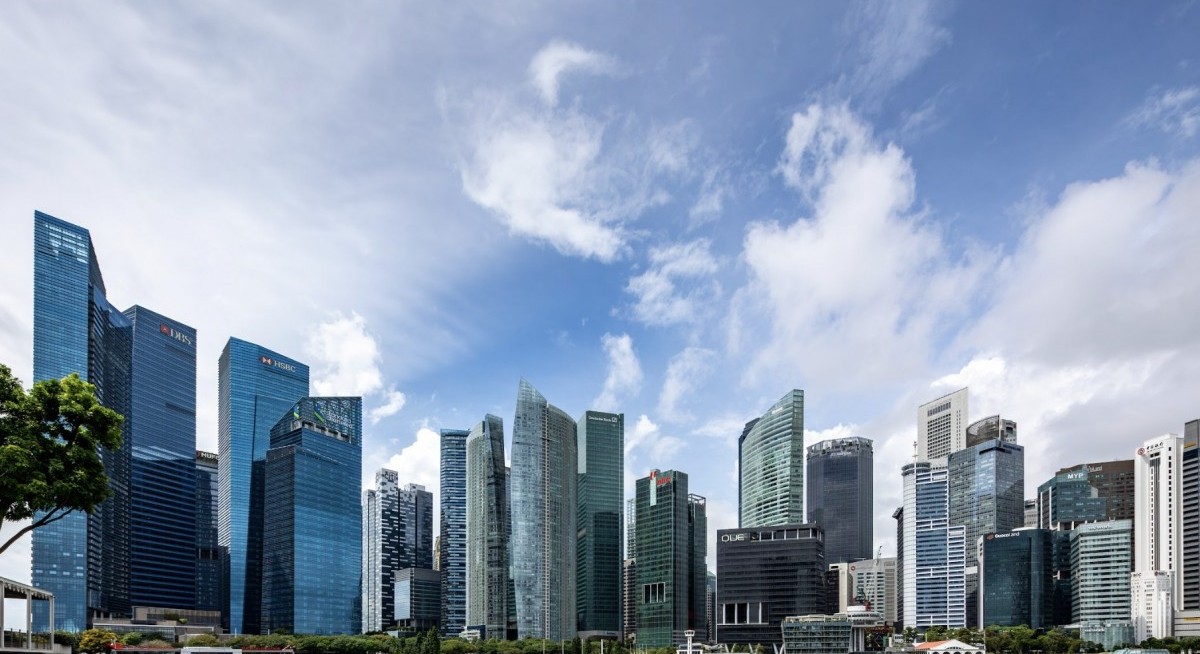
HKL’s choicest investment properties are in Marina Bay here and the Central District in Hong Kong. In December 2025, HKL divested Marina Bay Financial Centre (MBFC) Tower 3 to Keppel REIT for US$1.1 billion, or approximately $1.5 billion, at a 2% premium to its valuation as at June 30, 2025.
Following the divestment, HKL launched SCREF on Feb 3, using its one-third stake in MBFC Towers 1 and 2 and One Raffles Quay, and 100% of One Raffles Link, as seed capital. A fourth property, Asia Square Tower 1, which QIA owned, was also placed in SCPREF, along with QIA and APG as capital partners. The initial fund size is $8.2 billion, with plans to grow it to $15 billion in the next five years.
“The fund has a very particular focus. It’s Singapore-only and the assets must be located in Marina Bay or on Orchard Road. The fund is focused on prime commercial, office, retail or hospitality assets. It’s quite a particular narrow focus, which we deliberately want because that is what HKL knows best; and we think there’s demand for a fund vehicle of this type,” Beattie emphasises.
“Our focus is on the best assets. We’ve got the benefit of time to build a position. We’re not looking to do it all within the next six months. The growth ambition is over the next five years.”
Landmark makeover
HKL’s ultra-premium positioning is unique. For instance, in 2024, when Hong Kong’s retail sector was in a challenging period, HKL announced a US$1 billion makeover of Landmark, with US$400 million from HKL and US$600 million from its luxury tenant base. The leading luxury brands co-invested to create flagship stores, with some of them doubling in size with an eye to Hong Kong’s pool of ultra-high-net-worth individuals as customers. According to Beattie, 85% of Landmark’s sales are to local Hong Kong people.
In its 1QFY2026 business update, HKL said Landmark’s retail portfolio’s rental contributions increased slightly compared with 1QFY2025 despite over 30% of lettable space under renovation as part of the ongoing Tomorrow’s Central transformation. “This performance underscores the resilience of ultra-high-net-worth spending and Landmark’s position as Asia’s premier luxury retail destination. Tenant sales and top-tier customer spend were both higher compared with the same period last year. Average effective rents were higher than in the first quarter of 2025 as new leases recently commenced for several flagship Maison stores,” the report added.
Based on HKL’s business updates, the results of Landmark’s makeover are tracking ahead of expectations. “It’s a complex project which will take three years to complete. We’re doing it in phases. Sales, despite all the temporary disruption from the renovation works, are up. We are expecting sales in the Landmark mall to increase by well over 25% upon completion,” Beattie emphasises, adding: “We have demonstrated time and time again that we can execute on these ultra premium, integrated commercial properties.”
Most of HKL’s Central portfolio is on 999-year leases and effectively freehold. “We have a competitive advantage by having such long tenure in our buildings. All of our buildings are in Central. We continue to believe that there’s a real benefit from being in the best real estate in any market, particularly given the flight quality trends that are prevalent around the world at the moment,” he adds.
The Hong Kong office market has been in quite a difficult position over the past five years, but it appears to be turning the corner amid capital market activity. Property consultants are expecting rents to grow by 5%–10% this year.
Shanghai assets
In terms of gross floor area and net lettable area, China is by far HKL’s largest market. In Shanghai, HKL is building a mixed-use project spanning 18 million sq ft on the Huangpu River, called Westbund Central. Hong Kong Central is 4.6 million sq ft in comparison.
The capital value of Westbund Central when completed is likely to be around US$8.5 billion. “In terms of potential, China is the number one growth market for Hongkong Land, because a lot of new projects are about to open, which will generate additional income,” Beattie notes.
However, he acknowledges that the company’s The Ring series in cities such as Chengdu and Chongqing does not fit the description of ultra-high-premium investment properties. “It is the intention, over time, to recycle capital out of those projects,” Beattie says.
Another investment that appears out of character is the purchase of a 10.8% stake in Suntec REIT for $541 million. “The Suntec block from ESR was a unique opportunity to acquire immediate, additional exposure to Singapore office assets through the REIT and we felt that the shares were undervalued relative to the underlying assets. We were aware that the manager was changing, with Gordon Tang coming in,” Beattie says. A strategic review of Suntec REIT’s portfolio is underway.
HKL is not a sponsor of any REIT, but Beattie acknowledges that it may create a China REIT at some point. On geographical expansion, HKL has hired representatives in Sydney and Seoul who have been working with the group for more than six months, Beattie reveals. “We are working on market entry strategies, which is something that we are discussing with the HKL board. One of the appeals of entering these new markets is that asset yields are higher. The main takeaway is that HKL wants scale in these markets, so buying a single building by itself is not particularly appealing,” Beattie says.
In a May 20 report, UBS points out that HKL’s 1QFY2026 operational update reported earnings rose 5% y-o-y, as lower net finance costs offset the loss of rental income following the disposal of MBFC Tower 3 and the formation of SCPREF. HKL also announced an upward revision to its FY2026 earnings guidance, reflecting improving sentiment in Hong Kong office leasing and proactive cost management. UBS calculates that HKL still has US$278 million of unutilised buyback capacity until mid-2027. It forecasts a 12-month target of US$10.96, based on a 15% discount to HKL’s estimated NAV per share.
JPMorgan says the next catalysts for HKL are: further improvement in the Hong Kong office market; capital recycling; and more clarity on the investment in Suntec REIT, as well as leasing updates from Westbund Central. Share buybacks may also support the share price, the report adds. JPMorgan has a 12-month target of US$10.70, based on a 20% discount to its NAV estimate.
Smith, Beattie and the new team at HKL have a long-term perspective compared to the shorter-term outlooks of analysts. “Hongkong Land has been in business for 137 years. By having a 10-year strategy and a 10-year goal was quite deliberate, because fundamentally, we are looking to create value over the long term,” Beattie concludes.




