


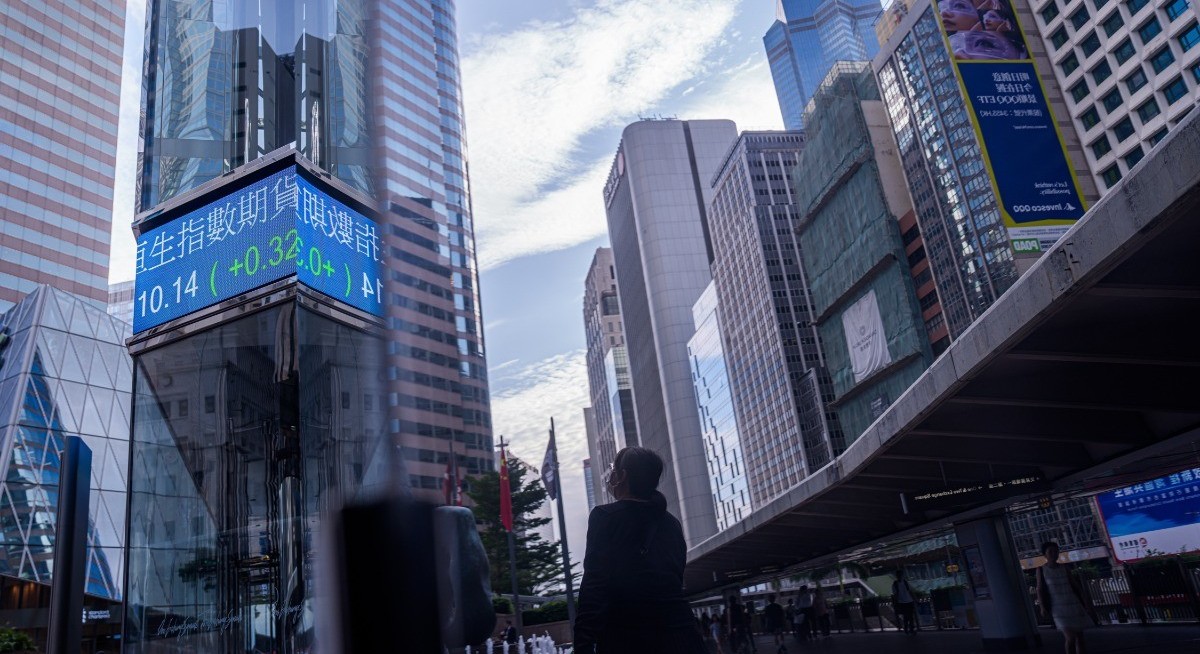


(May 25): Chinese investors are rushing to find alternative ways to buy and sell overseas equities after Beijing launched its most forceful crackdown on illicit cross-border stock trading to stem capital outflows.
Richard Wang, who works in artificial intelligence in the US and has around US$120,000 in stock holdings with Futu Holdings Ltd, said he dumped his US stocks on Friday after China moved with its most stern action yet to plug capital control loopholes. He’s waiting for the Hong Kong market to open again on Tuesday to sell his remaining positions.
The surprise triggered swift reactions on Friday, with the Nasdaq Golden Dragon China Index slumping 2.2% and more than a quarter of Futu’s market value wiped out. The fallout is likely to spread to Hong Kong when the market re-opens as the move threatens to curb the city’s liquidity and its booming initial public offerings amid dwindling demand from mainland Chinese investors.
An estimated US$1 trillion of so-called hot money flowed out of the country last year, according to an index compiled by Bloomberg Intelligence — the biggest annual outflow since data began in 2006.

Citic Securities estimates that the clampdown could affect as much as HK$250 billion of assets in Hong Kong, with Futu alone accounting for around HK$150 billion to HK$180 billion. Futu underwrote 30 IPOs in Hong Kong this year, more than any other banks, according to data compiled by Bloomberg.
See also: China trading tycoon loses US$1.7 bil in one day after curbs
“China is concerned of more capital outflows so it’s shutting the cross-border trading channel and forcing the funds back to domestic markets,” Wang said from California. “So I quit.”
The crackdown marks an escalation from late 2022 when China ordered online brokers to rectify illegal business activities and stop onboarding new onshore investors, signalling growing impatience with the cross-border flows. The China Securities Regulatory Commission, the nation’s top securities watchdog, on Friday slapped more than US$330 million of combined fines on Futu, Up Fintech Holding Ltd’s Tiger Brokers and Longbridge Securities for operating on the mainland without a licence.
Investors like Daisy Qin have managed to circumvent the 2022 directive and set up new accounts using falsified documentation. Qin, a bank employee in Chengdu, said she opened an account with Futu last year using address details of a Hong Kong friend so she could subscribe to IPOs in the city.
See also: Taiwan urges US$630 bil asset management sector to beef up

She rushed to check with other brokerages over the weekend for workarounds, only to find out the account opening requirements had been further tightened. Now she’s ready to dump all two million yuan worth of shares.
“Some people are now preparing to move to other brokers in Singapore or the US, but I’m not going to wait for the detailed rules. I also don’t plan to open a new account,” she said. “I’ll sell my holdings and exit immediately to avoid risks.”
Banks are already picking up the slack. Allen Wang, a Shanghai-based partner at Jincheng Tongda & Neal Law Firm, said some clients have started shifting their trading of offshore stocks to firms such as Bank of China’s Hong Kong branch or HSBC Holdings plc, where cross-border trading is still allowed. Investors don’t need to sell their holdings as the accounts can be moved via a custodian transfer, he said.
While banks have long been a viable but less attractive option than brokers like Futu due to higher fees and lower efficiency, “now they’re in a stronger position,” Wang said. “The policy is bit unclear at the moment, but clients are worried the banks will be banned too.”
Local Hong Kong arms of some Chinese brokerages are also awaiting further policy clarity to gauge the scope of the impact, before making changes to their businesses, according to people familiar with the matter, asking not to be identified discussing private information. Some remained hopeful that existing accounts opened before 2022 might be excluded from the recent clampdown.
While Chinese authorities allowed online brokers to continue servicing existing clients in 2022, they on Friday ordered all “illegal” existing accounts to be liquidated within two years. Beijing has said the measures are designed to clean up the capital market and steer investors toward regulated channels for overseas investment.
To stay ahead of Singapore and the region’s corporate and economic trends, click here for Latest Section
Advise caution
The campaign also coincides with an intensifying drive over the past few years to tax residents on overseas income, including gains from offshore stocks trading. China’s been trying to beef up its fiscal coffers as land sales revenue dried up and local governments are debt laden due to excessive borrowing.
Many people “continue to bet that there is still wiggle room or ways to circumvent these new rules — for example, through arrangements such as marriages with non-Chinese nationals,” said Dong Yizhi at Joint-win Partners, a law firm. “I’ve consistently advised caution, as I believe this round of regulatory tightening is materially different from those in the past. I would not be surprised if this evolves into increased data-sharing on accounts and financial activity, similar to how the US has been scrutinising the accounts of non-residents.”
For Chen Li, chief executive officer of Soochow Securities (Hong Kong) Financial Holdings Ltd, forcing the assets back to official channels such as Hong Kong’s stock connect and Qualified Domestic Institutional Investor (QDII) schemes will make it much easier to tax citizens on their overseas assets. Moreover, it sets the ground for potentially more financial opening.
“The ‘room cleaning’ doesn’t mean China will kick offshore financial institutions all out, but rather it’s rectifying market order, and laying the foundation for compliant opening up in the future,” Chen said in written comments. “It’s not shutting all doors, just closing a small one in order to open a wider gate.”
Some savvy investors already got the message. Tom, who works for a technology firm in Beijing, said he’ll now shift his two million yuan worth of Hong Kong and US stock holdings to the official stock connect and QDII fund products.
“While I was planning to move the funds back to the official channels some day in future, it’s a different story when you’re forced into that decision in a rush,” he said, asking not to be named for fear of reprisal. “But there’s no other way, one can’t go against the state’s will.”
Uploaded by Felyx Teoh




