


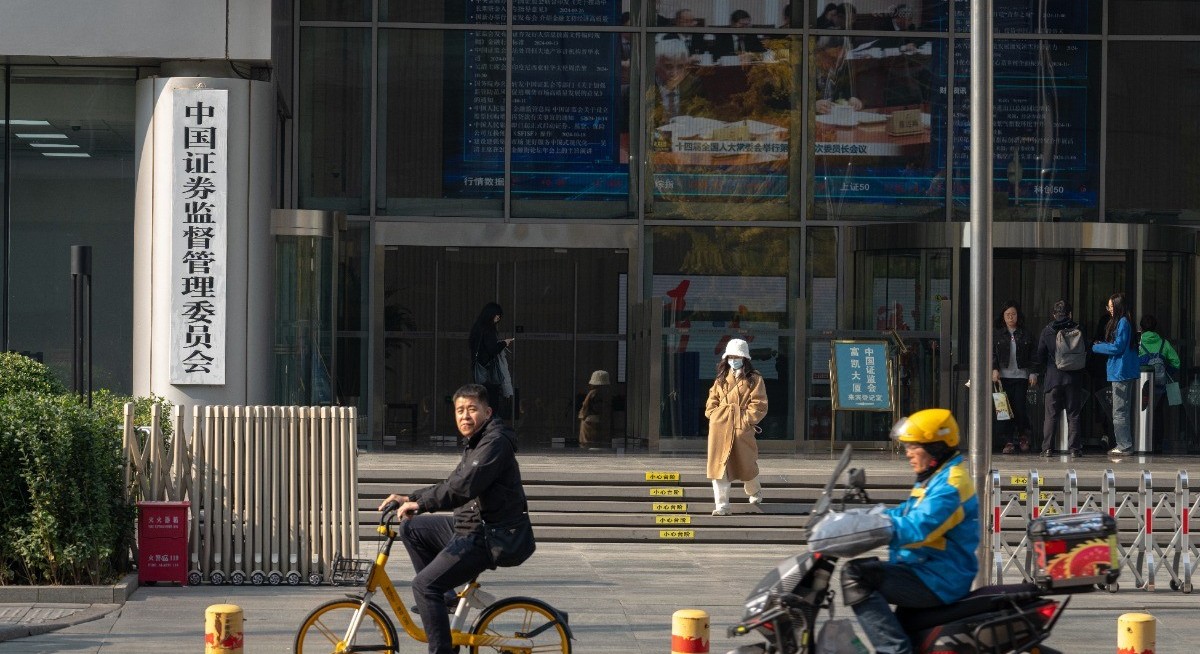


(May 23): China has launched an unprecedented campaign against illegal cross-border trading to stem capital outflows, threatening severe penalties against popular brokers and ordering non-compliant accounts to be liquidated within two years.
The pushback came in a quick burst after the onshore markets closed on Friday when eight regulators issued a joint statement vowing a campaign against these trades, sending US-listed Chinese stocks tumbling.
The securities regulator said it planned to penalise brokerages Futu Holdings Ltd, Tiger Brokers and Long Bridge Securities Ltd for operating on the mainland without a licence, and would confiscate all “illegal gains” from their domestic and overseas entities. Hong Kong’s markets regulator also announced measures on accounts for mainland Chinese investors.
Futu later said regulators proposed about US$271 million ($347 million) in fines, while Tiger Brokers owner Up Fintech Holding Ltd said it was subject to a combined CNY411 million ($77 million) in fines and confiscated income.
The impact on the brokers’ shares was swift. Up Fintech saw its American depositary receipts (ADRs) sink 25% on Friday, while the US-listed shares of Futu tumbled 27%. The declines spread to other Chinese stocks, as the Nasdaq Golden Dragon China Index fell 1.9%.
The moves amount to China’s most aggressive attempt yet to clamp down on its citizens finding ways to trade overseas markets, a long-running practice that is officially off-limits for a nation that imposes strict capital controls to defend its currency.
See also: DeepSeek founder declares artificial general intelligence goal as US$10 bil round advances

But the ramifications may be much wider than just the brokers targeted. Chinese companies’ global ambitions have led them to list in New York, London and particularly Hong Kong — and Chinese citizens have invested large sums as they follow their national champions overseas.
“This came as a huge shock that the plug would be pulled today,” said Chen Da, the founder of Dante Research, adding that the biggest surprise was the push to close existing accounts within two years. “This is very bad news for Chinese ADRs and the Golden Dragon Index if people rush to liquidate all at once.”
See also: China scrutinising companies, funds after AI-fuelled stock moves — Bloomberg
Up Fintech said in a statement that it would “actively cooperate with the relevant process” and all business operations remain normal. Representatives of Longbridge didn’t immediately respond to requests for comments.
Futu also said it will cooperate with regulators and that business outside mainland China remains normal. Chinese clients represent about 13% of total funded accounts, the firm said in a statement.
The penalty on Futu likely refers to revenue from mainland clients before 2022, Morgan Stanley said in a research note. That’s because Futu has largely stopped adding new mainland clients since then, and the requirement at that time was to ask brokers to continue serving existing clients, according to analyst Chiyao Huang. Separately, JPMorgan Chase & Co cut Futu to 'neutral', with a price target of US$87.
Chasing taxes
The Hong Kong stock market’s strong performance has attracted a growing number of mainland investors to open overseas accounts illegally to trade there, increasing outflows and likely providing authorities a stronger incentive to stop such practices, said Allen Wang, a Shanghai-based partner at Jincheng Tongda & Neal Law Firm.
The latest move also coincides with Chinese tax authorities’ intensifying drive to get its citizens to pay taxes on offshore income, he noted. A number of clients have since last year been contacted by officials to pay taxes for gains including those from overseas stocks trading, with some having opened new accounts in Hong Kong after 2022, he added.
The joint plan, issued on Friday by the China Securities Regulatory Commission, the People’s Bank of China, the Ministry of Public Security and five other government bodies, aims to dismantle unauthorised offshore investment services that target mainland investors.
To stay ahead of Singapore and the region’s corporate and economic trends, click here for Latest Section
Officials said the measures are designed to clean up the capital market and steer investors towards regulated channels for overseas investment. An estimated US$1.04 trillion of so-called hot money flowed out of the country in 2025, according to an index compiled by Bloomberg Intelligence — the biggest annual outflow since data began in 2006.
Under the new initiative, overseas institutions will be banned from marketing in China related to securities, futures and fund products. They will also be prohibited from offering account-opening services, executing trades or facilitating fund transfers for domestic clients.
The crackdown extends beyond foreign firms. Domestic entities that assist such operations — including intermediaries that solicit investors or companies providing website, trading software or customer support — will also be subject to enforcement action. Internet platforms and social media accounts publishing illegal promotional content are included.
In addition to securities laws, violations involving foreign exchange controls, anti-money laundering rules, cybersecurity requirements and personal data protection will also be inspected.
Banks will face closer scrutiny as well. Institutions providing accounts for cross-border investment will be required to strengthen compliance checks on outbound foreign exchange transactions, as regulators move to curb illicit capital outflows, including those routed through underground banking networks.
The move comes around three years after local retail traders were cut off from accessing the apps of Futu and Up Fintech, an early sign that Beijing was growing impatient with cross-border flows.
Uploaded by Tham Yek Lee




