




In its FY2025 results, Keppel REIT’s distribution per unit (DPU) declined 6.6% y-o-y to 5.23 cents while property income and net property income (NPI) rose 4.9% and 6.9% y-o-y, respectively.
During the Feb 4 results briefing, Chua Hsien Yang, CEO of the manager, noted that a key priority is to drive organic growth across the portfolio, given the favourable market dynamics for office space in Singapore.
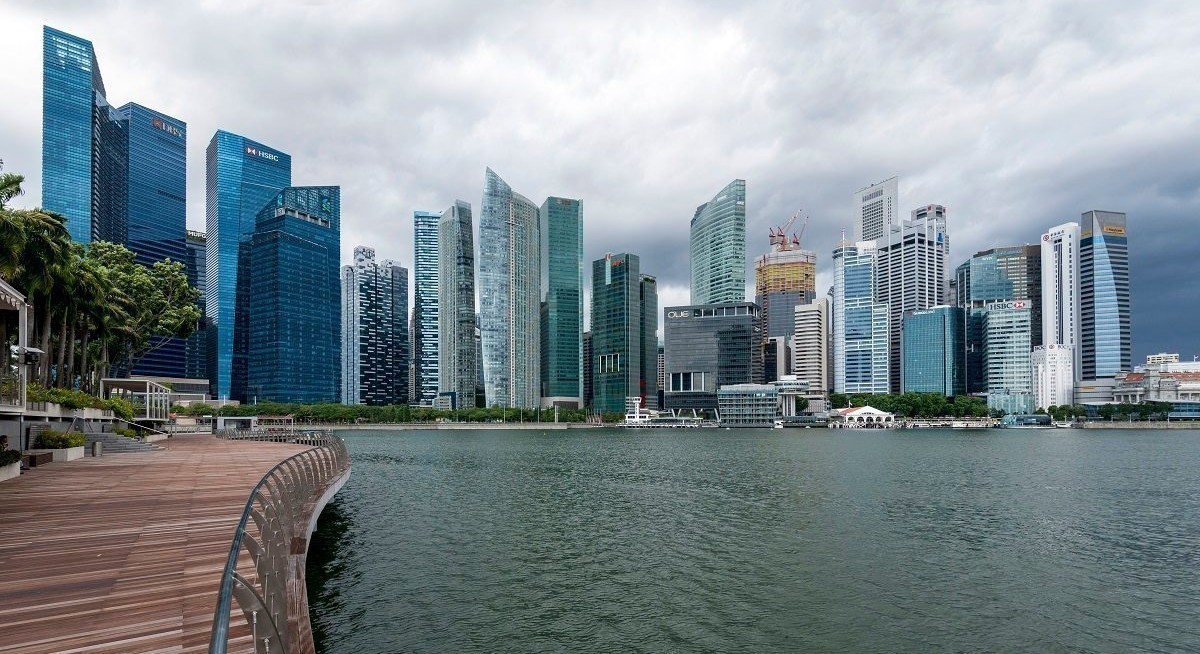
Recent media reports suggest ANZ is moving from Ocean Financial Centre to the Marina One complex. Chua did not confirm which tenant is leaving, but he sees strong demand for office space, particularly at Ocean Financial Centre.
“For Singapore, any tenants, especially full-floor tenants that return the space in our CBD assets (Ocean Financial Centre, Marina Bay Financial Centre, One Raffles Quay), we really don’t mind, as we shared for the last two quarters that we have a lot of demand.”
See also: Indonesia’s Danantara wealth fund sees senior management shakeup
“Therefore, if a tenant leaves, there is definitely a lot more demand to lease out the space at much higher rates,” says Chua.
“On top of that, we also want to continue to push the best results that we can actually get from our Australian assets as well,” he adds.
Keppel REIT’s Australia portfolio valuation declined 4.2% y-o-y in Singapore dollar terms, but committed occupancy remained fairly stable at 96.5%, and NPI increased 6.0% y-o-y to $105.2 million.
See also: Relocation specialist Chasen rides chip growth; eyes more solar panel projects
The higher NPI was mainly due to contributions from 255 George Street and increased occupancy at 2 Blue Street, offset partially by a stronger Singapore Dollar.
The other key priority Chua highlighted was reducing Keppel REIT’s borrowing costs. Sebastian Song, CFO of the manager, stated that the REIT aims for its borrowing cost to be between 3% and 3.3% in 2026. As of Dec 31, 2025, that figure stood at 3.41% per annum.
Given the Reserve Bank of Australia’s recent 25-basis-point rate hike, analysts are concerned about its ability to meet the 2026 borrowing cost target. As of Dec 31, 2025, Australia dollar-denominated loans accounted for about 14% of Keppel REIT’s total borrowings.
“I think that the target has not changed yet and won’t be derailed for the time being. Unfortunately, they hiked the rate. While we can’t control this aspect of things, what we can control is really to tap on the momentum of our refinancing exercise to drive margin savings,” adds Song.
Meanwhile, with Marina One reportedly on the market at around $5 billion to $6 billion, Chua admitted that while the whole market will be looking at the property, it will be quite challenging for Keppel REIT to acquire it due to the hefty price tag.
“I assured investors that we have already done a fair bit of acquisitions and we are not rushing to do any equity fundraising anytime soon. But of course, if the time is right and if we find attractive offers for some of our assets, we could look at strategic divestments and use the proceeds for any potential acquisitions,” states Chua.
Regarding the potential acquisition of Keppel South Central, Chua states that there are currently no further updates and that no discussions have commenced with Keppel, the sponsor, regarding the asset.
To stay ahead of Singapore and the region’s corporate and economic trends, click here for Latest Section
“My understanding is that occupancy is still not at a level that makes it interesting for us to start discussions with them at this point. Even if the occupancy level is at a level that’s high enough for us, there’s still a lot of things that we need to figure out,” says Chua.
Separately, at Keppel’s results briefing on Feb 5, Louis Lim, CEO, Real Estate, says that this property is about 50% “committed or in very active levels of negotiations”, and that Keppel is looking forward to “being in a position in the near-to-medium-term future to be able to figure out a monetisation path for this asset.”
Finally, regarding the relationship with Hongkong Land, Chua says it is still good, and things are back to normal. “We have always been partners and competitors at the same time, so nothing has really changed. Every company has their own aspiration and strategy. If you look at Hongkong Land, Mapletree, and Suntec, we all have similar strategies. Does that mean our working relationship is not good? I don’t think so,” adds Chua.




