


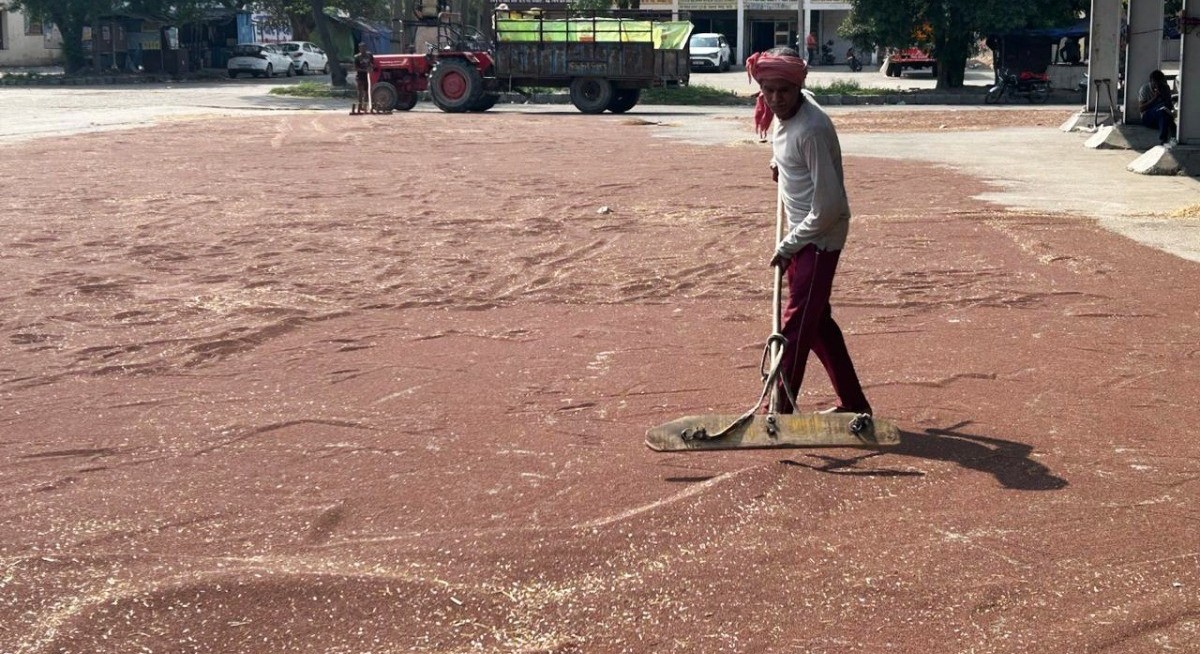


(March 25): Governments are rushing to secure supplies of critical crop nutrients ahead of spring planting, as the Middle East war chokes off the flow of commodities and amplifies fears of a global food crisis.
Fertilisers exemplify the tight link between energy and food prices, underpinning harvests worldwide. The Middle East is a vital supplier, rich in both mineral reserves and the gas needed to produce nutrients for staples like corn, wheat and rice. With the Strait of Hormuz effectively shut, shipments have ground to a halt as Iran, the US and Israel continue to exchange strikes on energy infrastructure.
In turn, prices of urea — the most widely used nitrogen fertilisers — have surged, with phosphate supplies also at risk. Much of global stock is tied to the Persian Gulf, and panic is spreading across major agricultural economies.
Top exporters China and Russia are curbing some crop nutrient sales, while the US is loosening shipping restrictions to facilitate domestic flows. India, the largest urea buyer, is scrambling for supply and weighing a tender. Greece and France have expanded financial support for farmers, and in Africa, Ghana has rolled out a free fertiliser programme.
“Farmers should not bear the burden of any crisis,” Indian Prime Minister Narendra Modi said on Tuesday in Parliament, where he addressed the Middle East conflict and announced efforts to shore up fertiliser reserves. “The government stands with them.”

See also: Fortescue chairman Forrest urges China to end iron ore price war
Rising fertiliser prices could push food costs higher, just as inflation in agricultural goods had started to ease after years of shocks — from the pandemic to the war in Ukraine and extreme weather. Typically excluded from core measures, they have challenged central bankers. Bank of England governor Andrew Bailey warned of renewed price pressures as policymakers held rates steady this month.
At the same time, countries are moving to shield farmers already hit by weak crop prices, high input costs and US President Donald Trump’s tariffs.
Competition for supplies is intensifying. Earlier this month, the Trump administration lifted sanctions on Venezuelan fertilisers to “ease the impact on American farmers”, according to White House spokesperson Anna Kelly. Colombia’s state-owned Ecopetrol SA is seeking access to the same stock and considering a bid for Monómeros, a key plant on its Caribbean coast.
See also: Copper rises as US’ push to end war buoys industrial metals
Further south, Brazil is ramping up purchases from Morocco and Gulf countries while exploring a joint fertiliser and energy project with Bolivia, according to a senior Brazilian official. A law reducing taxes on chemical inputs for fertilisers was also sanctioned recently, Brazil’s Ministry of Development, Industry, Trade and Services said in a note.
“Everyone is on the hunt,” said Randy Place, a senior grains analyst at The Hightower Report.
In key ways, the Middle East war marks a more perilous moment than when Russia’s 2022 invasion of Ukraine disrupted supply chains, partly because a larger share of nitrogen fertiliser trade is at stake. The region accounts for more than a third of urea exports and nearly a quarter of ammonia, another important crop ingredient. About half of sulfur trade — used in the production of phosphate fertilisers — also mostly passes through the Strait of Hormuz.
Jolts from Russia’s war in Ukraine exposed the risks of relying on imported nutrients. Efforts launched four years ago to shore up supply have gained fresh urgency in recent weeks. Unlike in 2022, when Russian goods were largely redirected, closure of the Strait of Hormuz is far more restrictive. Shipments are being physically blocked at a critical maritime chokepoint.
India is under particular pressure. Fertiliser production is the country’s biggest gas consumer, and some plants have shut as supplies of the fuel needed to make nitrogen-based nutrients have dwindled. To bridge the gap, officials are turning to China for cargoes. They have also approved at least one new type of fertiliser to shift towards less conventional alternatives.
In recent days, some urea producers have held daily meetings with farmers to restrain excessive usage, according to people familiar with the matter.
Sushil Kumar, a 42-year-old farmer in Haryana, is feeling the pinch. He cultivates rapeseed, wheat and rice on about 20 acres of leased land, but has been unable to find di-ammonium phosphate, a nutrient needed at sowing. Local dealers don’t have anything in stock.
To stay ahead of Singapore and the region’s corporate and economic trends, click here for Latest Section
“Fertilisers are never available on time when we need it,” Kumar said.
To get ahead, buyers are paying a premium. Saudi Arabia and Morocco have sold cargoes to Latin America at elevated prices. Dangote Fertiliser Ltd, one of Africa’s largest suppliers, said demand had surged. Russia paused some fertiliser exports on Tuesday, but the Kremlin said last week that it remains one of the few countries capable of meeting global demand.
“We are talking about an agricultural input that plays an important role in food security,” said Ticiana Alvares, a technical director at INEEP, an energy research firm in Brazil. “Those who do not look out for themselves and their national interests, who do not start looking to regional supply chains instead of global ones, they are going to be in for a rough time.”

If the conflict drags into mid-year, much of the world stands to lose. Major crop producers like the US, Brazil and India are already seeing margins squeezed, upping the threat of broader food-price spillovers. Wealthier nations may shield farmers with subsidies, but poorer countries face tighter budgets.
The risks are most acute in sub-Saharan Africa and parts of South Asia, where reliance on food imports is high and hunger already a problem. Nigeria, for instance, has reported delays in supplies from Russia and China. Some West African nations are “extremely worried” about protecting export crops like cocoa and cotton, said Ashish Lakhotia, the chief executive officer of fertilisers and agricultural inputs at ETG.
Even Gulf producers are unable to fully capitalise on higher prices or soft power advantages while the Strait of Hormuz remains shut, according to Nick Kraft, a senior analyst at the Eurasia Group whose focus includes agriculture.
If there’s one winner, he said, it’s China.
“As the world’s biggest urea producer, with large reserves and tight state control over exports, Beijing can shield its own farm system while forcing tighter conditions on everyone else,” he said. “That is exactly what it is doing now.”
In the US, the Trump administration has tried to temper price spikes. Agriculture Secretary Brooke Rollins said in an interview that officials are “looking at every single tool in the toolkit” to alleviate stress on farmers.
Last week, Washington waived a shipping law so foreign-flagged vessels can carry fuel, fertilisers and other goods between US ports. The White House will host agricultural executives at an event on Friday, including to highlight the president’s efforts to lower input costs. Farm groups are also lobbying to remove duties on phosphate fertilisers from Morocco, which holds some of the world’s largest reserves.
Even with those measures, Sherman Newlin, a farmer in Illinois, said the US isn’t likely to tame prices quickly and significantly, short of ending the conflict and reopening the Strait of Hormuz. “Every time they say they are going to make an announcement, it amounts to a hill of beans,” he said. “There’s not much they can do.”
David Delaney, the CEO of phosphate producer Itafos Inc, said he can’t recall a tougher time across his four decades in the industry. After the war broke out, the United Nations warned of record levels of hunger this year. If the conflict continues for even a few more months, tens of millions of people may face severe food insecurity.
“The world is just used to big crop plantings every year and yields and crops getting to where they are needed,” he said. “I don’t want to sound the alarm too much yet, but this could be catastrophic if it lasts long.”
Uploaded by Tham Yek Lee




