


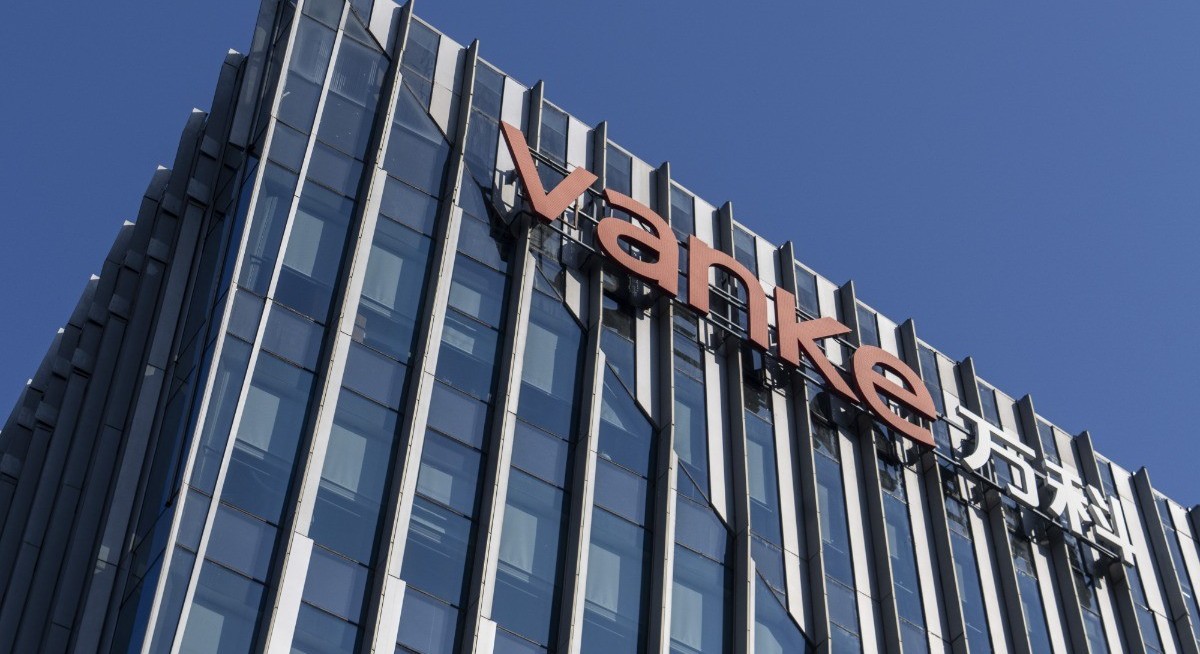


Vanke is hoping bondholders extend a grace period on the CNY2 billion (US$284 million or $366.77 million) note until Jan 28 to give the developer more time to determine what kind of potential credit enhancements it could offer, said the people, who asked not to be identified discussing private matters.
The bondholder meeting was a formal step by Vanke to try to win support from creditors as they weigh options in a vote that runs until Monday on the bond, which is now in a grace period ending that day. If by then there’s no payment or agreement to extend it, holders could call default.
The company is also planning separate face-to-face meetings with some holders of the note in Beijing on Thursday afternoon to seek feedback on the proposals, according to people familiar with the matter.
Vanke, once China’s biggest homebuilder, is lurching closer towards what would be one of the country’s largest-ever debt restructurings. Even as it struggles to get bondholders on board — it failed just days ago to get sufficient support to pass earlier versions of the proposed extension — the builder has also started pushing other creditors to stomach delays. It summoned some commercial banks and insurance firms to its hometown of Shenzhen on Wednesday and asked some of the lenders to accept delayed interest on certain borrowings.
See also: Taiwan may push back timeline to meet green energy goal after missing it last year
The company has some US$50 billion of interest-bearing liabilities, meaning a restructuring would be one of China’s biggest ever. Vanke itself has started to signal such a scenario is nearing. During face-to-face small-group conversations with the creditors at the meeting in Shenzhen, the developer asked some of them to give it more time to come up with a holistic debt plan.
As patience runs thin, some observers have started saying that a default now could actually help avoid even worse outcomes for creditors, as it could preserve assets for bondholders in any broader restructuring down the line. The country’s broader property market slump has already sparked record defaults and liquidations or restructurings at property giants such as Country Garden Holdings Co and China Evergrande Group.
Vanke had long benefited from being partially owned by a state-owned company, Shenzhen Metro Group Co, which provided a key lifeline to the developer. The support, however, has come under scrutiny in recent months after Shenzhen Metro signalled plans to tighten borrowing terms. That shift sparked a drop in Vanke’s securities to deeply distressed levels.
See also: CK Hutchison seeks damages via arbitration on Panama Ports
One Vanke official noted during the meeting that Shenzhen Metro had extended over 30 billion yuan in shareholder loans to the builder, and said its efforts already exceeded its responsibilities.
Vanke and Shenzhen Metro didn’t immediately respond to requests for comment.
“Given the poor liquidity conditions, very limited support from the government as well as the poor funding conditions for the company, I think it is almost unavoidable that Vanke will have to end up in debt restructuring,” Zerlina Zeng, the head of Asia strategy at Creditsights Singapore, said in a recent Bloomberg TV interview. “If there is an immediate default, the recovery process might be faster instead of dragging along with an ongoing negotiation with bondholders.”
Vanke this week unveiled the revised plans for the local bond. There are two main items on the ballot, and holders can vote for none, one or both: accept payment on the principal getting pushed back by 12 months, but get unspecified credit enhancements added, as well as interest that was due Dec 15 to be paid by Monday; and extend the grace period to Jan 28. If the initial grace period expires with no payment and no other agreement, holders could call default.
Each option needs approval from holders of more than 90% of the outstanding principal to pass, and implementation would then be at Vanke’s discretion.
The previous ballot included two proposals similar to the one that would push back the maturity a year with enhancements that weren’t detailed. One of those options got 83.4% support, while the other received 18.95%. It’s unclear if the current proposal would succeed in pooling enough support to get past the threshold.
In the previous vote, there was also a third option, Vanke’s original proposal, which no creditors voted for, to delay both principal and interest for 12 months without any upfront cash payments.
To stay ahead of Singapore and the region’s corporate and economic trends, click here for Latest Section
Vanke is separately asking holders of a bond due Dec 28 for another 12 months to meet obligations on that debt.
The property giant’s woes highlight broader challenges in China as the real estate crisis enters its fifth year. Financial institutions, including banks, have become less patient with struggling developers in a sector that remains sluggish.
Policymakers recently pledged to intensify efforts to stabilise the housing market, but prices for new homes in many cities continued to drop in November from the previous month, when they saw their biggest decline in a year.
Uploaded by Tham Yek Lee




