


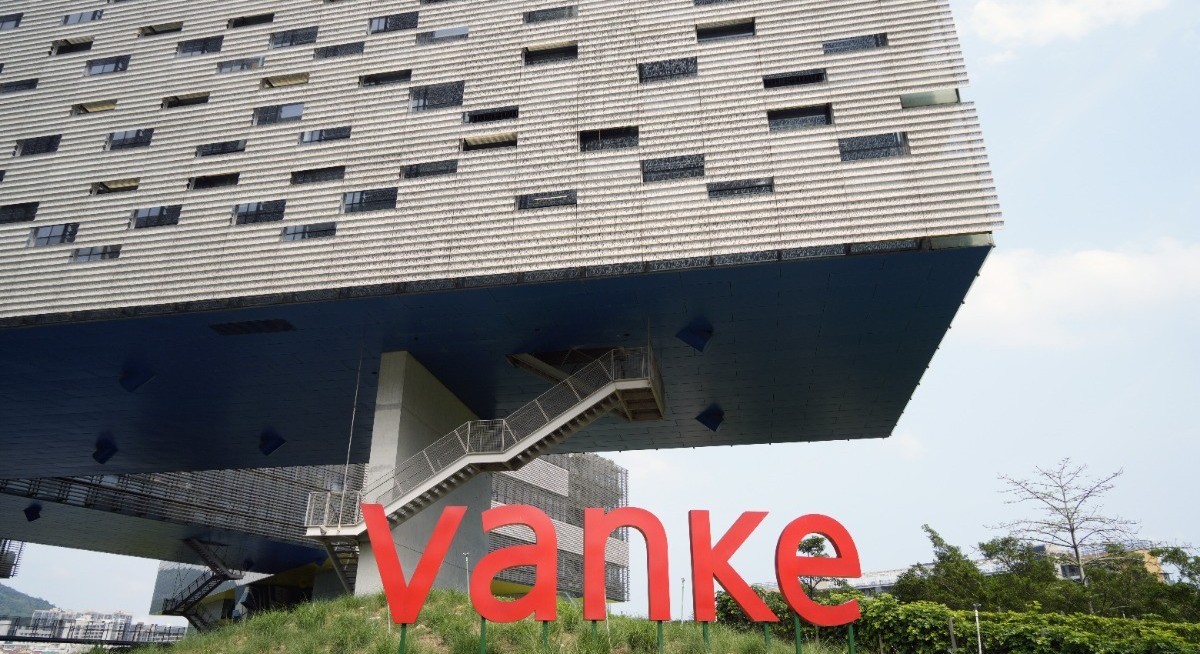


But the challenges aren’t over. Vanke’s proposal to defer principal payment for 12 months failed to pass, with creditors representing only 20.2% of the outstanding amount voting in favour, short of the more than 90% required. The builder is also trying to persuade investors to accept delayed payment on a 3.7 billion yuan bond that matures Dec 28.
Vanke is the last major Chinese real estate firm to so far have avoided reneging on its debts amid the multi-year real estate crisis. Any eventual default at the firm, which has US$50 billion of interest-bearing liabilities, would mark a new phase in the country’s real estate woes that have already prompted US$130 billion of defaults as well as restructurings and liquidations at other developers, including giants like Country Garden Holdings Co and China Evergrande Group.
A restructuring at Vanke would be among the biggest-ever in China. The builder has roughly US$160 billion of assets and more than 125,000 employees.
The pain in the property sector traces back to 2020, when authorities introduced metrics called the “three red lines” to curb excessive leverage among developers.
See also: Taiwan may push back timeline to meet green energy goal after missing it last year
In the absence of any rescue, the bigger picture is that Vanke is still lurching toward a potential restructuring or default in the months ahead. Such an outcome would usher in a new chapter in the property crisis in which nearly all creditors are finally now in the same boat, trying simply to lose less.
Many complex restructurings have already been dragging on for years. As creditors increasingly accept terms they’d prefer not to, eight of China’s 10 most indebted developers have already largely, if not entirely, put the offshore restructuring process behind them.
Vanke’s troubled debt negotiations highlight challenges for the government as it tries to revive an economy struggling with consumer sentiment that’s been weakened by years of declines in home prices. Policymakers have long sought to balance the challenge of reviving the property market without stepping in to rescue individual firms.
See also: CK Hutchison seeks damages via arbitration on Panama Ports

Founded in the early 1980s as China’s economy first began to open up, Vanke grew into a real estate juggernaut on the back of building apartment blocks for a young middle class seeking a modern lifestyle. Its mass-market apartments long enjoyed an image of solid quality. That helped Vanke remain the country’s largest home builder by sales for about a decade before peers Country Garden and Evergrande topped it.
Vanke had long benefited from the backing of its largest state-owned shareholder, Shenzhen Metro Group Co, which had served as a crucial lifeline for the developer. That support, however, came into question in recent months after the subway operator signalled plans to tighten its lending terms. The shift triggered a sharp selloff in Vanke’s securities, pushing them into deeply distressed territory.
“Vanke is essentially the first case where the government became substantively involved in a rescue — only to abruptly step back halfway through,” said Li Gen, a founder of Beijing G Capital Private Fund Management Center, which focuses on China’s high-yield bond market. “This caught investors completely off guard and will undoubtedly heighten concerns about the transparency and stability of the state support that many Chinese companies are still counting on right now.”
Based in the southern city of Shenzhen, Vanke has been grappling with mounting liquidity pressures for at least two years as the prolonged property slump eroded confidence among homebuyers and financial markets.
Vanke reported combined losses of 28 billion yuan for the first three quarters of this year, after posting a record 49.5 billion yuan loss for all of last year. Bloomberg Intelligence predicts its contracted sales are at risk of falling closer to its worst-case scenario of a more than 40% decline in 2025. That could fuel an over 100 billion yuan sales shortfall versus 2024, according to Kristy Hung, a real estate analyst.
Once an investment-grade property firm, Vanke hasn’t been able to issue any offshore notes since 2022, and its onshore bond-financing channels have also been shut since mid-2023, according to data compiled by Bloomberg, further straining its liquidity.
To stay ahead of Singapore and the region’s corporate and economic trends, click here for Latest Section
It was recently downgraded to C by Fitch Ratings due to “heightened default risk”, just one level above restricted default. If Vanke did end up defaulting, that could further dent already fragile housing market sentiment and affect other developers with weak credit profiles, according to Fitch Ratings.

One Vanke official noted during a bondholder meeting earlier this month that Shenzhen Metro had extended over 30 billion yuan in shareholder loans to the builder, and said its efforts already exceeded its responsibilities.
The embattled builder has recently begun signalling that it is edging closer to a holistic restructuring.
During face-to-face small-group conversations with some other bank creditors at a meeting in Shenzhen recently, the developer asked some of them to accept delayed interest payments and give the firm more time to come up with a holistic debt plan.
A default on the yuan bond could have a cascading impact on the builder’s notes and loans through any cross-default clauses. Around 45% of Vanke’s roughly US$50 billion debt load is unsecured, according to Barclays, making it particularly vulnerable if the company goes into restructuring.
Uploaded by Chng Shear Lane




