




(March 25): Pop Mart International Group Ltd shares tumbled nearly 22% after the company posted full-year revenue growth still largely reliant on sales of Labubu, disappointing investors counting on other franchises to sustain its success.
Revenue surged 185% to CNY37.1 billion (US$5.4 billion or $6.9 billion) in 2025, narrowly missing the CNY38 billion consensus, the Chinese pop toy maker reported on Wednesday. Net income climbed 309% to CNY12.8 billion, slightly exceeding the forecast of CNY12.6 billion.
Pop Mart’s second-half revenue growth likely missed expectations of institutional investors, with a sharp fourth-quarter slowdown fuelling “concern on the durability” of its top franchises, said Jeff Zhang, an analyst at Morningstar Inc. He cited a reduction in the dividend payout ratio to 25% in 2025 from 35% in 2024 as “another negative”.
Pop Mart has leaned on the global appeal of Labubu, the snaggle-toothed monster doll that has become a worldwide collectible phenomenon and remains its primary growth driver. The company is now seeking to diversify its intellectual property (IP) portfolio and sustain momentum through new releases, positioning emerging characters such as Twinkle Twinkle as stand-alone draws with their own fan bases rather than alternatives to Labubu.

“Pop Mart has more than just Labubu,” chief executive officer Wang Ning said in a post-earnings call, seeking to reassure the market. He acknowledged the strain of meeting soaring expectations, likening scaling the business at this pace to “much like a rookie racing driver suddenly thrown onto an F1 circuit — both the driver and the car are under immense pressure”.
See also: Meituan, Alibaba shares jump as Beijing vows to end price wars
The company expects at least 20% sales growth in 2026, he said.
Even so, Labubu remains central to performance. The Labubu-led Monsters series generated CNY14.2 billion in revenue in 2025, beating estimates of CNY12.5 billion. The character accounted for about 40% of total revenue last year, up from 23% in 2024.
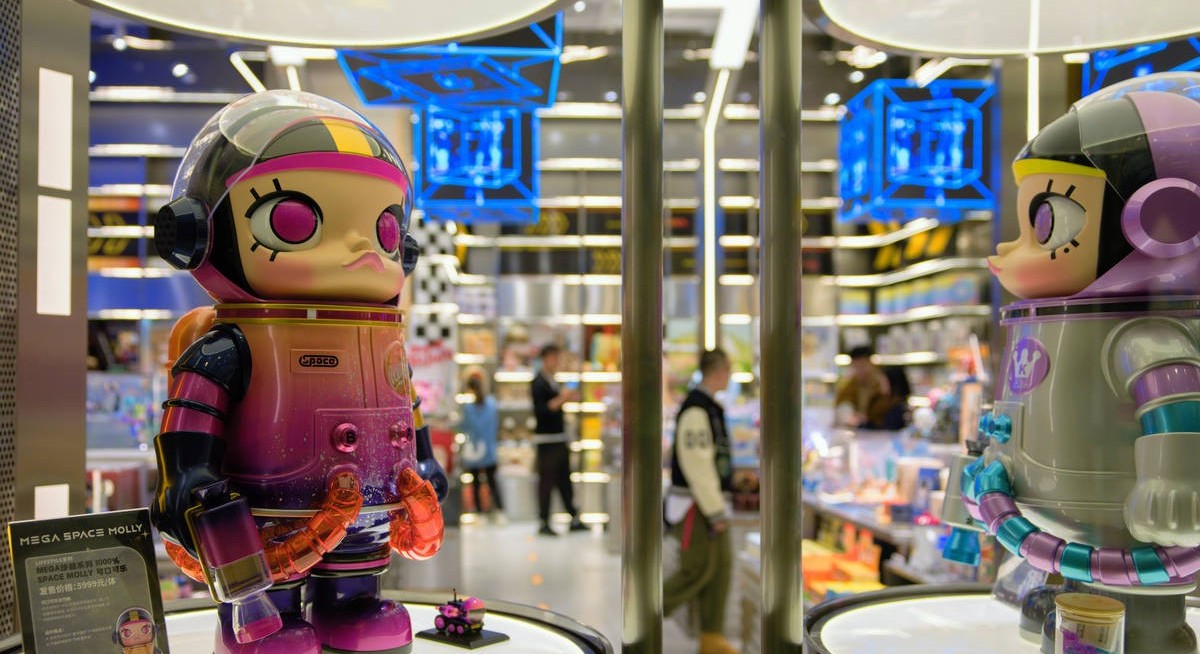
While heavily marketed Skullpanda topped estimates with revenue of CNY3.5 billion, other high-profile figures including Crybaby and Molly posted weaker-than-expected sales. The performance of Molly — the company’s original flagship character — underscores the challenge of sustaining legacy franchises, with revenue of CNY2.9 billion well below the CNY4.6 billion consensus.
See also: China's AI stocks gain as state media tout rising token usage
“After a stellar 2025, we believe 2026 could shape up to be more of a transition year with more normalised growth,” Bloomberg Intelligence analysts Peter Tang and Monica Si wrote in a post-earnings note.
Labubu went viral in 2025, helping propel Beijing-based Pop Mart into overseas markets including the US. But as supply increased and counterfeit products spread, resale premiums narrowed and the frenzy cooled. The company is now betting that other characters can extend the collectible boom sparked by Labubu, testing its ability to evolve into a durable IP powerhouse capable of competing with players such as Sanrio Co, the owner of Hello Kitty.
Concerns persist, however, that the Labubu craze could fade, weighing on the company’s Hong Kong-listed shares since their August peak. In response, Pop Mart has stepped up its promotion of other characters while seeking to reignite interest in Labubu through a planned movie with Sony Pictures Entertainment Inc.
Pop Mart said it was in the “expansion period” in the key Americas market, with a strategic focus on the US. Americas saw 42 stores added, driving revenue 748% higher to CNY6.8 billion last year, which accounted for 18.3% of Pop Mart’s total sales.
Uploaded by Tham Yek Lee




