




(March 16): China’s economy rebounded in early 2026 with a surprising uptick in domestic consumption and investment, an acceleration that may prove hard to sustain if the war in Iran stalls exports.
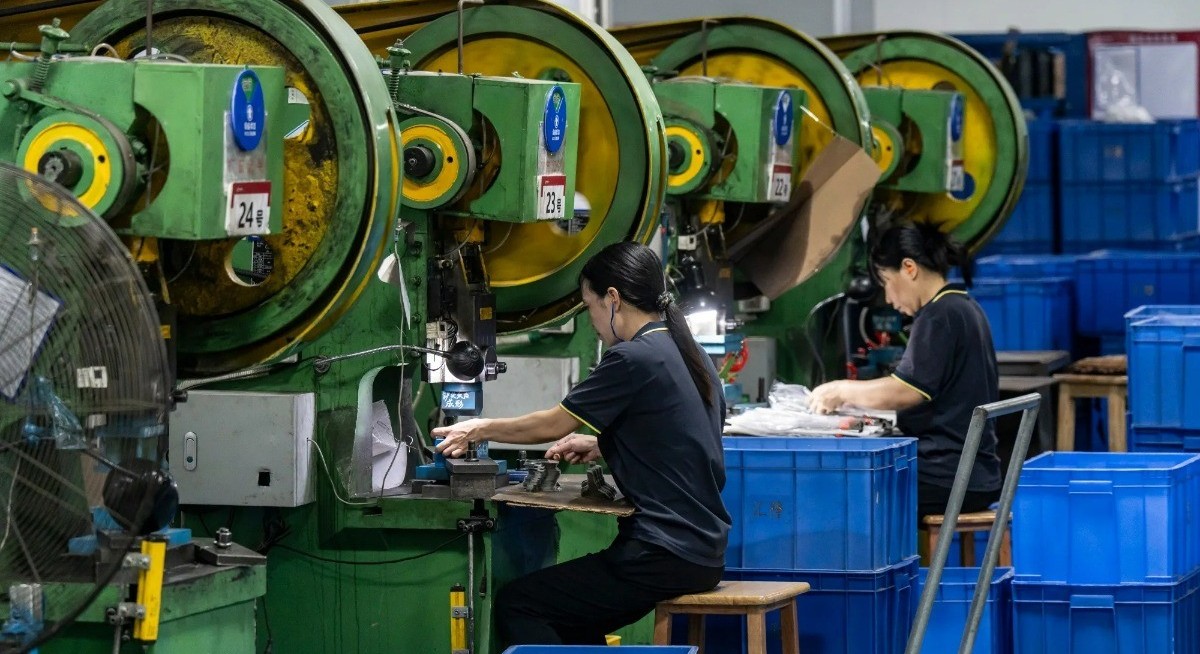
Factories revved up production as shipments overseas surged at the start of this year. Industrial output climbed 6.3% in January-February from a year earlier, according to data released by the National Bureau of Statistics on Monday, the fastest growth since September.
Other segments of the economy that are more reliant on domestic demand also got off to a stronger start than expected. Retail sales rose 2.8% in the first two months — more than triple their gain in December — while fixed-asset investment unexpectedly expanded 1.8% after contracting for the first time on record in 2025.
“While risks to the outlook have increased amid geopolitical tensions and disruptions to global trade and energy markets, the latest figures indicate that China entered the year with a firmer growth footing than previously thought,” said Hao Zhou, chief economist at Guotai Junan International in Hong Kong. “This should help cushion the economy against external shocks in the near term.”
The figures provide an encouraging snapshot of the world’s second-biggest economy this year, after it ended 2025 with the slowest growth since the reopening from Covid lockdowns in late 2022. As domestic consumption and investment cooled, gross domestic product growth decelerated in the fourth quarter to 4.5% from a year earlier.

See also: China home prices drop at slower pace as property slump abates
But in the past two weeks, the widening conflict in the Middle East has upended energy markets and caused a new disruption to trade. While China is less vulnerable to an oil price shock than other major economies in Asia, its export machine is exposed to the threats to global growth and inflation.
Higher fuel and raw material costs could also squeeze profit margins of manufacturers already under pressure from cutthroat competition.
Chinese government bonds declined across the curve after the upbeat data, and as fears of inflation sweep through markets following the spike in oil prices caused by the Iran war. The yield on 30-year bonds rose to the highest since August 2024, with the offshore yuan maintaining its 0.1% gain versus the dollar.
See also: Didi swings back to a loss after revving up global expansion

The improvement across the economy will likely delay the rollout of stimulus as policymakers assess the fast-changing situation in the Middle East. Economists polled by Bloomberg in late February expected a cut to the policy interest rate and banks’ required reserves by the end of March, but the likelihood of a later reduction is rising.
“The biggest surprise would be the positive increase in FAI,” said Serena Zhou, senior China economist at Mizuho Securities in Hong Kong. “Such upside surprises may delay the timing of the rate cut we’ve been expecting,” she said, adding that they had been forecasting a decrease by the end of March.
Prior to the latest report, China’s investment had been contracting on a monthly basis since mid-2025. Economists have explained the downturn by pointing to a combination of factors, including weakening business confidence as well as a potential adjustment made to correct past over-reporting in the statistics. Government spending on infrastructure also slowed as authorities focused on repaying debt.
Now a nascent shift appears to be underway. Infrastructure investment surged 11.4% in the first two months from a year ago — the fastest increase for the period since 2021.
That could be a result of authorities embarking on construction projects delayed from late 2025, when the growth target already appeared within reach.
“The rapid recovery of infrastructure investment shows that macroeconomic policies are proactively providing support, and the strength of fiscal spending will likely be maintained,” economists at CF40, a Beijing-based think tank, wrote in a note.
To stay ahead of Singapore and the region’s corporate and economic trends, click here for Latest Section
Other details of China’s macroeconomic data:
- Property investment plunged 11.1% in the first two months from a year ago, a narrower decline than the 19.3% drop predicted by economists
- The urban unemployment rate went up to 5.3%, worse than every forecast in a Bloomberg survey
Manufacturing investment also reversed declines and grew 3.1%. Higher raw material prices were partially behind the turnaround, with non-ferrous metals like copper rallying in the past few months.
China’s producer prices have narrowed their declines in recent months and could climb back up above zero as early as in March, thanks to a rally in oil. A sustained rise in prices could support the investment figures, which were weighed down by deflationary pressure in the past few years.
But Mizuho’s Xue warned that it’s still “too early to tell” if there’s a recovery and bottoming out in real demand underlying the data.
China usually publishes combined figures for January and February to smooth out distortions caused by the irregular timing of the Lunar New Year holiday.
A detailed breakdown of retail data showed demand for alcohol and cigarettes, communication equipment and jewellery drove the rise, while car purchases continued to plunge.
It’s still a question if the recovery in consumer spending is sustainable. The government earlier announced that it’s trimming subsidies for consumer goods purchases to 250 billion yuan (US$36 billion or $46.46 billion) this year from 300 billion yuan in 2025, while maintaining the meagre pace of increases in basic pension payouts.
Beijing lowered its annual economic growth target to 4.5%-5% — the least ambitious goal since 1991, though from a much larger base of gross domestic product. While exports were surprisingly strong in the first two months of 2026, the outlook now hinges in part on the duration and intensity of the war, which began with US and Israeli strikes against Iran on Feb 28.
So far, authorities have adopted a cautious approach, choosing to observe how the situation unfolds instead of rushing out new policies. Earlier this month, the government unveiled a slightly scaled back fiscal stimulus plan for this year.
Chinese leaders are known for delivering economic goals they set for themselves, but how they achieve the more modest target this year will be key. The country’s growing reliance on exports to drive growth is fuelling tensions with trading partners and failing to benefit households.
“In January and February, the main economic indicators showed a marked rebound, and the economy was off to a good start,” the NBS said in a statement accompanying the data release. “But we also need to see that the impact is deepening from changes in the external environment, and geopolitical risks keep rising.”
Uploaded by Chng Shear Lane




