


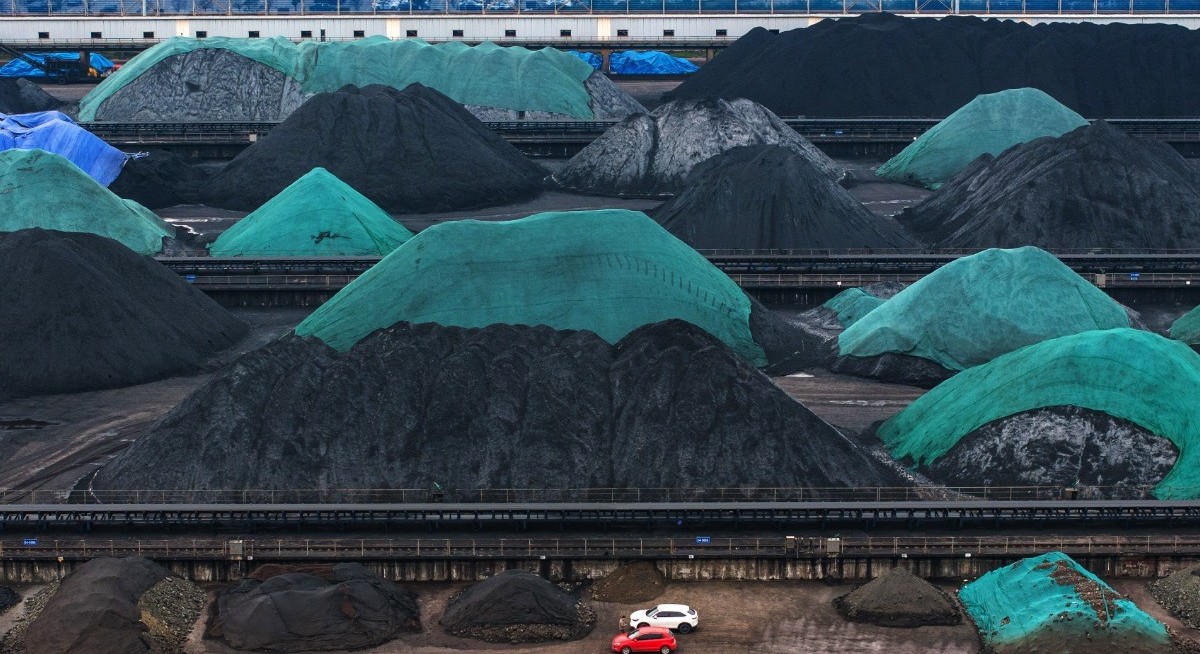


(April 7): Chinese coal companies are turning to chemicals manufacturing for growth, as war in the Persian Gulf constrains supply of the liquid fossil fuels more commonly used by the industry.
The country’s vast coal deposits mean that, unlike oil and gas, it requires relatively fewer shipments from overseas. In the current climate, that abundance is becoming increasingly valuable to industries that would otherwise depend on crude oil for their feedstock.
China Shenhua Energy Co, the nation’s largest listed coal miner, is shifting capital spending to coal-based olefins — the chemical building blocks for plastics, fibres and solvents — betting it will deliver stronger returns than oil-based production if Middle Eastern disruptions persist.
It’s a notable expansion in a total budget that’s shrunk 16% from last year’s level.
The coal-to-chemicals industry has seen rapid growth in recent years, in part because the powerful mining lobby — heedful of the challenge from renewables in power generation — wanted to develop another source of demand for their product. Coal’s industrial uses are gaining prominence at a time when markets for rival feedstocks like naphtha (derived from oil) and liquefied petroleum gas (from oil or natural gas) are getting tighter.

See also: China services gauge slows after boost from New Year holiday
Shenhua said last week that net income dropped 5.3% in 2025. The firm predicted downward price pressure at its power generation business this year.
One of its remedies is to trim coal output by 0.6%, given that average prices in 2025 were about 12% lower than the previous year. A second is to press on with the expansion of its plant making polyethylene and polypropylene — two of the commonest plastics — which is expected to double annual capacity by 2027 to 1.4 million tons.
“Rising oil prices could weaken the availability of petrochemical supplies, and improve demand and competitiveness for coal-to-olefins,” chief executive officer Zhang Changyan said during the company’s earnings webcast last week.
See also: The sad demise of China’s economic debate
Asset purchase
The coal giant has also agreed to buy assets worth US$19 billion ($24.42 billion) from its parent, including coal-to-chemicals operations. It’s a move aimed at weathering the pressure from China’s accelerating green transition, as well as geopolitical risks to the global economy, said Zhang.
Coal’s margin advantage over oil in chemicals production is now at its widest since 2015, China International Capital Corp said in a note, while coal currently accounts for about one fifth of China’s olefins output, according to data presented by Ningxia Baofeng Energy Group Co in its latest earnings statement. The country’s biggest coal-to-olefins producer reported a 79% jump in net income last year after expanding annual capacity to five million tons.
Chinese oil companies are joining the push, too. Sinopec Group, the biggest refiner, has revived a long-stalled coal-to-olefins project at a cost of over US$3 billion. Its listed unit, meanwhile, has slashed capital spending on petrochemicals after losses deepened last year.
Uploaded by Chng Shear Lane




