


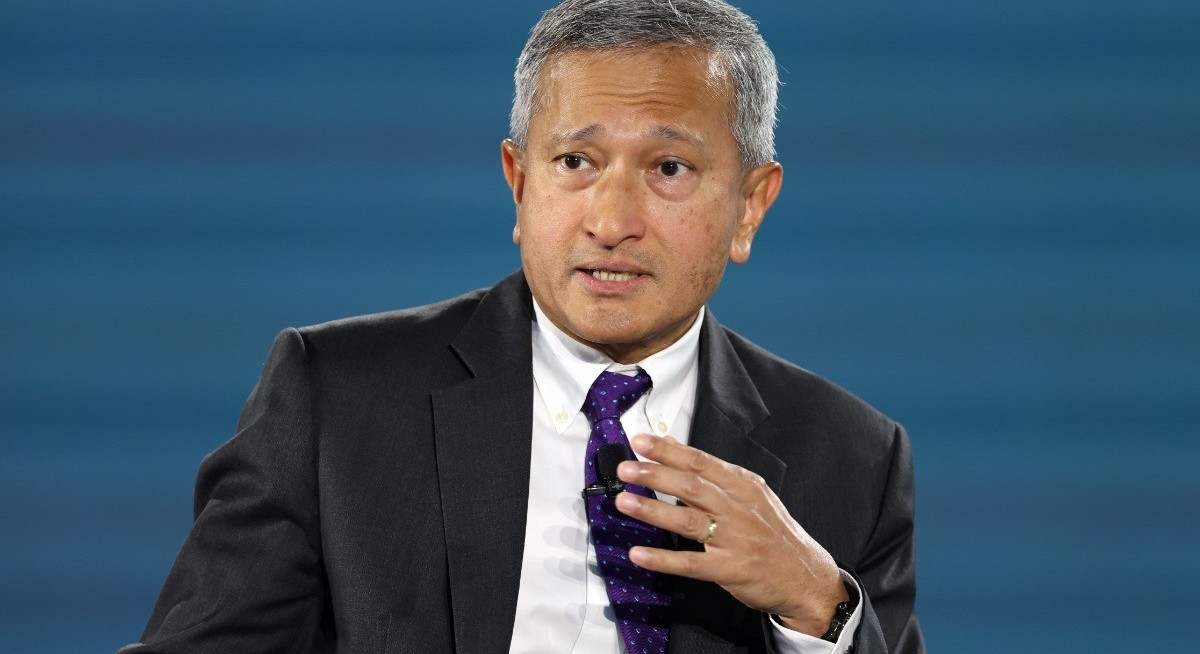


(April 7): Singapore’s top diplomat warned the economic fallout from the war in Iran could worsen and markets have yet to factor in the worst-case scenario.
“I’ve stopped trying to get into prediction markets,” Foreign Affairs Minister Vivian Balakrishnan told Bloomberg Television’s Avril Hong at an Investment Management Association of Singapore conference on Tuesday, referring to US President Donald Trump’s latest deadline to Tehran.
“I’m quite sure the markets are not fully pricing the worst-case scenario,” Balakrishnan said. “How’s that for a note of soberness.”
Markets have been whipsawed by mixed messaging on the war in Iran. Traders were cautious ahead of Trump’s latest Iran deadline expiring at 8pm Eastern Time.
Since the global conflict began in late February, global equities are down less than 6% while oil prices have soared. Even the dollar, a reliable haven in times of geopolitical uncertainty, has weakened since touching a 2026 high late last month.
While Balakrishnan — like many in Asia — questioned the need for US military action in Iran, he sees Washington’s main regional rival, China, as not seeking to exploit the situation.
See also: Hormuz traffic rises to highest in weeks as more transits agreed
China has been “stable, careful, deliberate — focusing on its domestic economy and not trying to take advantage of what made things worse on the global stage”, he said, adding he views the moves as “strategically wise actions”.
The effective closure of the Strait of Hormuz has disrupted a critical artery for oil and gas shipments to Asia, forcing buyers to scramble for alternative supplies and pushing prices higher. The chokepoint handles about a fifth of the world’s LNG supply.
Governments are already warning of a more challenging outlook as higher import bills feed into inflation and growth. Singapore imports nearly all of its energy and relies on natural gas for more than 90% of its electricity generation, leaving it highly sensitive to swings in global fuel prices and supply disruptions.
See also: Italy deficit at 3.1% breaches EU ceiling in setback for Meloni
“We’re trying to be upfront with our people and tell them this is serious, this could get worse,” Balakrishnan said. “We all need seat belts.”
Uploaded by Chng Shear Lane




