




I was disappointed but hardly shocked. In 2024, I was informed that, while I could still attend the CDF, I would not be allowed to speak in any public sessions. My views on China (and especially Hong Kong) had turned more cautious, and I was told that my comments on the Chinese economy had “generated intense scrutiny and even controversy” among the Chinese and foreign press, which suggested to them that any comments I made at the CDF would be “misinterpreted and even sensationalised” by the media. The organisers were explicit that this would not be in my — or China’s — best interest.
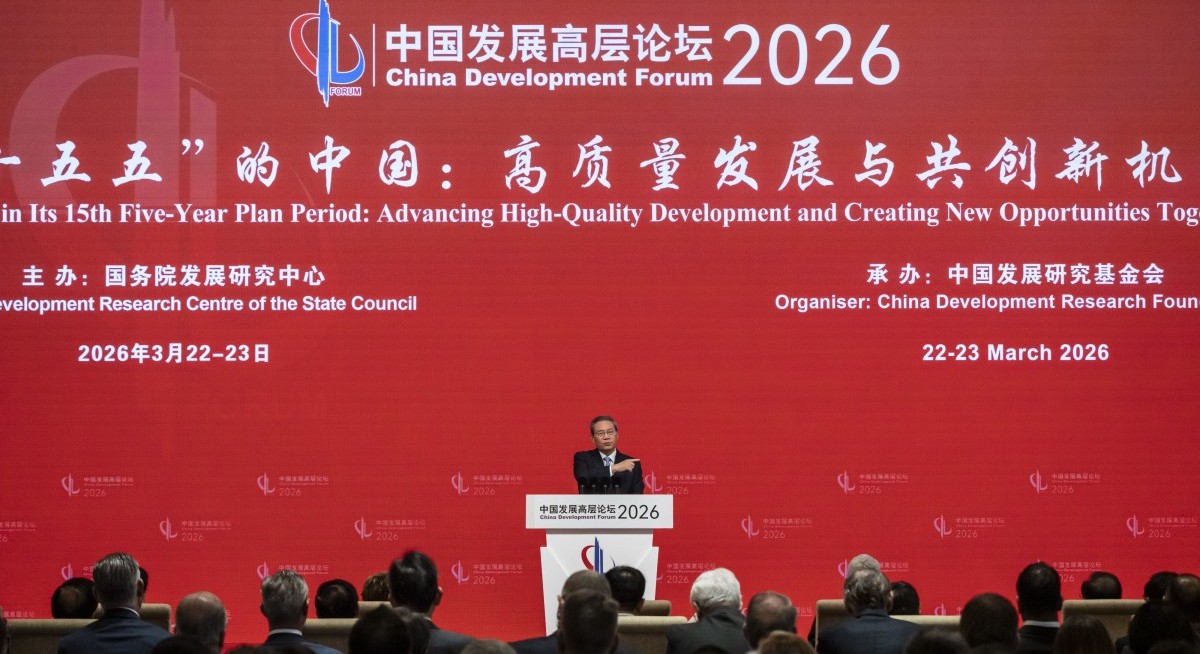
Still, I attended the forum as a spectator in 2024 and again last year. As I wrote at the time, the point was to continue to show up and bear witness to the CDF’s fate. While I was not able to do that this year, my friends in China gave me a rundown of how it went. The CDF is now a day shorter, cut from three days to two in 2024, and Premier Li Qiang gave an opening speech for the third consecutive year, rather than hosting an interactive dialogue at the end.
A pirated copy of the agenda shows 13 seminars lasting 90 minutes on average, featuring a total of 117 speakers. When allowing for opening remarks by session moderators and courtesy time adjustments for eight keynote speakers, four Nobel laureates, and a special address by Apple CEO Tim Cook, that boils down to an average of about six minutes per speaker. That makes it almost impossible to say anything of substance and leaves little room for questions, let alone debate.
These rapid-fire sessions hardly did justice to the important theme of this year’s CDF: how to ensure high-quality development and create new opportunities as China begins its 15th Five-Year Plan. The start of a new plan is a crucial moment for the Chinese leadership to ponder — and, yes, debate — the strategic opportunities and challenges that lie ahead. Sadly, the CDF, in its current form, is ill-equipped to serve that critical function.
See also: China’s reflation shows signs of peaking as Iran war shock fades
A fragmented agenda packed with sound-bite-length contributions from a multitude of speakers — many of whom know little about the topics they were assigned to opine on — is incapable of fostering debate over anything, especially a new five-year plan. My view, for what it’s worth (clearly not much in China these days), is that the 15th Five-Year Plan is disappointing, as it basically doubles down on the just-completed 14th Five-Year Plan.
The top priority continues to be new, high-quality productive forces, especially advanced technology. With domestic demand lagging, this leaves the Chinese economy heavily dependent on exports at a time when external demand is facing stiff headwinds, owing to geopolitical tensions and increased protectionism.
Meanwhile, the new plan pays only lip service to the Chinese consumer, long the most obvious candidate to fill the void left by the property market’s post-crisis weakness and over-investment in both the public and private sectors. When it comes to consumer-led rebalancing, senior Chinese leaders continue to talk the talk but are unwilling to walk the walk.
See also: China auto sales drop even as exports help cushion slump
Instead of addressing the excesses of fear-driven precautionary saving that hobble long-term discretionary consumption, the new plan, like the old one, promotes trade-in campaigns for cars, appliances, and other durable goods that simply borrow from demand that would have been fulfilled in any case. Had I been at the CDF this year, I would have made that point for the umpteenth year in a row.
Sour grapes for not having been invited this year? It’s more a sense of disappointment in the Chinese government’s denial of a serious growth problem and its fixation on quashing debate in favour of “the good stories of China.”
I will always remember my first appearance at the CDF in 2001. Then-Premier Zhu Rongji had launched the conference a year earlier as a platform for engagement and debate between Chinese government ministers, academics (foreign and domestic), and some business executives. It underscored Zhu’s brilliance as a strategic thinker: If China’s senior leaders couldn’t handle tough feedback immediately after the completion of the National People’s Congress, the biggest policy meeting of the year, the thinking was that they didn’t deserve their seats on the State Council.
Back then, I had long discussions with Zhu and his successor, Wen Jiabao, over the imperative of consumer-led rebalancing. True to the CDF’s original spirit, we didn’t always agree. But there was never a problem being frank and open in expressing disagreement. Chinese leaders recognised the importance of constructive debate. Sadly, that was then, not now. China will suffer as a result. — © Project Syndicate, 2026
Stephen S. Roach, a faculty member at Yale University and former chairman of Morgan Stanley Asia, is the author of Unbalanced: The Codependency of America and China (Yale University Press, 2014) and Accidental Conflict: America, China, and the Clash of False Narratives (Yale University Press, 2022)




