




This year’s gatherings come amid signs of significant weakness in domestic demand. Authorities have tried to boost consumption with incremental measures like childcare subsidies, but are probably not facing enough pressure yet to make major moves such as expanding the social safety net.
The world’s second-biggest economy is emerging largely unscathed from its second trade war with the US. The recent de-escalation of tensions with the Trump administration, coupled with China’s surprisingly strong export strength this year, will probably keep its leadership’s focus on advanced manufacturing and technology even at the risk of worsening the imbalances in global trade.
“The broad picture will be that policymakers are pretty happy with the way things went this year, particularly on the trade front,” said Duncan Wrigley, the chief China economist of Pantheon Macroeconomics, during a webinar on Wednesday. The key message will be that “the basic path of upgrading manufacturing and pursuing technology is working and that’s what they are going to do more of”, he said.

See also: Taiwan may push back timeline to meet green energy goal after missing it last year
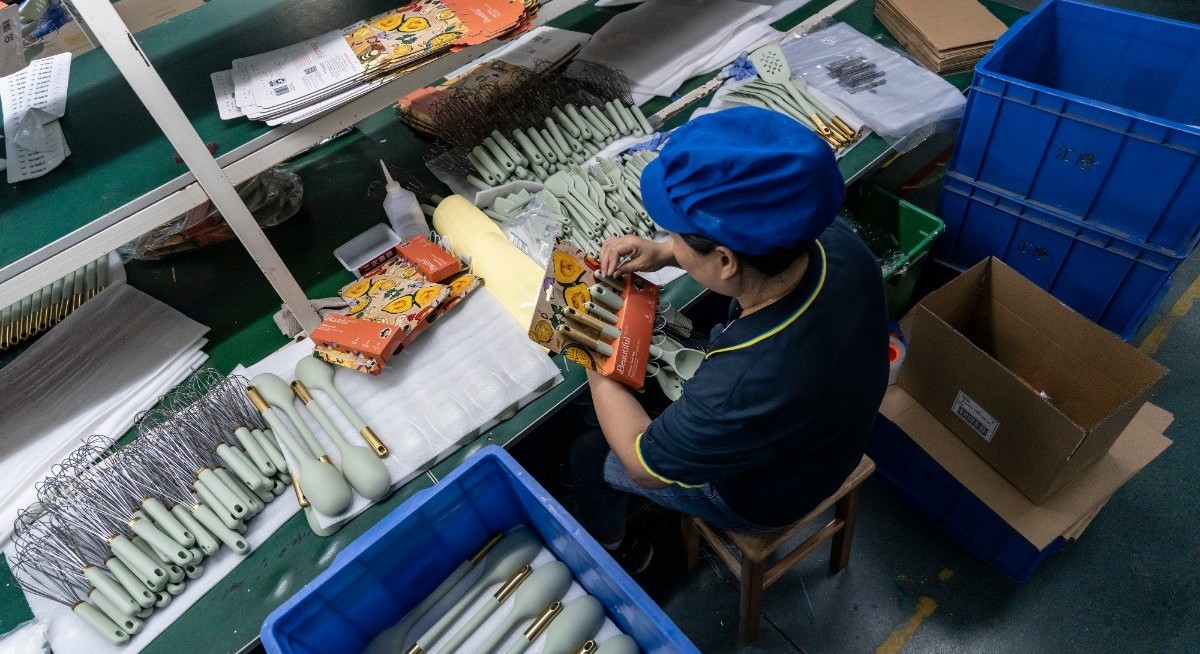
Offsetting economic weakness at home, exports have boomed in spite of US President Donald Trump’s launch of a trade war early in 2025, with the year-to-date surplus clocking a record of almost US$965 billion ($1.25 trillion).
At the same time, retail sales are coming off the longest stretch of slowdowns since 2021, investment just shrank by a record amount and the property market is in such dire shape that two private data agencies were told to withhold sales figures, a Bloomberg report showed.
Some prominent Chinese economists have called for Beijing to take steps such as adopting a stronger exchange rate or embracing a 2008-style stimulus package. Foreign officials including US Treasury Secretary Scott Bessent have urged forceful action to boost domestic consumption and reduce reliance on overseas markets. But, in the wake of Trump standing down from his most aggressive actions against China, economists warn against expecting any big rebalancing by Chinese President Xi Jinping and his team.
See also: CK Hutchison seeks damages via arbitration on Panama Ports
Authorities attending the work conference will back a 2026 growth target of around 5% for 2026 — the same as for this year — according to 10 of 13 projections from banks and research institutions compiled by Bloomberg News. That gross domestic product (GDP) goal will only be officially unveiled in annual legislative sessions in March.
Moving the target lower — potentially to a range of 4.5% to 5% — is still a possibility for some analysts. One downside: That could weaken already-fragile sentiment in the economy, with home values at their weakest in years.
Given that 2026 marks the start of the next five-year planning period, officials may be motivated to ensure growth is off to a good start. China is also aiming for an ambitious increase in per capita GDP by 2035.
Aside from any public statements from the Politburo and works conference confabs, further signals on the growth target will emanate from provincial-level goals typically announced in January.

The following is a look at what economists are anticipating from specific policy areas from the upcoming gatherings:
Fiscal stance
To stay ahead of Singapore and the region’s corporate and economic trends, click here for Latest Section
Authorities will likely stick with the current “more proactive” setting for next year — keeping it expansionary to counter stubbornly weak household and business confidence.
Many economists expect Beijing to set the official budget deficit at around 4% of GDP, the same as in 2025.
Other closely watched metrics include guidelines for the issuance of bonds, the proceeds of which are used to support spending or alleviate debt burdens. Officials are seen boosting the quotas for special sovereign and local bonds.
Even so, the leadership is likely to reiterate its determination to contain local debt risks as the government’s CNY10 trillion (US$1.4 trillion or $1.8 trillion) programme to refinance hidden liabilities heads into the third year.
Beijing is also likely be ready to add stimulus later in 2026 as the year progresses, to address any challenges that emerge — such as renewed trade tensions with the US.
Monetary policy
Last year’s Politburo meeting saw a major switch in language, with policymakers adopting a “moderately loose” monetary stance, and they are expected to keep that terminology for 2026. Despite the signalling shift a year ago, substantial monetary easing failed to materialise this year — amid strong export growth.
The People’s Bank of China (PBOC) has delivered just one 10-basis-point cut to the policy interest rate since the start of the year — notably less than the 40 to 60 basis points many expected. That’s the smallest amount of rate reductions since 2021.
The PBOC faces several constraints in cutting rates, even amid entrenched deflationary pressures. For one, the key rate is now so low that it’s raised questions about the health of the banking sector, along with concerns about fuelling bubbles in some asset markets. The central bank recently signalled more caution towards easing.
Officials might in the first quarter lower the ratio of reserves that banks must keep locked up at the PBOC against their deposits, with a policy rate cut in the following quarter, according to Standard Chartered plc.
Consumer boost
A CNY300 billion programme to subsidise the purchase of consumer goods could get extended into next year, Citigroup Inc economists said.
Others expect the focus may shift towards services. Coupons or subsidies for service consumption could be offered nationwide, as a short-term measure to avoid a sudden pullback in household spending, according to Shen Jianguang, the chief economist of JD.com.
The Citigroup team, including Xiangrong Yu, sees a “strong case” for the government to start setting a target to boost the share of consumption in GDP by one percentage point in 2026, as the nation aims to “significantly lift” that ratio over the next five years.
Aid for property
China’s real estate market has been plunging for four years now, and economists broadly expect the contraction to extend into 2026. Many have urged Beijing to ramp up aid for the sector to mitigate the downward pressure it puts on the economy.
Policymakers may unveil measures such as a property stabilization fund and government purchases for low-cost housing to reduce unsold inventory, Citic Securities Co. economists including Ming Ming wrote in a note this week.
Other analysts anticipate authorities will provide mortgage subsidies for homebuyers. Morgan Stanley calculates that it would take government spending of almost CNY400 billion a year to turn around market sentiment.
Battling ‘involution’
Countering excessive competition, or involution as it’s become known, is almost certain to continue being a focus for 2026, given China’s continuing worries about deflation and profit margins getting squeezed so much that it limits companies’ capacity to invest and innovate.
But the government will have to strike a careful balance, as any move to aggressively cut back on industrial capacity could exacerbate the slowdown in investment and lead to significant job losses. The campaign is still largely opaque and targeted at specific industries. While some raw material prices saw a surge earlier this year, the impact of efforts taken so far has been limited.
Uploaded by Tham Yek Lee




