


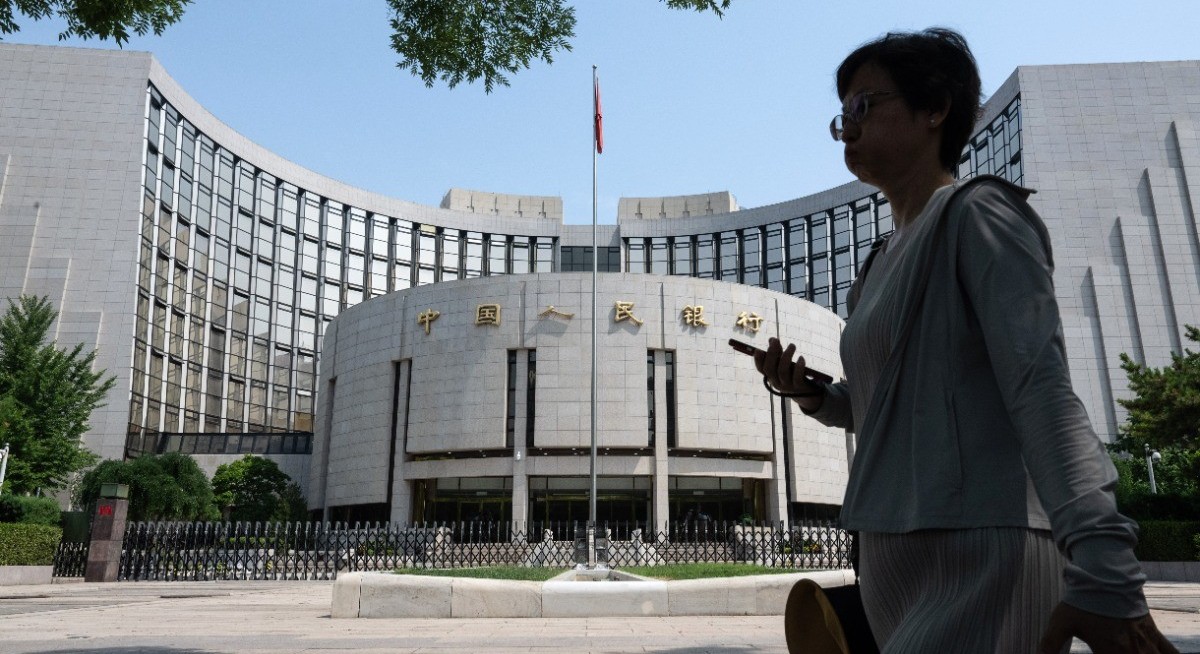


(June 12): China told big state-owned banks to reduce their lending in the interbank market, according to people familiar with the matter, in an effort to prevent borrowing costs from drifting too far below the policy interest rate.
The People’s Bank of China (PBOC) recently instructed financial institutions including policy banks to strictly control their net lending to other banks, said the people, asking not to be identified as the information is private.
The move is aimed at correcting market expectations around access to liquidity with the goal of upholding the authority of the policy rate, they said. The PBOC didn’t immediately respond to a faxed inquiry for comment.
The central bank’s action signals officials are becoming unwilling to tolerate money market rates they deem too low. Known as window guidance, the PBOC typically uses such informal notices to steer markets at times of significant volatility or to manage the pace of credit extension.

Following months of a liquidity glut that drove borrowing costs to multi-year lows and fuelled a bond rally, the PBOC in recent weeks sought to drain some of the extra cash in the banking system.
See also: Alibaba bids US$1.5 bil for China grocer in fight with Meituan — Bloomberg
The overnight repo rate has climbed to 1.4% to match the current policy benchmark in recent days, after touching around 1.2% in April. That rate is a key measure of the cost of short-term funding backed by bonds that has become the implicit policy target.
The yield on 10-year government bonds also rebounded to 1.75% from 1.7% earlier this month.
Balancing act
See also: Gaokao lessons for Chinese businesses
The PBOC is trying to balance competing objectives as a global energy shock ripples through the world’s No 2 economy. It needs to ensure there’s sufficient liquidity in the system to stimulate growth.
At the same time, the central bank has been wary of fanning risks with funding that simply circulates in the financial system, threatening to stoke up bubbles in assets like government bonds.
Weakening borrowing demand from businesses and households has prompted banks to lend to each other or buy more bonds. Credit growth has slowed to the worst pace on record, adding to an excess of cash sloshing around.
With consumer and producer inflation under pressure from high oil prices, a slew of economists have pushed out their expectations for the PBOC’s next cut to the policy rate to 2027. In the absence of an outright rate decrease, many in the market had expected the PBOC to keep liquidity conditions loose to support the economy.
Earlier this month, the central bank reduced the size of its daily open-market operations to a record low. In a sign the liquidity glut is starting to normalise, banks turned net borrowers of short-term funds for the first time in seven months.
Large state-owned lenders are a key source of liquidity in the interbank market. The PBOC has a number of policy tools to funnel money to them, which is then passed on to other banks and financial institutions.
Uploaded by Felyx Teoh




