


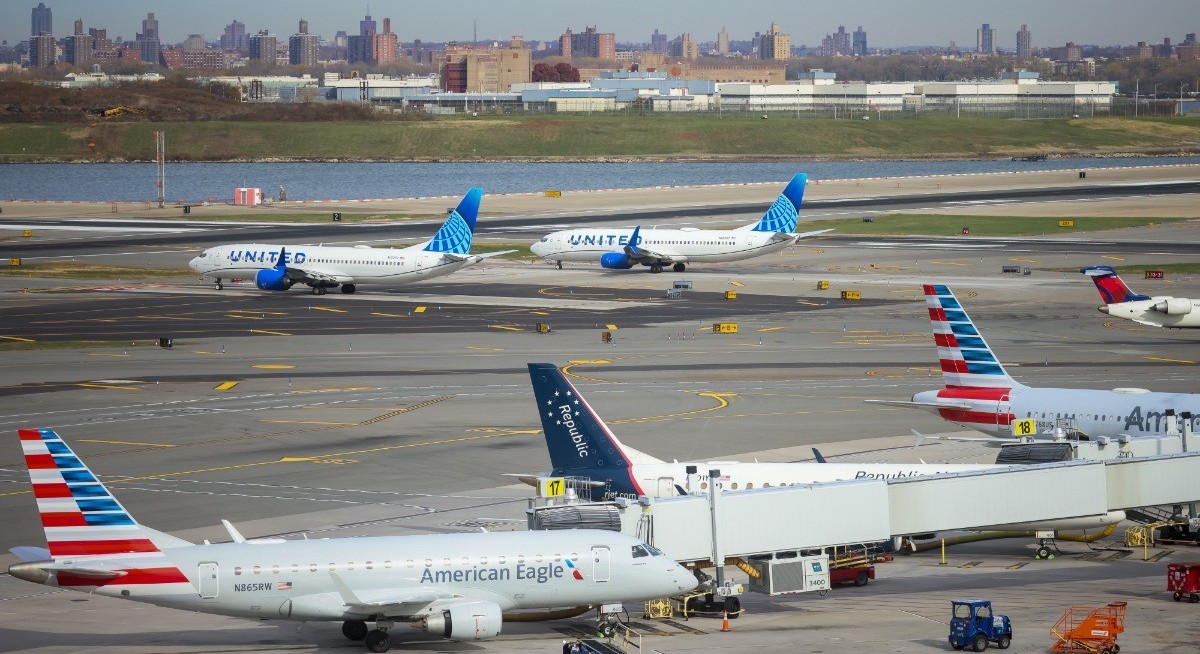


(June 26): A popular gauge of the US airline industry has finally recovered from pandemic-era losses after six years, as progress on a peace deal between US and Iran pushed oil prices lower and eased the pressure on carriers’ profitability.
The US Global Jets ETF (Jets), a major proxy for the biggest airline stocks, closed up 4.2% on Wednesday, at its highest level since December 2018, and continued to rise on Thursday. This year, JETS is outpacing the S&P 500’s 7.9% gain with a 20% jump. Yet, the index has barely gone anywhere since the end of 2019 — eking out a mere 3% gain as of Wednesday’s close — while the S&P 500 Index has soared almost 128% over the same period.
The long road to recovery for the sector was dotted with hurdles, including country-specific travel restrictions during the pandemic, aircraft supply shortages and a record-breaking US government shutdown. From a January 2020 peak to pandemic trough about four months later, Jets nosedived about 63%. Even when travel demand slowly started to trickle back, it was years before business travellers — the highest margin clients for airlines — returned in full force.

Much of Jets’ latest strength can be attributed to the price of oil sliding under US$75 barrel this week against the backdrop of peace talks. Jet fuel is one of the airline industry’s largest expenses, and the spike during the war in the Middle East had put pressure on carriers to protect profit margins. Companies have raised air fares to cope with the higher costs, cut routes, increased checked bag fees and grounded older, less-efficient aircraft.
“Airlines are the most leveraged out of the travel subgroups to oil prices, so with oil coming down, they’re going to have the most potential for margin to move higher,” said Bret Kenwell, an investment analyst at eToro.
See also: EasyJet ready to talk after rejecting fourth Castlelake bid
Even so, given the cyclical nature of the industry, there is some caution against being too optimistic about its recent strength. Consumer sentiment, though improving slightly, is still hovering around record lows. US workers are feeling pinched, with their savings depleted, credit card balances rising and absolute prices remaining high, according to Muriel Siebert & Co chief investment officer Mark Malek.
“I am concerned that the consumer is silently limping along and close to falling off,” Malek said.
During the latest reporting season, both United Airlines Holdings Inc and American Airlines Group Inc lowered their full-year targets due to higher jet fuel prices spurred by the Middle East war. Delta Air Lines Inc will kick off second-quarter results for the group when it reports on July 10.
See also: Airbus A380 aircraft require checks for possible wing cracks
Despite the gloominess, there are some bright spots for the industry, such as demand for premium services. Delta and JetBlue Airways Corp said earlier this month that travellers continue to pay up for higher-end products like airport lounges and pricier cabin seats in the face of mounting economic pressures. United’s chief executive officer Scott Kirby has also noted affluent travellers continue to spend on air travel despite this year’s 20% surge in fares.
Any decline in fuel costs should be a relief to low- and middle-income consumers just in time for the summer travel season. Budget carrier Spirit Aviation Holdings Inc’s collapse is also an industry tailwind, as demand has shifted to other airlines and fewer routes allow for higher fares.
“With oil coming off highs and schedules cut back a bit for the third-quarter, we would expect some good profits,” said Bloomberg Intelligence analyst George Ferguson. “We think the third quarter could be pretty strong and you’ll see that in the guides as airlines report earnings starting in the next few weeks.”
Uploaded by Felyx Teoh




